
Narrowing your focus is one of the fastest way to grow your client base. It feels like the opposite of what should work, but a photographer known for one thing gets found more easily, referred more specifically, and hired more confidently than one who does everything.
A portfolio that covers every genre gives potential clients too much to sort through and too little to hold onto. When someone is looking for a photographer, they're almost always looking for the right fit for a specific project, not the most versatile option available.
A clear niche makes you that fit. It gives your business a center of gravity that makes everything else work more efficiently: marketing, pricing, SEO, referrals, and the quality of the inquiries themselves.
In this guide:
- Understand what a niche does for your business
- Assess your interests, strengths, and market reality
- Research the market and find your angle
- Build a portfolio that proves the niche
- Present your work so clients can hire you
- Optimize for search and discovery
- Build and publish your portfolio with VSCO
- FAQ: Choosing a photography niche
A photography niche is the specific part of the market where you choose to focus your creative energy and your business development. Instead of covering every genre, you focus on a subject, a client type, or a visual approach that you want to become known for.
The practical effect is immediate. When someone searches for a photographer, they're almost always searching for something specific: a wedding photographer, a brand photographer for their product line, a portrait photographer with a particular aesthetic. A clear niche makes you findable in those searches, legible in those conversations, and easy to recommend when someone asks for a referral.
Specialization also accelerates skill development. The more you work within a specific area, the more you refine not just your photos but your workflow, your client communication, and your creative instincts. That depth shows in the work and compounds over time in ways that broad generalist practice doesn't.
The common fear is that narrowing will limit opportunities. In practice, the opposite tends to be true. A tightly positioned photographer attracts more of the right inquiries and fewer of the wrong ones, which makes the business more efficient and the work more consistent.
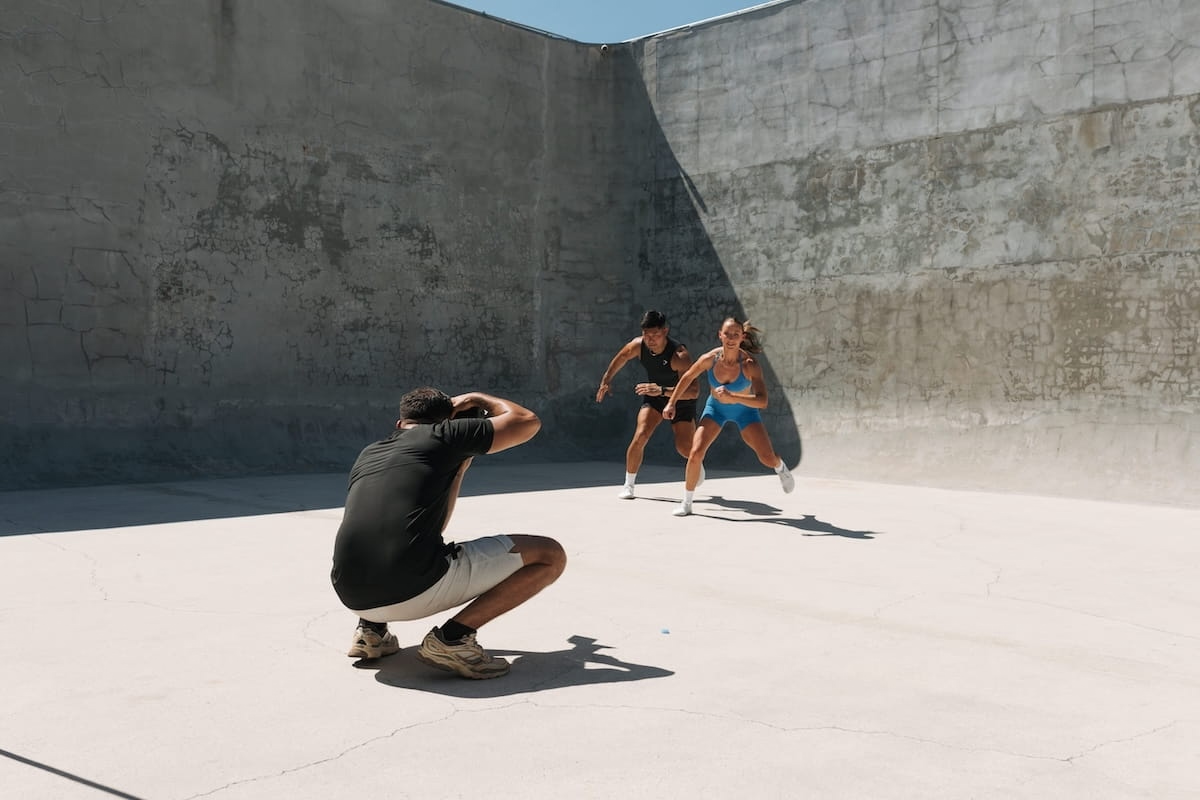
The most durable niches sit at the intersection of what you genuinely enjoy photographing, what you do well technically and creatively, and what the market around you actually needs. Optimizing for only one of those produces a niche that either burns you out, that your portfolio can't yet support, or that doesn't generate enough work to sustain.
Start with what you keep coming back to
Pay attention to patterns in your existing work. The subjects you return to without prompting, the light you're instinctively drawn to, the kinds of sessions that energize you versus the ones that drain you. These patterns reveal where your creative investment is already concentrated. Work that comes from genuine interest tends to be more consistent, more distinctive, and easier to sell, because the enthusiasm behind it is visible in the images.
Be honest about what you do well
Review your strongest work with the question of what's actually there, not what you want to be there. What technical skills show up consistently? What recurring choices in color, composition, or mood are beginning to feel like a signature? Who responds most enthusiastically to your work, and what are they responding to?
This isn't a judgment of the work's overall quality. It's an honest inventory of where your strengths currently lie and where you want to develop them further.
Factor in gear, lifestyle, and income
A niche needs to work for your actual life. Wildlife and adventure photography can require significant gear investment and frequent travel. Event photography means late nights and weekends. Commercial and product work often requires studio access and controlled lighting setups. Portrait and brand work tends to offer more scheduling flexibility and predictable income.
Think through what each potential niche actually demands in terms of equipment costs, scheduling constraints, local market demand, and realistic earning potential. A niche you love but can't sustain financially is a hobby. The goal is finding one that's also a business.
Once you have a sense of where your interests and strengths overlap, check whether there's a real market for that work in your area or online.
Study demand without chasing every trend
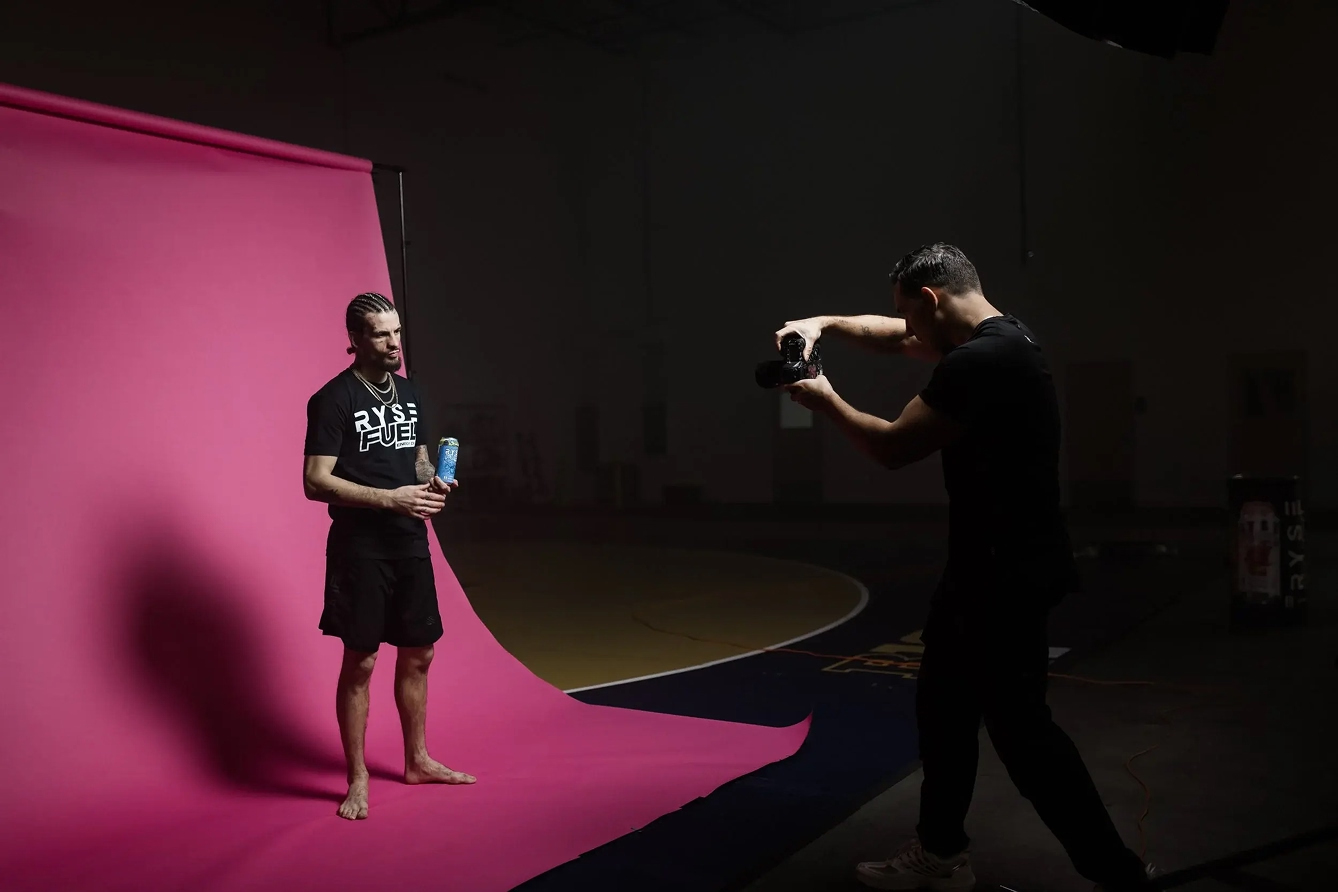
Look at local job boards, social platforms, and business communities to understand where photographers are being hired and what kinds of work clients are actively looking for. Talk to other photographers if you can. Most are willing to share a general sense of what's working and what's oversaturated in their market.
The goal isn't to pick the most popular niche, but to find one where genuine demand meets a space you can credibly occupy. A niche with strong demand and dozens of established photographers competing at similar price points is harder to enter than one with solid demand and fewer specialists.
Analyze competitors to find your opening
Study photographers already working in the niches you're considering. Look at their portfolios, their services, their pricing, and how they position themselves. You're not looking for what to copy. You're looking for the gaps. What's missing? What perspective, aesthetic, or client experience isn't being offered? Where could your specific combination of skills and approach stand out rather than blend in?
Define the clients you want to work with
Get specific about who you're trying to reach. What are they hiring a photographer to accomplish? What budget can they realistically spend? What aesthetic and communication style do they prefer? How much guidance do they expect from the people they hire?
The clearer your picture of the specific client you're trying to attract, the more precisely you can tailor your portfolio, your messaging, and your marketing to reach them.
Your portfolio is the argument you make to potential clients that you can do the work they need. A curated selection of 20–30 strong, relevant images in your niche is more persuasive than 80 images covering five different genres. Clients aren't looking for evidence that you can photograph everything. They're looking for evidence that you can photograph their thing, well and consistently.
Curate for the work you want to book
Every image in the portfolio should reflect the kind of work you want to attract. If that means including personal projects or styled photoshoots to fill gaps, do it. If it means leaving out technically strong images that belong to a different genre, leave them out. A focused portfolio is stronger than a comprehensive one, even when the comprehensive one contains more individually impressive images.
Ask peers or mentors to review your selection. Fresh eyes catch the images that feel inconsistent or out of place before potential clients do.
Organize for easy navigation
Group work into clearly named galleries or case studies that reflect the services you offer and the clients you're trying to reach. Keep the labels intuitive: Portrait, Brand, Editorial, Product. Clients should be able to find work relevant to their project without searching through unrelated images.
Within each gallery, sequence images to create rhythm and progression rather than just uploading them in chronological order. Lead with your strongest image. Vary perspectives and compositions through the middle. Close with something that leaves an impression. A well-sequenced album demonstrates more than technical skill. It shows that you can maintain a consistent visual standard across a complete body of work.
Fill gaps with spec projects
If your niche portfolio has holes, fill them deliberately. A personal project in a style you want to attract, a collaboration with a local brand or designer, or a styled photoshoot gives you the images you need without waiting for a client to hire you first. The work itself is what matters. How it was commissioned matters less than most photographers assume.
A portfolio site needs a handful of well-executed pages to do its job:
A focused image selection that leads with the strongest work and reflects the projects you want to book.
An about section that gives clients a clear, concise sense of your background, your creative approach, and what it's like to work with you. This is where personality does real work. Clients hire photographers they feel comfortable with, not just photographers whose work they admire.
A contact form or inquiry link that's easy to find from every page. The clients who are ready to book shouldn't have to hunt for it.
Testimonials that address the things clients worry about: reliability, communication, delivery, the experience of being photographed. A quote that says "the experience was relaxed and the images were exactly what we hoped for" does more work than one that says "incredible photographer."
Service descriptions that clearly explain what you offer, what clients receive, and how the process works.
Show the work behind the work
Full session galleries, behind-the-scenes content, and project stories show potential clients what it's like to work with you, not just what your best images look like. A complete gallery demonstrates consistency across an entire photoshoot in a way that a highlight reel can't. This is especially valuable for commercial and brand clients evaluating whether your work will hold up across a large deliverable.
A strong portfolio only helps if people can find it. Local SEO is the highest-priority visibility task for most photographers serving a geographic market, and the language you use across your site is the foundation of that visibility.
Use location- and niche-specific terms in your page titles, headings, service descriptions, and image alt text. "Brooklyn brand photographer" ranks in local search in ways that "photographer" never will.
Create a Google Business Profile with your niche in the category, individual services listed, and recent images from your work. Collect reviews from every client. A direct review link in your post-delivery email dramatically increases the rate at which clients actually leave one.
Keep your portfolio current. Regularly adding new galleries, publishing project stories, and updating your availability signals to potential clients and search engines alike that you're active and working. A portfolio that was last updated eight months ago raises quiet questions that an active one doesn't.
VSCO Sites gives you a portfolio website that builds itself from your existing VSCO profile, publishes in seconds, and stays current automatically when you add new work. There's no coding required, no template wrestling, and no maintenance overhead separate from the work you're already doing.
Key features for photographers building a niche portfolio:
Auto-generated from your profile. Your selects, galleries, and blogs populate the site automatically. Updates to your profile or galleries reflect on your site without any extra steps.
Custom domain support. Pro and One members can connect a custom domain for a fully branded web presence. Your site appears under your own URL rather than a subdomain, which is the first signal to potential clients that you treat your business seriously.
Built-in contact form. Every inquiry submitted through your VSCO Site lands directly in VSCO Workspace as a managed lead with the client's details pre-populated. The path from "I found your portfolio" to "I have a quote in my inbox" is as short as possible.
VSCO Galleries embedded directly. Add your public galleries to your site so visitors can see complete sessions alongside your curated highlights.
Blog support. Publish venue guides, project stories, behind-the-scenes content, and planning resources that attract search traffic and give potential clients a clearer picture of your work and process.
VSCO Sites is available on all VSCO plans. Custom domain support requires Pro or One membership. VSCO One includes Sites, Galleries, Canvas, Workspace, AI Lab editing tools, Studio Pro, and VSCO Film Presets.
Build your portfolio with VSCO Sites →
Explore VSCO One →

When is the right time to choose a photography niche?
Earlier than most photographers think, but not before you have enough experience to understand what you enjoy and where your strengths lie. Experimenting across genres while you build your skills is useful. Once you are actively trying to attract clients, a clear niche makes it easier for the right people to find you, understand what you offer, and decide to hire you. For many photographers, choosing a primary niche within the first year of actively booking work is a good target.
What if I want to photograph multiple types of photography?
You can. Many working photographers work across multiple genres, but they typically lead with one primary specialty. For example, a photographer might focus on brand photography while also offering portraits. You can showcase both in separate portfolio sections while making your primary niche clear throughout your site and marketing. The goal is not to limit your work. It is to make it immediately clear to your ideal clients why you are the right photographer for them.
How many images should I include in a niche photography portfolio?
Focus and consistency matter more than volume. A curated selection of 20 to 30 strong images that reflect your niche will usually make a stronger impression than a larger portfolio covering unrelated subjects and styles. Choose work that represents the clients you want to attract, and edit ruthlessly. A focused portfolio makes your specialty easier to understand and gives potential clients more confidence in what you can deliver.
How do I build a niche portfolio if I do not have enough client work yet?
You do not need to wait for clients to build the portfolio you want. Personal projects, styled photoshoots, and collaborations with local brands, models, or other creatives can all help you create relevant work. Identify what is missing from your portfolio, then plan photoshoots specifically around those gaps. The goal is to show potential clients what you can create, not just what you have already been hired to create.
How do I use VSCO Sites to build a niche photography portfolio?
Start with your existing VSCO profile and turn your work into a portfolio site. From your profile on VSCO or in the iOS app, select Build Site. Your site can pull from your existing selects, galleries, and blogs, which you can then organize around the type of work you want to attract. Use your About page to explain your specialty and approach, organize galleries around your services, and connect a custom domain with Pro or One. You can also add a Workspace contact form to give potential clients a direct way to get in touch.
How long does it take for a niche photography portfolio to generate inquiries?
There is no universal timeline. Results depend on your niche, location, competition, SEO, and how consistently you promote your work. A focused portfolio can improve the quality of inquiries relatively quickly, but building sustained search visibility takes longer. Publishing relevant content, maintaining an active presence in your niche, optimizing your Google Business Profile, and consistently directing people to your portfolio can all help accelerate the process.
Start with the work you want to be known for
A niche portfolio isn't built all at once. It's built through deliberate curation, consistent work in a focused area, and a clear presentation that makes it easy for the right clients to recognize you as the right photographer.
Choose the work you want to be known for. Build the portfolio around it. Make it easy to find and easy to hire from. Everything else compounds from there.