For years, I entered photography competitions and open calls without thinking very much about what happened after I pressed submit. I would choose the photographs I liked most, write something about them, and wait. My acceptance rate was maybe two out of a hundred applications.
Someone once told me that this was simply how open calls worked: you had to submit again and again in the hope that eventually one of them would work out. So I kept submitting, my success rate remained impressively close to zero, but until recently, I never really tried to understand why.
In this guide:
- 1. Understand where you're submitting your work
- 2. Ask yourself whether you found a scene or made a photograph
- 3. Get another opinion; and learn who to ask
- 4. Don't confuse your best photographs with your best submission
- 5. Make it easy for the jury to understand your work
- 6. Why good photographers still get rejected
- 7. Mistakes I've made and what I've learned
- Focus on the part of the process you can control
Being part of the team behind the Lisbon Street Photo Fest has given me a very different view of the process. Over the past editions, I've watched thousands of photographs go through several rounds of judging, seen images that I thought were strong disappear early in the process, and others divide a jury completely. I've also seen how differently jurors approach the task and how much the strength of the submissions around a photograph can change the way it is perceived.
None of this has given me a formula for how to win photography competitions. But it has changed the way I approach open calls and, perhaps more importantly, the way I look at my own work.
I used to approach open calls too much from my own point of view. I had photographs I wanted to show, so I looked for places to send them.
Now I spend more time thinking about the opportunity itself. This starts with the obvious things: reading the rules, understanding the theme, and making sure the work is actually eligible. But I also look at who is organizing it, who is judging and what has been selected in previous editions.
Looking at previous winners is useful. If you dislike everything a competition has awarded for the past five years, this may not be the year they suddenly discover you. You shouldn't change your photography to please them, and juries are often far less predictable than we imagine, but there is a difference between changing your work for an opportunity and recognising that your work simply makes more sense in some contexts than others.
Good work can still be the wrong work for a particular competition. Sometimes a rejection has less to do with the quality of the photography than with where it was sent.
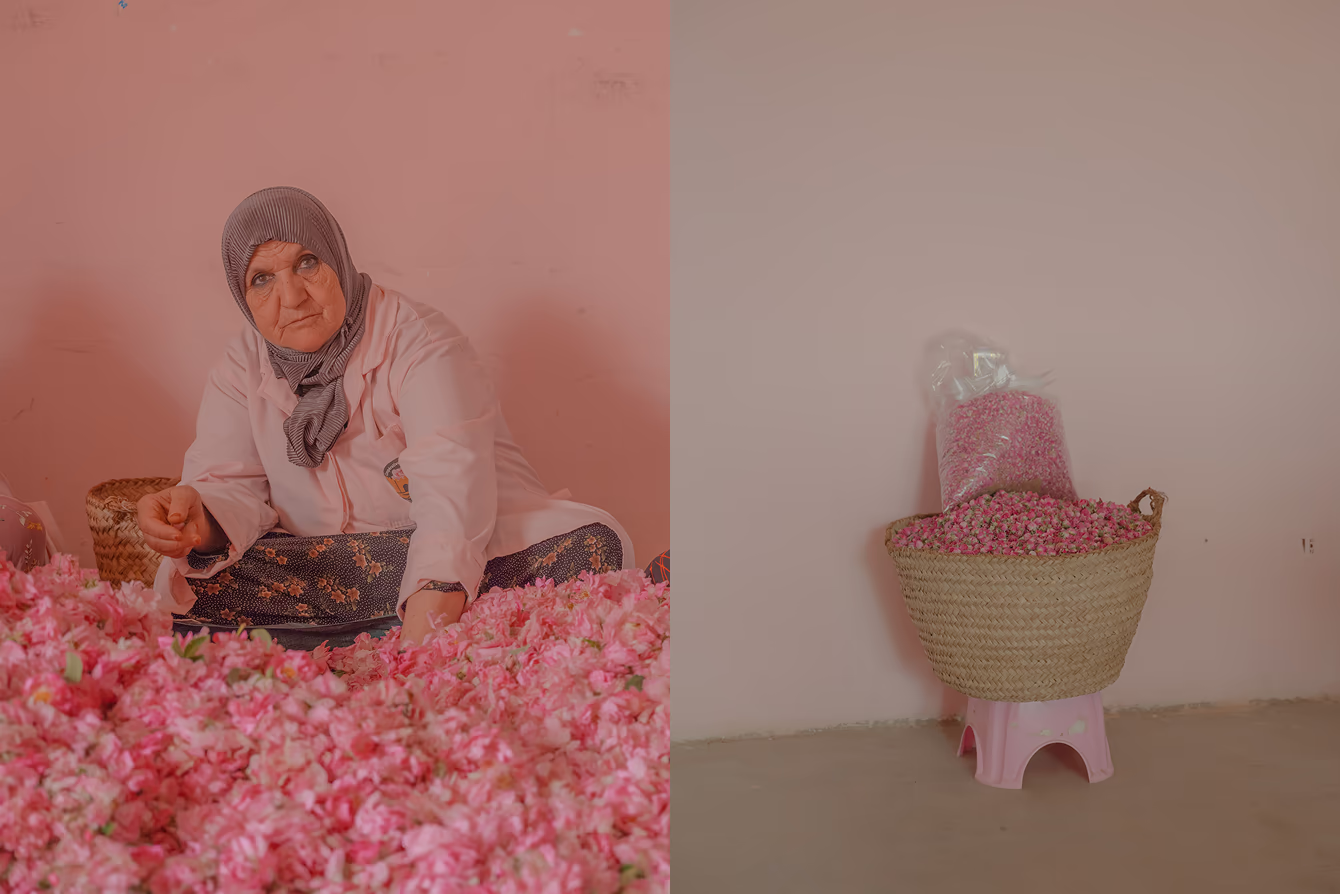
At the same time, finding the right opportunity doesn't mean you'll be selected.
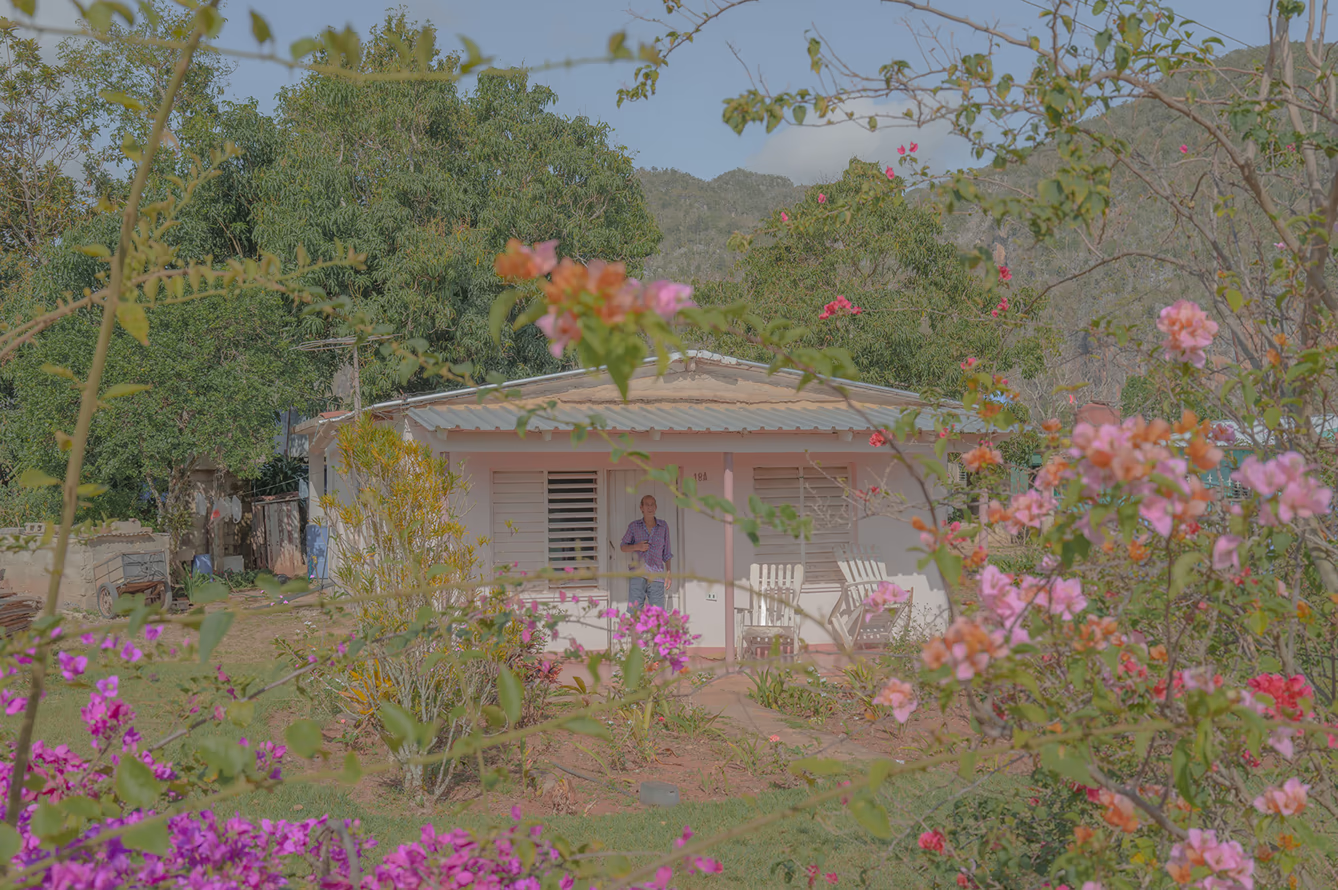
I tried to fit my ongoing Flower(s) project into many different open calls and grants, with very little success. On one occasion, I found an opportunity whose theme seemed almost perfectly aligned with the project. I genuinely thought I had a good chance. But I didn't get it. Someone else did. The sometimes frustrating reality is that there are millions of photographers making good work and applying for the same opportunities. Sometimes your project is strong, the fit is right and you've put together the best submission you can, and someone else is still chosen.
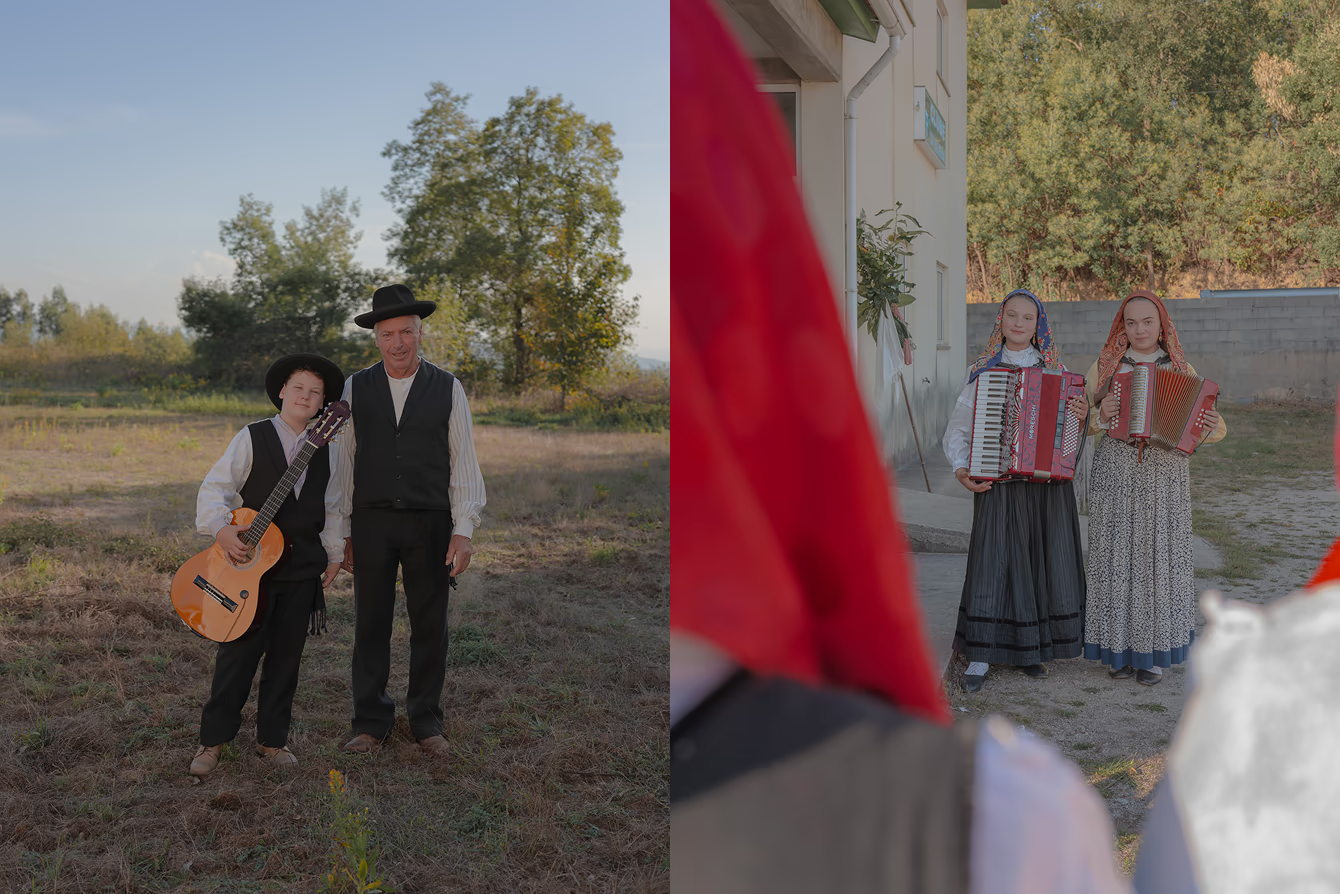
A few months later, the company behind that same opportunity contacted me and hired me to photograph a project in Portugal. I hadn't been selected, but the work had been seen and remembered. We tend to think of open calls as having two outcomes: accepted or rejected. But submitting your work still puts it in front of people. A curator may remember your name, a juror may follow what you do next, or an organization may think of you for something different later on. Of course, most rejections will simply be rejections. Occasionally, though, submitting work creates an opportunity you couldn't have predicted.
One thing I understand much better now is that a good photograph is not necessarily a strong competition photograph. When you look through hundreds or thousands of submissions, you become very aware of how many photographs contain the beginnings of something interesting without ever going much further.
I see this in my own photography too. You notice an unusual person, beautiful light, an interesting arrangement of bodies, and you take the photograph. Maybe you stay there for ten minutes because you know there is potential. But nothing else happens. The people separate, the light changes, an ugly car gets into the scene. You found the scene, but the scene never quite became a moment. I've become more interested in asking whether there is enough inside an image to keep someone looking after they've understood what initially attracted them.
Sometimes, the photographs we submit simply aren't strong enough. I have submitted photographs in the past that I was convinced were strong and that I now wouldn't consider entering. When you look through thousands of submissions, you realise how many images rely on very little: an interesting person, a colourful wall, a reflection, a silhouette, good light. There may be nothing technically wrong with them, but there is also very little to discover after the first glance.
There is a big difference between “I like this photograph”, “this is a good photograph” and “this is one of my strongest photographs and worth submitting against thousands of others”. I'm not sure we always make that last distinction.
Seeing a large number of submissions together makes you realise how many photographs rely on the same ideas and visual solutions. What initially seemed like an unusual moment starts to feel familiar after you've seen twenty variations of it. A composition that felt clever loses its impact when several other photographers have found similar solutions. This doesn't make those photographs bad, but it becomes much clearer how difficult it is for an image to distinguish itself. You begin to notice which photographs depend mainly on a trick, and which ones have something more particular to say.
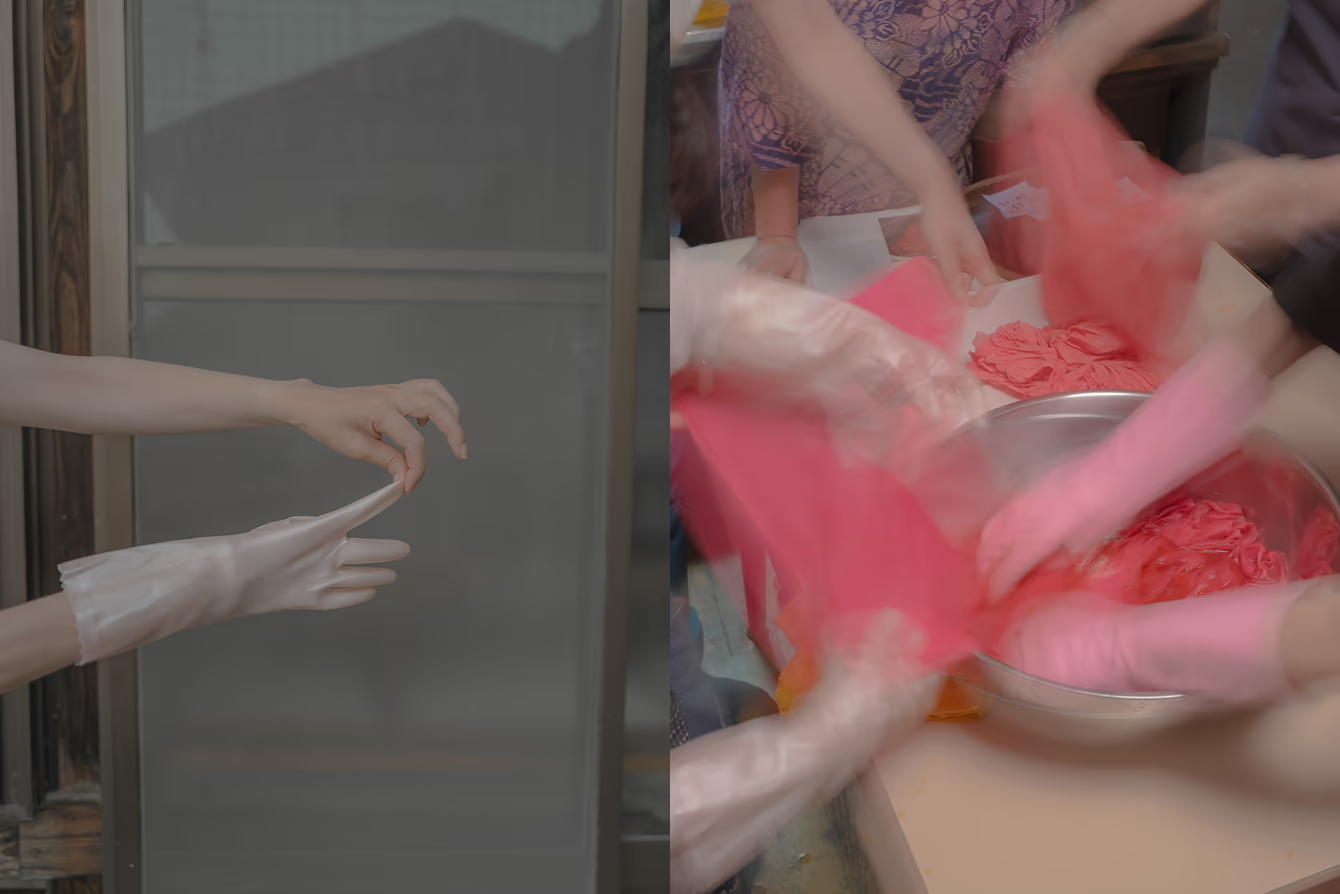
Editing your own work is difficult because we never see our photographs in the same way as everyone else. We know too much. This is why showing your work to other people can be extremely useful, although choosing the right people matters. Ideally, you want someone whose judgement you trust, who understands photography and who is comfortable telling you that an image you love isn't very good. Your mother telling you, “That's beautiful, honey,” may be good for morale, but probably isn't going to improve your edit.
Without providing any context, show them the image first. See what they notice, where they look, what they misunderstand, which photographs they return to and where they lose interest. You don't have to follow their advice. I've ignored plenty of good advice and probably accepted some bad advice too. But other people can help you see where your own attachment to an image is getting in the way.
Distance helps, too. I am much worse at editing photographs soon after making them. The experience is still too present, and I tend to confuse how excited I was when I took the photograph with how successful the photograph actually is. A few months later, some images become stronger and others much less interesting. The photograph hasn't changed, but my relationship to it has.
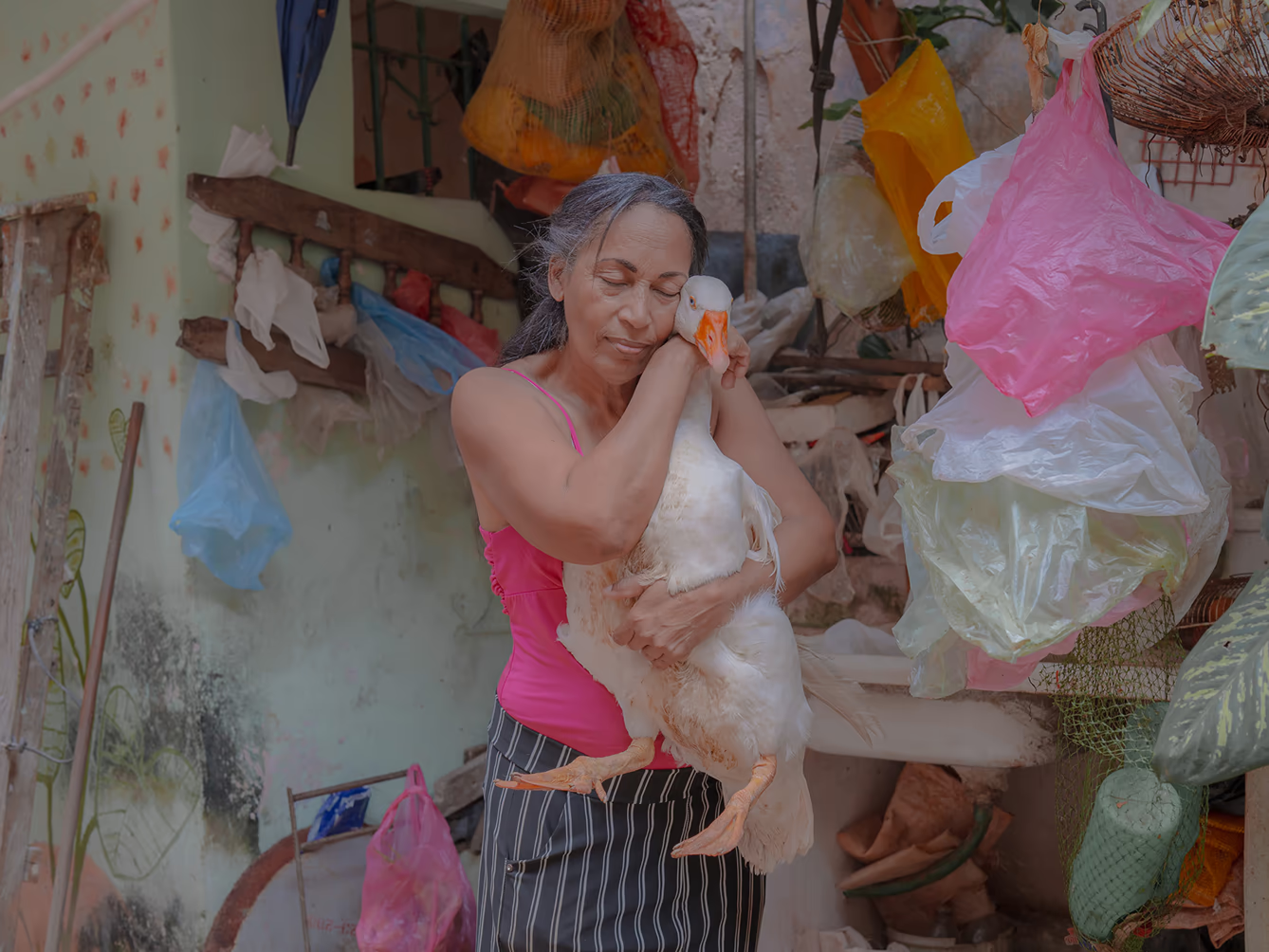
Choosing photographs for an open call is not quite the same as choosing your favourite images. For a single-image competition, I try to think about how the photograph will function on its own. Does it need context from the images around it? Is what I find interesting actually visible in the frame? Does it reward looking for more than a few seconds?
Series submissions create a different problem. When photographers are allowed to submit between ten and fifteen photographs, many submit fifteen. I understand the instinct: if ten photographs are good, surely adding five more makes the project stronger. Besides, if I've paid for fifteen photographs, I'm going to use all fifteen photographs.
But when you are reviewing submissions, you quickly notice that this isn't how a series works. Sometimes I get to image nine and feel I understand the project, and the next six photographs simply repeat what I already know. Other times, one or two noticeably weaker photographs make me question the photographer's judgement about the entire edit.
This doesn't mean every photograph needs to work as a strong single. Some of my favourite series contain simpler images that would probably never succeed on their own, but within the sequence they create rhythm, provide information, introduce a change of pace or connect other images.
Before submitting a series, I find it useful to remove the weakest photograph and look again. Then remove another. At what point does the project actually lose something? If the answer is that it doesn't, those images probably weren't necessary.
Project statements matter, particularly when a series deals with a subject that requires context. A good statement can help the jury understand where the work was made, why you made it and what is at stake. But the writing and the photographs have to support each other.
I've seen strong work buried under statements so complicated that it becomes difficult to understand what the photographer is actually trying to do. I've also seen good series accompanied by statements that say almost nothing about the work, as if the photographer was reluctant to explain it or felt the photographs should speak entirely for themselves. The images may be strong enough to hold your attention, but when a statement is requested, not taking it seriously can leave the jury without context that might help them better understand the project.
Write clearly and be specific. Explain what the project is about, why you made it and anything the jury genuinely needs to know in order to understand the work. Then read the statement again and look for the sentences that could apply to hundreds of other photography projects.
The same principle applies to the practical side of submitting. Follow the requirements, respect image limits, check filenames and file sizes, provide captions when they are requested, and go through the entire submission over and over again, ideally with some time in between, before pressing submit.
When thousands of submissions are being reviewed, clarity matters. You want the jury spending their attention on your photography, not trying to work out what you submitted.
Strong photographers get rejected from open calls all the time, and seeing the selection process from the other side has made the reasons much clearer to me.
Sometimes the work doesn't fit the opportunity. Sometimes a photographer submits a good image, but another photograph dealing with a similar idea is stronger. A jury may be building a shortlist or exhibition and already have several projects occupying the same territory. There may be practical limitations on how many photographers can be selected. And sometimes, it simply comes down to taste.
The further a competition progresses, the less useful it becomes to think of the decisions as separating good photography from bad photography. At the final stages, everyone remaining may be producing strong work. The jury is choosing between different kinds of good photography, and different people will make different choices.
But there is another reason not to take rejection too personally: not every juror will be equally good at judging. Being a great photographer, curator or editor does not automatically make someone a great juror. Judging requires a slightly different set of skills. You need to be able to look beyond your own preferences, give unfamiliar work enough time, compare photographs fairly and remain open to changing your mind. Some people are better at this than others.
Jurors also bring different frames of reference to the process. One may compare a submission primarily with the other photographs in front of them, while another is thinking about decades of work made within the same genre or subject. A photograph that feels fresh and exciting to one person may feel familiar to someone who has seen many similar projects before. Some jurors are extremely open to work that looks nothing like their own; others respond most strongly to images that align with their interests and ideas about what photography should be. Reputation and experience don't necessarily remove those preferences.
A rejection is not an authoritative assessment of your work. Your photographs were looked at by a particular group of people, at a particular moment, alongside a particular group of submissions. Another jury might have made completely different choices.
Of course, it is also possible that the work simply wasn't strong enough. Learning to live with both possibilities—that a jury may have overlooked good work, and that we may be overestimating our own—is probably one of the harder parts of submitting to open calls.
I've submitted photographs because I loved the experience of making them and assumed that feeling was visible in the image. I've kept images in projects because I was emotionally attached to them or knew how difficult they had been to make, even when they weren't helping the edit.
I've mistaken visual consistency for a strong series, assumed that jurors would understand context that wasn't actually present in the photographs, and sent the same work to very different opportunities without thinking enough about whether it belonged there.
And, like most photographers, I've taken rejection personally.
I still make some of these mistakes. Seeing the process from the organizational side hasn't suddenly made me objective about my own photography. If anything, it has made me realise how difficult it is to see your own work clearly.
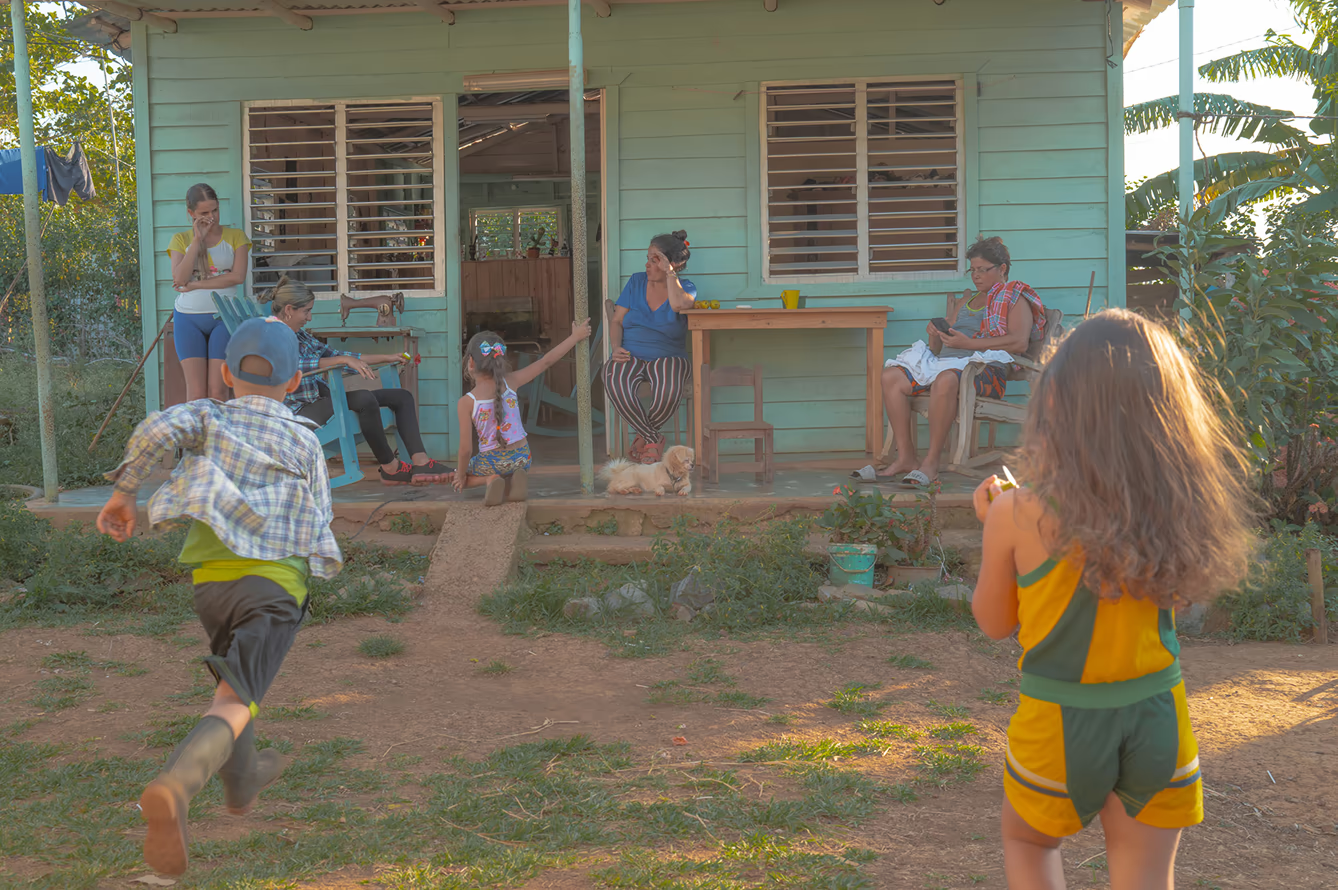
For a long time, I kept submitting the same street photograph to competitions. I genuinely thought it was one of the best street photographs I had ever made, and every time it was rejected I found reasons to explain it. Perhaps it didn't fit what was currently valued in street photography. Maybe other styles were more popular, or juries were looking for a different kind of image. Every time the photograph was rejected, I found a new explanation. For quite a while, the only explanation I wasn't willing to consider was the photograph.
But after enough time had passed, I looked at the photograph again and had to consider a much simpler explanation: maybe it just isn't that good. I still like the image. I understand why I was attached to it, and I don't think it suddenly became a bad photograph. But I had overestimated its strength. I was comparing it with my own work and with how I felt when I made it, rather than with the strongest street photography being made and submitted at the time.
I think one of the hardest things to learn is when to stop explaining rejection through external factors and look again at the work itself. Sometimes a photograph is overlooked. Sometimes the jury isn't right for the work. Sometimes the prevailing tastes of a genre work against you. And sometimes the photograph you are defending simply isn't as strong as you think it is.
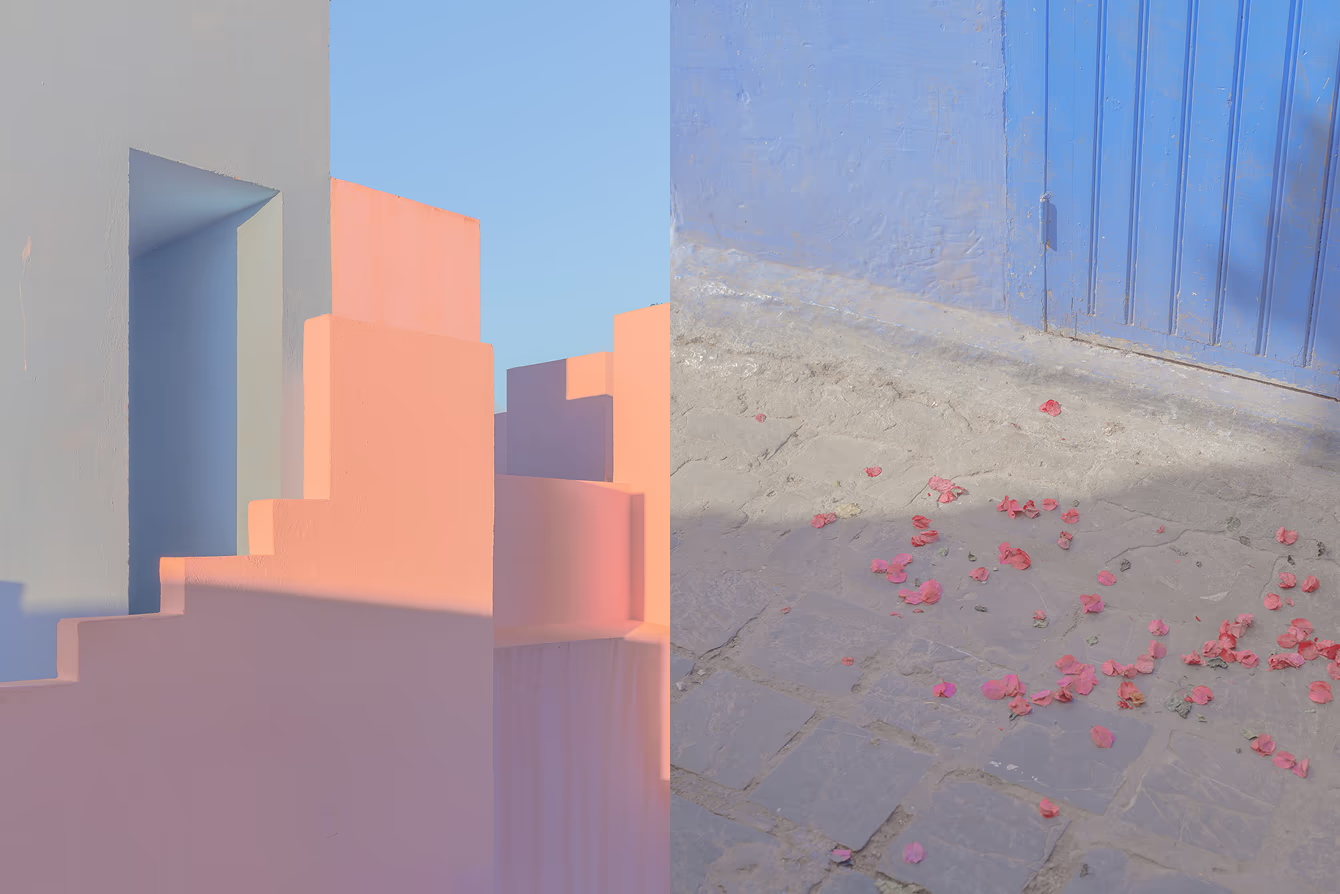
I still don't know how to win photography competitions. What has changed is that I've stopped thinking the answer is simply to submit more. I've become much more selective about where I send my work. I spend less money on open calls, try to be more realistic about whether an opportunity is right for me, and increasingly ask people whose judgement I trust to look at the work before I send it.
I'm also trying to compare my photographs with a stronger point of reference, rather than only with the rest of my own archive, and to recognise when I'm holding onto an image because of my attachment to it rather than because it is genuinely one of my strongest. I've become better at recognising when a scene had potential but never quite became the photograph I hoped it would be.
None of this guarantees that the work will be selected, but I think it has made me better at deciding when a submission is worth making in the first place. Once I press submit, the final decision belongs to someone else. Before pressing submit, there is still quite a lot I can do.