
Growing a photography business is easier when you don't have to figure everything out alone.
Collaborating with fellow creatives can help you discover new techniques, connect with potential clients, make new friends, and open doors to opportunities you might otherwise miss.
Key takeaways
Collaborating with other photographers and creative professionals can help grow your photography business by expanding your network, strengthening your skills, and creating new opportunities for referrals and paid work. Successful collaborations start with shared goals, complementary expertise, and clear expectations that benefit everyone involved.
- Expand your reach: Partner with photographers, stylists, designers, and other creatives to introduce your work to relevant audiences and potential clients.
- Develop your skills: Use peer feedback, shared photography sessions, and creative challenges to improve your techniques and explore new approaches.
- Find the right collaborators: Look for complementary skills, shared creative goals, and professional reliability. Use VSCO Search, photography communities, and local events to connect.
- Set clear expectations: Agree on project goals, responsibilities, timelines, compensation, image usage rights, and attribution before collaborating.
- Turn collaborations into business opportunities: Build portfolio projects, exchange referrals, host workshops, and evaluate results to identify partnerships worth continuing.
What you'll learn in this guide:
- Why Collaborating With Peers Accelerates Business Growth
- Expand Your Reach Through Shared Audiences
- Strengthen Your Skills Through Real-Time Feedback
- Choose Collaboration Partners Who Complement Your Strengths
- Choose Collaboration Formats That Support Your Business Goals
- Make Every Collaboration More Effective
- Avoid Common Collaboration Mistakes
- Photography Collaboration FAQs
Collaborating with photography peers helps you develop new skills while expanding your professional network.
Every project gives you a chance to learn something new, connect with potential clients, and build relationships with people who understand your industry.
Three benefits stand out:
- Greater visibility: Collaborators introduce your work to audiences you might not reach on your own, helping you connect with prospective clients and creative partners.
- Faster skill development: Sharing techniques, reviewing images, and observing different workflows helps you improve your craft through practical experience.
- More business opportunities: Trusted peers can recommend you for projects, share resources, or bring you into assignments that match your strengths.
The key is to approach collaboration as a two-way exchange.
When everyone brings something valuable to the table, you can create stronger work and build relationships that continue long after a project ends.
Every collaborator brings their own network of clients, followers, and industry connections.
Working together introduces your photography to people who may never have discovered your portfolio otherwise.
For example, a wedding photographer could team up with a florist and a wedding planner for a styled shoot.
Each professional gains fresh portfolio content, while the finished images give all three collaborators something to share with their audiences.
You can apply the same approach across photography niches:
- Partner on a styled shoot: Work with models, makeup artists, stylists, or event planners to create portfolio images that showcase everyone's expertise.
- Co-host a workshop: Team up with a photographer who specializes in a different technique to attract attendees, share knowledge, and introduce your services to a new audience.
- Create a brand campaign: Collaborate with a local business on lifestyle or product photography that benefits both your portfolio and its marketing efforts.
- Cross-promote complementary services: Connect with professionals whose clients may also need photography, such as designers, creative agencies, or event vendors.
Peer collaboration creates opportunities to learn through direct experience.
Try these three approaches:
- Start a critique circle: Meet regularly with a small group of photographers to review recent work. Ask specific questions about composition, lighting, editing, and storytelling rather than relying on general feedback.
- Organize shared sessions: Split costs for locations, props, or talent, then take turns capturing, assisting, and observing. Seeing how another photographer directs a session or adapts to changing conditions can teach you as much as taking the photos yourself.
- Set creative challenges: Choose a theme, technique, or deadline and create individual responses to the same brief. Comparing the results can reveal new approaches and push you beyond your usual style.
You can also use VSCO Spaces to keep conversations going between in-person sessions. A dedicated space gives collaborators a place to exchange ideas, discuss work, and share inspiration without relying entirely on public social feeds.
For projects involving multiple photographers or event participants, VSCO Collaborative Galleries make it easy to bring everyone's images together.
Enable a dedicated collaborative section in your gallery, then invite others to upload their photos using your gallery link and password.
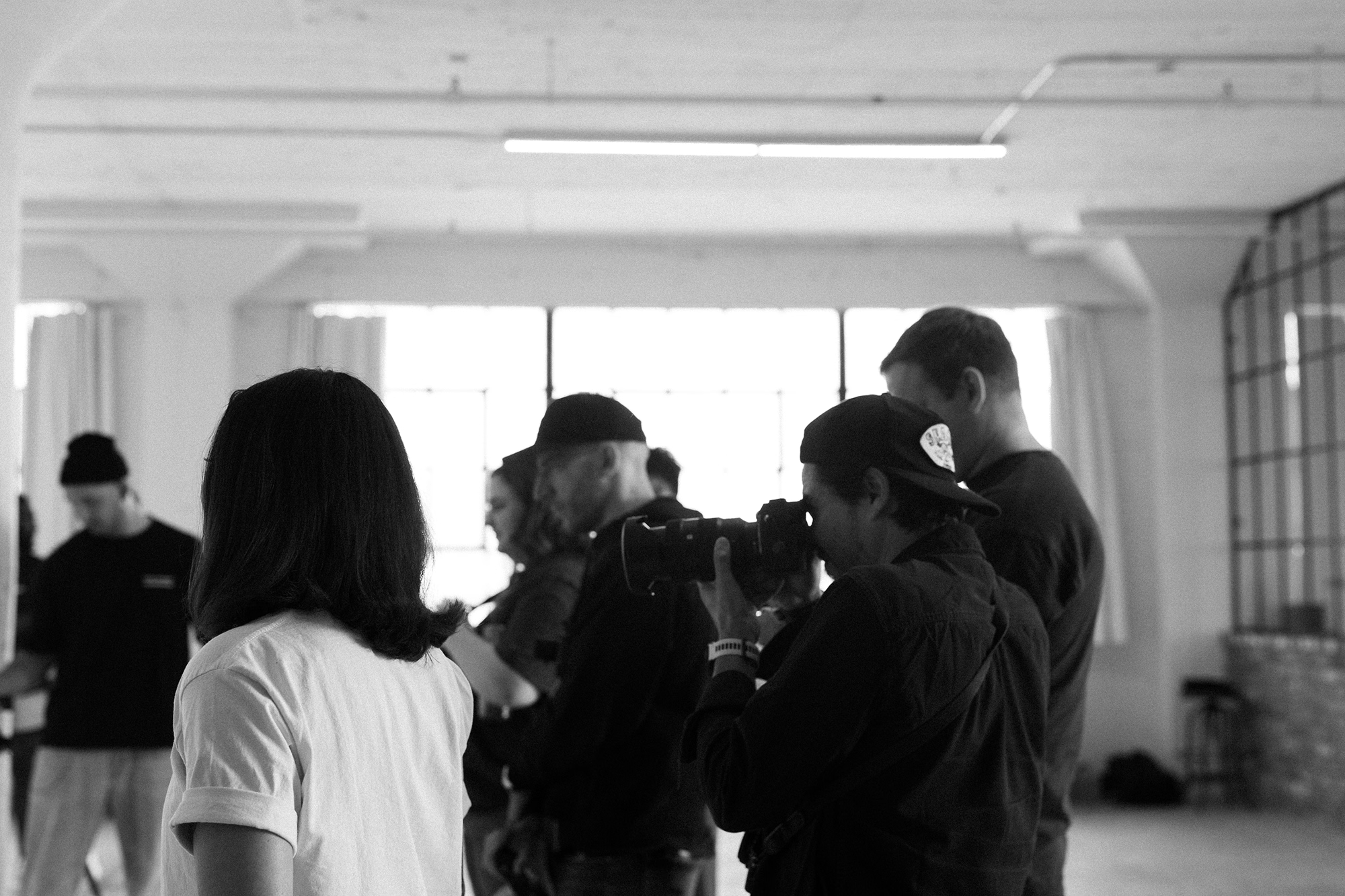
Look for people whose skills, creative interests, and professional values complement your own.
The right collaborators help you explore new possibilities while respecting the style and direction that make your work distinct.
A good place to start is VSCO Search, where you can discover photographers whose work aligns with your creative interests and explore different styles and specialties. You can also connect with other working photographers through The Freelance Photographer, a resource for building your photography career and learning from fellow creatives.
Look for complementary skills and shared goals
Think about where another professional could help you expand your capabilities.
A portrait photographer might collaborate with a stylist to create more polished editorial work, while a product photographer could team up with a designer to develop stronger commercial campaigns.
Before committing, consider:
- Creative alignment: Do your visual styles, interests, and working approaches fit together?
- Complementary expertise: Does each person bring a distinct skill, resource, or perspective?
- Shared objectives: Are you both looking to develop your portfolios, reach new clients, or generate revenue?
- Professional reliability: Does the person communicate clearly, respect deadlines, and follow through on commitments?
You can always start with a small project, such as a test shoot or shared mood board. This gives everyone a chance to see how the working relationship feels.
Set boundaries and expectations early
Discuss responsibilities, timelines, image usage, credit, and compensation before work begins.
If the project involves paid clients, clarify who manages communication, delivers the final images, and handles any revisions.
Put important agreements in writing so everyone understands the arrangement.
It's also worth considering safety and comfort when meeting new collaborators:
- Meet in an appropriate public or professional setting when possible
- Verify relevant portfolios and references
- Make sure everyone understands the session’s expectations
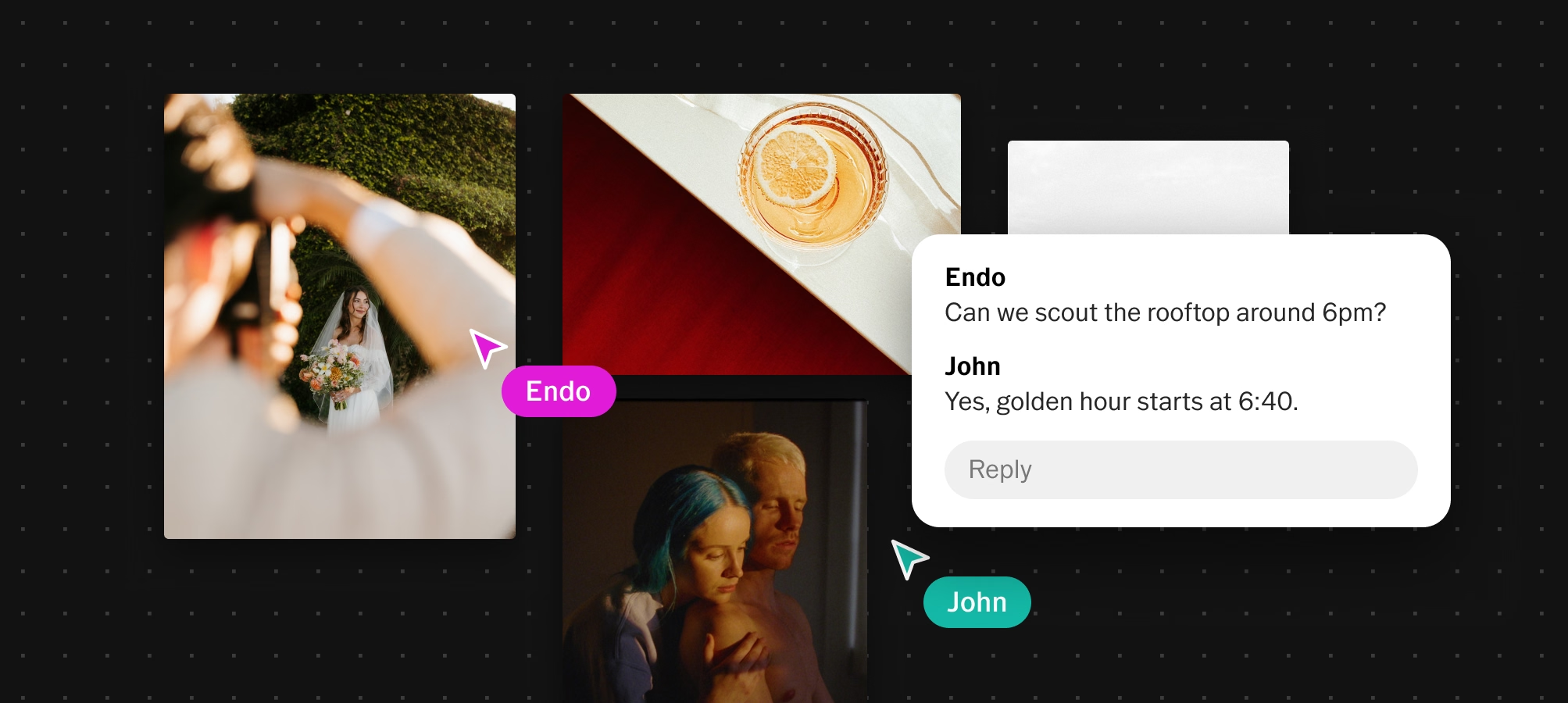
The best collaboration format depends on what you want to accomplish. Start by identifying the outcome you want, then choose a format that helps you get there.
Co-create portfolio and passion projects
Personal projects give you room to experiment without the constraints of a client brief.
By pooling equipment, locations, props, and creative ideas, you can develop concepts that might be too expensive or time-consuming to pursue alone.
These projects can also help you explore new specialties. A portrait photographer interested in fashion, for instance, could collaborate with a stylist and model to create an editorial series that appeals to a different client base.
Use a shared mood board to align on references, colors, locations, and creative direction before the session.
Afterward, organize the final images into a dedicated gallery so collaborators can review the work and share approved selections.
Exchange referrals and resources
A trusted professional network can help you find opportunities that would otherwise pass you by.
If you're booked for a date, receive a request outside your specialty, or need additional help on a large assignment, peers can connect you with someone qualified. You can return the favor when a suitable opportunity comes your way.
Resource sharing also saves time. Exchange pricing templates, location recommendations, workflow tips, or lessons learned from recent projects.
These practical conversations can help you avoid common mistakes and make better business decisions.
Host workshops and community events
Photo walks, mini-workshops, and local exhibitions offer another way to build relationships while demonstrating your expertise. Consider:
- Hosting a beginner-friendly photo walk with a landscape photographer
- Teaching a lighting workshop with a studio specialist
- Organizing a pop-up exhibition with other local artists
You can also explore The Freelance Photographer for hands-on workshops, group coaching, and opportunities to learn alongside other working photographers.
Its professional community offers a way to exchange ideas, get feedback, and build relationships with peers who understand the challenges of running a photography business.
Each event introduces participants to your work and gives you a reason to connect with potential clients and collaborators.
A few simple processes can help you protect your time, prevent misunderstandings, and make each project more valuable.
Before the first session, agree on what you're creating and how you'll measure success.
- Set a clear objective: Decide whether the project is intended to build your portfolio, generate leads, produce paid work, or develop a new skill.
- Assign responsibilities: Determine who handles planning, equipment, talent, capturing, editing, and delivery.
- Establish a timeline: Set dates for preparation, the session, editing, and final delivery, leaving room for unexpected changes.
- Agree on usage rights: Document image ownership, licensing, attribution, exclusivity, and any revenue-sharing arrangements.
A shared project workspace can help everyone keep track of these details.
Once the project wraps, take a few minutes to evaluate what worked.
- Did the collaboration bring relevant visitors to your portfolio?
- Did you gain useful images, receive inquiries, generate revenue, or learn a technique you can apply to future work?
Reviewing these outcomes helps you decide which relationships and formats are worth repeating.
Share credit publicly, tag collaborators where appropriate, and communicate how you'll use the finished images.
If the project went well, discuss what you might create together next.
A single collaboration can become the start of a valuable professional relationship when everyone feels respected and sees a clear benefit.
Collaboration can create momentum, but only when the arrangement makes sense for your business. Watch for these common pitfalls:
- Choosing partners based on follower count: Prioritize relevant audiences and complementary expertise over popularity.
- Leaving expectations vague: Clarify roles, deadlines, image rights, and compensation before starting.
- Undervaluing your work: Weigh unpaid projects against the portfolio value, exposure, or experience they offer.
- Treating every interaction as a sales pitch: Build genuine relationships by focusing on mutual respect and shared creative interests.
- Failing to follow up: Share results, thank collaborators, and stay in touch about future opportunities.
Being selective allows you to invest your energy in collaborations that support your creative development and long-term business goals.
What are the benefits of collaborating with other photographers?
Collaborating with other photographers helps you exchange creative ideas, improve your skills, and reach new audiences. You can also share resources, exchange referrals, and discover opportunities to work on projects you might not take on alone.
How do I find collaboration partners as a photographer?
Start by exploring VSCO Search to discover photographers whose work, specialties, and creative interests align with yours. You can also connect with other creatives through VSCO Spaces, explore The Freelance Photographer community, and attend local photography workshops, meetups, or events. Look for collaborators with complementary skills, shared goals, and a professional approach to communication.
How can photographers collaborate to grow their businesses?
Photographers can grow their businesses through styled shoots, shared workshops, referral networks, brand campaigns, and creative projects. These collaborations help you build your portfolio and connect with potential clients while strengthening professional relationships.
Should photographers charge for collaborative projects?
It depends on the project's goals and what each person contributes. Some collaborations are unpaid exchanges that offer portfolio images, experience, or exposure, while others involve compensation or shared revenue. Always discuss expectations, responsibilities, image usage, and payment before getting started.
Turn Creative Connections Into Your Next Growth Move
Collaborating with peers can help you sharpen your skills, reach new audiences, exchange referrals, and take on creative opportunities you might not pursue independently.
Start with one manageable project. Reach out to a photographer whose work you admire, connect with a local creative professional, or organize a small session around a shared idea.
Set clear expectations, make the experience valuable for everyone involved, and use what you learn to guide your next step.
VSCO offers tools to help you turn creative connections into lasting collaborations. Use VSCO Search to discover photographers, VSCO Spaces to exchange ideas, VSCO Canvas to develop creative concepts, VSCO Galleries to share finished images, and VSCO Sites to showcase your work to prospective clients.
With the right relationships and a thoughtful approach, collaboration can become a practical part of how you create, connect, and grow your photography business.