Your photography portfolio is more than a collection of images, it’s a representation of your visual identity.
Every frame speaks to your eye, your process, and the kind of work you want to create next.
Whether you’re reaching out to publications, agencies, or brands, a strong portfolio isn’t just a showcase, it’s an invitation to collaborate.
In this guide, we’ll show you how to shape a portfolio that highlights your skills, expresses your perspective, and positions you as the photographer clients can’t wait to work with.
Key answers
A strong freelance photography portfolio showcases your best work, establishes a recognizable creative style, and helps attract the clients and paid photography opportunities you want. To build a professional photography portfolio, select your strongest images, organize them around your specialties, and present your work on an easy-to-navigate website with clear contact information.
- Define your target clients: Tailor your portfolio to the photography work you want to book, whether that's commercial, editorial, portrait, wedding, or brand photography.
- Curate your best photos: Start with approximately 15–25 strong images in your main gallery, prioritizing quality, consistency, and relevance over quantity.
- Show your style and experience: Include cohesive projects, personal work, and relevant client assignments that demonstrate your creative perspective and technical skills.
- Organize your portfolio strategically: Lead with your strongest images, group related work by project or specialty, and add brief descriptions that explain your role and creative process.
- Create a professional portfolio website: Use a platform like VSCO Sites to showcase your photography, organize projects, and make it easy for potential clients to contact you.
- Make your work discoverable: Optimize project titles, photography specialties, and location information for search engines, and promote your portfolio through social media, creative communities, and direct outreach.
- Keep your portfolio updated: Regularly replace outdated work, highlight recent projects, and refine your portfolio to reflect the freelance photography opportunities you want next.
What you'll learn in this guide:
- 1. Define Your Goals and Audience
- 2. Curate With Purpose: Less Is More
- 3. Let Your Vision Lead
- 4. Show Versatility Without Losing Your Identity
- 5. Organize Thoughtfully: Flow Matters
- 6. Include Context and Details
- 7. Give Your Portfolio a Home: Your Website
- 8. Put Your Portfolio in Front of the Right Eyes
- 9. Keep Your Portfolio Updated
- 10. Extra Tips to Elevate Your Freelance Game
- Photography Portfolio FAQs
A strong freelance photography portfolio showcases your best work, communicates your creative style, and makes it easy for potential clients to understand your experience and hire you.
- Define your audience: Tailor your portfolio to the clients and photography opportunities you want to attract.
- Curate your best images: Start with approximately 15–25 strong photos in a focused gallery rather than showing everything you've created.
- Show your creative perspective: Include cohesive projects, personal work, and examples that demonstrate your unique style.
- Build a professional website: Make your portfolio accessible on desktop and mobile, with clear contact information and an easy way to inquire.
- Improve discoverability: Share your work through relevant communities, search engines, social platforms, and direct outreach.
Before you start curating images, think about who you want to reach.
Freelance opportunities come in many forms, and each audience has different expectations:
- Editorial Clients: Magazines, online publications, and niche blogs look for storytelling, cohesion, and a distinctive visual voice. They want to see that your work can carry a narrative and align with their aesthetic.
- Commercial Clients and Brands: From startups to established companies, these clients prioritize versatility, technical precision, and imagery that clearly communicates their brand across social, digital, and marketing channels.
- Agencies and Studios: Creative agencies, production houses, and talent agencies hire photographers who can adapt quickly, understand trends, and deliver high-quality work under deadlines. They often value a defined style that can be pitched to multiple clients.
- Nonprofits and Cultural Organizations: These clients often hire for campaigns, events, or exhibitions. They look for photographers who can capture emotion and authenticity while representing a cause or community effectively.
Clarifying your goals will help you curate your work intentionally.
A portfolio built for a fashion magazine will look different from one meant for lifestyle brands, and tailoring your portfolio to your target audience makes your work more compelling to the people who can hire you.
Consider the photography specialties you want to be known for, too.
Whether you're a portrait, product, fashion, wedding, or commercial photographer, your portfolio should make your experience and interests clear.
One of the most common portfolio missteps is trying to show it all. Your portfolio isn’t an archive, it’s a highlight reel of your best work.
For a single portfolio gallery, aim for around 15–25 images that truly represent your vision and the type of freelance work you want to attract.
There's no universal ideal number, and you can always dive deeper into specific themes, projects, or case studies in separate galleries.
When choosing what to include, focus on three things:
- Craft and Precision: Every image should demonstrate mastery. That means intentional focus, thoughtful composition, and controlled exposure. Editors and clients notice attention to detail.
- Relevance to Your Goals: Only show work that aligns with the opportunities you’re pursuing. If you’re chasing commercial product shoots, a sweeping landscape, though beautiful, might not strengthen your portfolio.
- Visual Cohesion: Your images should feel like they belong together. Consider themes, color palettes, and the overall rhythm of your portfolio. Cohesion signals professionalism and a clear point of view.
Ask yourself: Would I stand behind this image in front of a client? Does it advance the story I’m trying to tell? If the answer is no, it doesn’t belong.
Curating with intention is what turns a collection of photos into a portfolio that gets noticed.
Read more: How to Choose a Photography Niche and Build a Portfolio That Attracts Clients
A strong portfolio does more than show skill, it communicates how you see the world.
Not every photo needs to tell a complete story, but each frame should feel intentional and part of a larger conversation about your vision.
- Series Work: Think in sequences or mini-projects. Group images around a theme, mood, or concept to show depth and creative thinking. This approach signals that you can sustain an idea across multiple frames, something editors and clients value.
- Personal Projects: Your passion projects are often the clearest window into your style. Including them alongside client work demonstrates initiative, curiosity, and the perspective that sets you apart from other photographers.
- Consistency: Even if your portfolio spans genres or subjects, your own unique, creative thread should tie it all together. Cohesion makes your work feel intentional rather than random.
Freelance clients hire photographers for more than technique.
They hire for the perspective, voice, and creative choices you bring to each project. Let your portfolio tell that story.
If you're building a portfolio without much paid experience, don't overlook personal or collaborative projects.
A thoughtfully planned independent photoshoot can demonstrate your abilities just as effectively as commissioned work, provided you represent the project accurately.
Versatility is a strength, but only when it highlights your perspective — not dilutes it.
Your portfolio should show range while still feeling unmistakably yours.
- Lighting and Composition: Demonstrate control in different settings, from natural light to studio setups. This shows that you can adapt without compromising your aesthetic.
- Subjects and Styles: Mix portraits, environmental shots, lifestyle imagery, or other relevant genres to reflect your range. Each image should still carry your signature touch.
- Mood and Storytelling: Include images that evoke emotion or tell diverse stories. Show clients that you can handle different narratives while maintaining a consistent voice.
The goal isn’t to show you can do everything.
Prove you can do everything that matters, in a way only you can. Even in variety, your style should shine through.
For photographers working across multiple specialties, consider organizing your portfolio into focused galleries.
This allows potential clients to quickly find relevant examples without having to navigate work unrelated to their needs.
How you present your work matters just as much as what you show.
A well-structured portfolio guides viewers through your vision, creating a rhythm that keeps them engaged from the first image to the last.
- Lead with Strength: Open with an image that immediately captures attention and sets the tone. The first frame should feel like a statement, something that defines who you are as a photographer.
- Sequence with Intention: Consider arranging your work by theme, story, or project so your viewer can follow a clear thread. Pay close attention to how images play off each other, both side by side and within the bigger picture of your portfolio.
- End with Resonance: Close on an image that lingers, one that encapsulates your style or emotional tone. The last impression should feel deliberate, not accidental.
Think of your portfolio like a film reel or playlist.
Pacing matters. Avoid repeating similar shots and aim for flow, a rhythm that reflects your sensibility as an image-maker and invites the viewer to keep scrolling.
When building an online portfolio, also consider navigation. Visitors should be able to find your work, learn about your services, and contact you without searching through multiple pages.
While images are the main focus, providing context adds credibility.
Including short captions or project descriptions can help clients understand your creative process:
- Project Details: Explain the concept, your role, and the outcome. Keep it concise, clients want clarity without long narratives.
- Technical Notes: If your audience values specific skills or gear, highlight the techniques, equipment, or creative challenges you navigated to showcase your expertise and problem-solving.
- Client Collaborations: When applicable, note who the work was for. Recognizable brands or publications add legitimacy.
- Creative Process: Share how you developed the concept, planned the photoshoot, or approached a particular creative challenge.
- Project Outcomes: When relevant and approved to share, explain how the images were used, whether in a marketing campaign, publication, product launch, or brand identity project.
This additional layer of information allows potential clients to see not just what you shot, but how you think and operate professionally.
Project descriptions also give your website useful written context. Including relevant details about your photography specialties, services, and project types can help search engines better understand your work.
In a digital-first world, your portfolio needs to travel as fast as your ideas.
Clients and editors expect to see your work instantly, on any device.
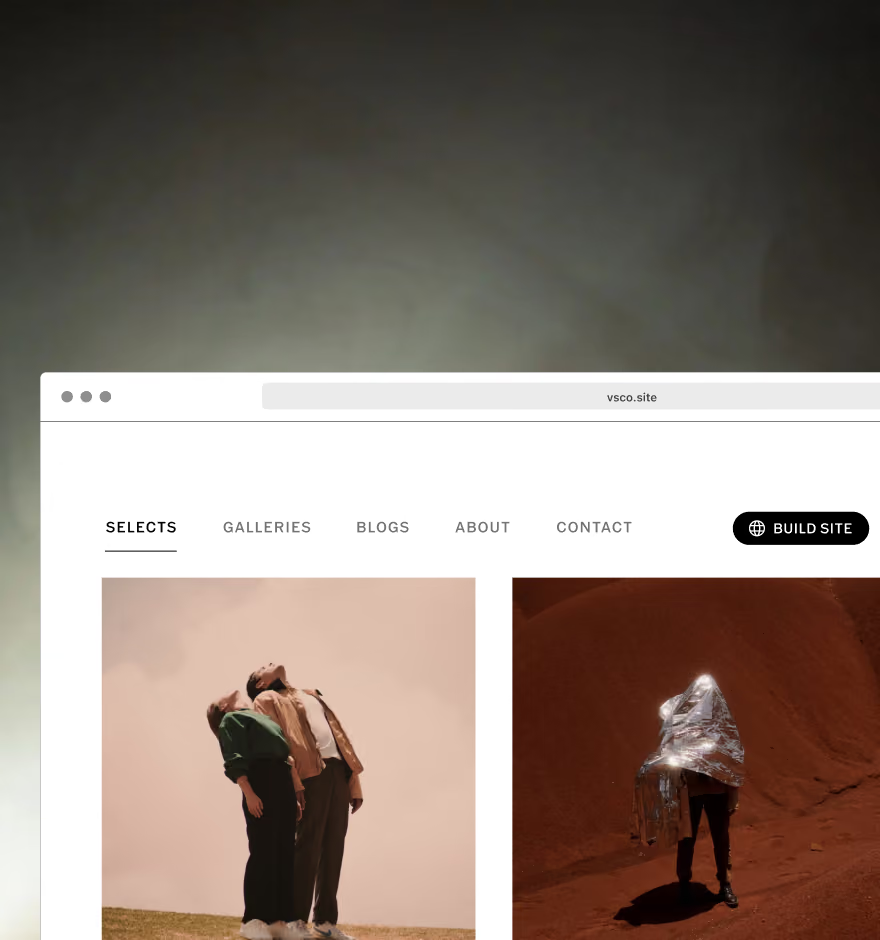
That's where VSCO Sites comes in.
A dedicated photography website gives your work a professional home beyond social media and makes it easier for potential clients to discover your portfolio, explore your experience, and reach out about future projects.
- Polished Presentation: Build a clean, visually compelling site that feels like an extension of your work, no coding required.
- Smooth Navigation: Organize photos, Albums, Blogs, and project galleries so viewers can explore your work and learn more about your experience.
- Seamless Integration: VSCO Sites connects directly to your VSCO Profile, making it easy to publish your work and keep selected portfolio content updated automatically.
- Mobile Ready: Whether clients are scrolling on a phone or tablet, your portfolio stays sharp, immersive, and professional.
- Custom Domain: Photographers with eligible VSCO memberships can connect their own domain for a more personalized, professional website address.
- Client Inquiries: Use a contact form connected to VSCO Workspace to help turn portfolio visitors into potential clients and manage inquiries in one place.
- Complete Project Galleries: Add public VSCO Galleries to your Site to showcase complete photography projects alongside your selected portfolio images.
VSCO Sites is available to free VSCO members, making it accessible to photographers building their first professional portfolios. Learn more in our Getting Started with VSCO Sites guide.
Additional customization and business features are available with eligible paid memberships.
A thoughtful online presence doesn’t just display your work, it signals professionalism, creativity, and readiness for freelance opportunities, making it easy for clients to connect and collaborate.
A portfolio only works if people see it. Promotion isn’t just sharing your work, it’s strategically connecting your vision with the right opportunities.
- Direct Outreach: Send tailored messages to editors, agencies, and brands with links to your portfolio. Highlight the projects that speak directly to what they’re looking for.
- Social Media: Platforms like VSCO, Instagram, and LinkedIn are your stage. Share select work, link to your full portfolio, and let your aesthetic speak for itself.
- Networking: Go beyond screens. Attend photo walks, workshops, conferences, and exhibitions to meet clients and collaborators face-to-face.
- Online Communities: Engage with photography groups, forums, and professional networks. Sharing your work thoughtfully can spark opportunities and collaborations you wouldn’t find otherwise.
- Search Engine Visibility: Make it easier for people to discover your photography portfolio through Google and other search platforms. Use descriptive project titles, relevant photography specialties, and location information where appropriate.
- Photographer Directories: Build a presence on relevant photographer directories and hiring platforms where potential clients are actively looking for creative professionals.
Promotion isn’t about showing up everywhere. It’s about showing up where it matters.
Focused, intentional visibility often leads to stronger connections and meaningful freelance opportunities.
For example, if you're a portrait photographer in Seattle, clearly describing your location and photography specialty can help people understand what you offer and may improve your relevance for searches such as "Seattle portrait photographer."
The goal is to make your portfolio accessible to the people most likely to hire you, whether they find you through a referral, social media, search engine, or photography community.
Freelance photography moves fast, and a portfolio that doesn’t evolve can feel stale.
Treat yours like a living project: a reflection of your growth, curiosity, and current vision.
- Refresh Regularly: Add new work, remove images that no longer reflect your style, and make sure every piece represents your best self behind the camera. VSCO Sites makes this easy.
- Adjust Seasonally: Subtly tailor your portfolio to the clients or projects you’re pursuing, or to trends in your niche. A little context goes a long way.
- Seek Feedback: Ask peers, mentors, or trusted clients for input. Honest perspectives can reveal gaps or opportunities you might miss on your own.
- Review Your Services: Make sure your portfolio reflects the photography work you're currently available for, including your specialties and location.
- Check Your Contact Information: Keep inquiry forms, email addresses, and other contact methods current so interested clients can reach you.
A portfolio should do more than showcase past work, it should signal your evolution, your priorities, and your readiness for the next project.
Keep it fresh, intentional, and unmistakably yours.
A strong portfolio is only part of the story.
These extra strategies help your work, and your approach, stand out:
- Show Personality: Clients hire people, not just images. Let your portfolio convey your perspective, professionalism, and creative voice.
- Share Your Process: Behind-the-scenes or making-of images reveal how you solve problems, adapt, and bring ideas to life.
- Be Selective: Quality beats quantity. Curate intentionally, keeping only the images that represent your vision and your best work.
- Tailor for Pitching: Different clients, different needs. Have portfolio versions ready for editorial, commercial, or agency projects so you can speak directly to each opportunity.
- Make It Easy to Get in Touch: Include a clear call to action that invites visitors to inquire about your photography services. A simple contact form can make the next step easier.
- Highlight Your Experience: Share relevant collaborations, published work, client testimonials, or project outcomes when available and appropriate to demonstrate your professional capabilities.
These extra touches signal that you’re not just a photographer, but also a thoughtful, adaptable, and professional collaborator ready for freelance work.
What makes a photography portfolio stand out to clients?
The best photography portfolios feel intentional. Editors and brands look for photographers with a clear voice, not just technical skill. Curate work that’s cohesive, purposeful, and aligned with the kind of assignments you want to attract. Every image should move your story forward.
How many photos should a professional photography portfolio include?
Keep your photography portfolio focused. Around 15–25 images in a main gallery can be a useful starting point for showing range without losing impact. Larger portfolios may need multiple project galleries or sections. Each photo should earn its place and reveal something essential about your craft.
Should I include personal projects in my photography portfolio?
Yes, personal work often defines your creative identity. It shows initiative, curiosity, and what inspires you beyond assignments. Pair it with select client work to show both authenticity and professionalism.
What's the best way to organize a photography portfolio?
Lead strong, end strong, and let everything in between flow with purpose. Group by project, specialty, or theme, and avoid repetition. The layout should feel like a visual journey, cohesive and intentional. Portfolio builders like VSCO Sites let you organize photos, Albums, Blogs, and public Galleries to help visitors explore your work.
How often should I update my photography portfolio?
Review your portfolio every few months, or whenever your work evolves. Swap out older images, refine project descriptions, and refresh your contact information. Your photography portfolio should grow with you and always reflect your strongest, most current vision.
Do I need a personal website for my photography portfolio?
A dedicated website isn't strictly required, but it gives your photography portfolio a professional home
Curating your photography portfolio
A standout photography portfolio is more than a gallery, it’s a carefully crafted reflection of your vision, craft, and professional identity.
By curating work intentionally, leaning on your unique vision, and using tools like VSCO Sites to present it thoughtfully, you set yourself up for freelance opportunities that align with your goals.
Remember: your portfolio evolves as you do. Keep it fresh, make it accessible, and let it showcase not just your images, but your style, your process, and your professionalism.
With deliberate curation, a clear point of view, and an easy way for potential clients to connect, your portfolio becomes more than a collection of photos — it becomes one of your most powerful tools for building a successful freelance photography career.