
A mini session day looks simple from the outside: a beautiful location, back-to-back families, a full calendar. What it actually requires is one of the most operationally demanding workflows in photography. You're managing 10 to 20 clients in a single day, often with young children, often with tight turnaround expectations, and no margin for a booking process that breaks down.
This guide covers how to design a mini session offer that's profitable and repeatable, build a booking experience that works for you, price and collect payment correctly, prepare clients so the day runs smoothly, and follow up in a way that turns one-time bookings into repeat business.
In this guide:
- Design a profitable offer
- Build a booking process that works for you
- Price and collect payment correctly
- Prepare clients before the session
- Run the day without losing momentum
- Deliver images and follow up
- Managing mini sessions with VSCO Workspace
- FAQ: Photography mini sessions
Mini sessions work best when they're treated as a distinct experience, not a discounted version of a full session. A well-designed mini session offer has clear boundaries that protect your time, predictable logistics that make the day manageable, and a defined deliverable that clients understand before they book.
Define the scope before you promote
The details you set upfront shape everything that follows. Before opening your calendar, decide on:
- Session length. Fifteen to thirty minutes is the standard range. The right length depends on your subject matter: families with young children often need a few extra minutes to settle in, while experienced photographers working with adults or seniors can move through a session more efficiently. Whatever you choose, build a 5–15 minute buffer between every slot.
- Image count. Set a specific number and hold it. Clear expectations about deliverables prevent the most common post-session frustration. If you offer additional files as an upgrade, price and present that option during booking rather than after delivery.
- Location. A single location or simple backdrop is what makes back-to-back scheduling feasible. Multiple locations on the same day add setup time, travel, and variables that eat into your buffer. Keep it simple.
- Subject limits. Establish clear limits on family size, pets, or group combinations. Unexpected additions on the session day throw off timing for every client that follows.
Choose dates that match real demand
Mini sessions perform best when they tap into existing seasonal demand: spring blooms, fall foliage, holiday card season. These periods create a built-in reason to book that reduces the effort required to fill your calendar.
Promote at least six to eight weeks in advance. That window gives you time to build marketing content, reach returning clients before they book elsewhere, and give clients enough flexibility to coordinate schedules. Last-minute promotion fills the slots that remain, not the full calendar.

The easier it is to book, the more likely a client follows through. Every step that requires a back-and-forth email (confirming availability, sending a separate contract, chasing a payment) is a step where someone decides to book someone else instead.
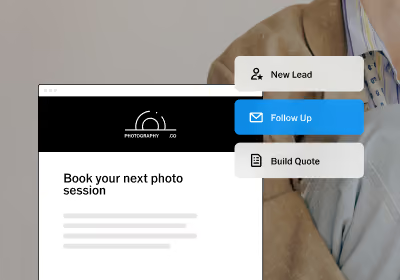
The standard for a mini session booking experience in 2026 is a single flow: the client selects a time slot from your real availability, signs the contract, and pays the retainer in one session, without requiring any manual action from you. That flow should work on a phone as easily as on a desktop, at any hour.
VSCO Workspace supports exactly this. Share a booking link and clients self-schedule from your live availability, sign the contract, and submit payment in a single workflow. Calendar sync with Google, Apple, and Outlook keeps your availability accurate automatically, so double bookings don't happen and you're not manually blocking personal commitments.
Once a client books, automated confirmations go out immediately. No manual response required after you set it up once. The slot is secured, the paperwork is signed, the payment is collected, and the client has everything they need to prepare.
Protect against no-shows with a non-refundable retainer
A time slot that goes unfilled on a fully booked mini session day can't be recovered. Unlike a full portrait session that might be rescheduled, a 20-minute slot in a back-to-back calendar has nowhere to move.
Requiring a non-refundable retainer at the time of booking is the standard practice for protecting against this. It also signals to clients that the appointment is a real commitment, which reduces casual cancellations from people who were never fully decided.
A clear rescheduling policy, documented in the contract and communicated during booking, handles the edge cases without requiring a case-by-case judgment call.
Mini sessions are often underpriced because photographers think about them as shorter sessions rather than as distinct offerings with their own cost structure. A 20-minute session still requires location scouting, setup, post-production time, gallery delivery, and follow-up communication. The time behind the camera is compressed, but the rest of the workflow isn't.
Build pricing around real costs
Rather than taking your standard session rate and cutting it proportionally, build mini session pricing from the ground up:
- Actual time on location per session
- Editing time per session at your real hourly rate
- Location costs, permits, or props divided across the number of sessions
- Overhead for booking, communication, and delivery time
- Your target profit margin
At full capacity, a well-priced mini session day can generate more revenue per hour than a standard session day. At undermarket pricing, it generates the same stress for significantly less return.
Pair your base price with clearly defined optional upgrades: additional digital files, prints, albums. Present these during the booking process, when excitement is highest, rather than after delivery when the purchase feels like an add-on. Transparent pricing at every stage creates revenue opportunities without pressure.
For more on photography pricing, read our comprehensive guide for How to Set the Value of Your Work.
Collect full payment at booking when possible
For mini sessions, collecting full payment at the time of booking is a defensible and increasingly standard practice. The session is a short, defined product with a non-refundable time slot. Clients who pay in full upfront have lower no-show and late-cancellation rates. For photographers who prefer a two-stage approach, a non-refundable retainer at booking with the balance due before the session keeps cash flow predictable without leaving revenue at risk.
A prepared client arrives on time, knows what to wear, and understands what to expect. An unprepared one arrives five minutes late in a mismatched outfit, with questions that eat into your buffer and everyone else's session time. Proactive communication is cheaper than recovering from the alternative.
Send a simple, well-timed reminder sequence
A short sequence of automated messages does the work of a full-time assistant:
- Booking confirmation. Immediately after booking: confirms the time slot, location, payment received, and what to expect next. The client should need nothing else until the week-of reminder.
- One-week reminder. Styling tips appropriate to the season and location, parking or arrival instructions, and a clear note on punctuality. Keep it specific and brief. Clients are more likely to read and act on a short message than a long one.
- 48-hour check-in. Weather contingency if shooting outdoors, a reminder of the meeting location, and an invitation to send any remaining questions. Answering questions before the session day is faster than answering them while the next family is waiting.
- Morning-of text. A brief message confirming the time and meeting point. For most clients this is the last thing they check before leaving the house.
These messages can all be built once in VSCO Workspace and triggered automatically based on the booking date, without any manual sending on your end.

A mini session day is a production, and productions run on schedules. The creative work takes care of itself when the operational layer is solid.
Protect your buffer time
The single most important structural decision in a mini session day is the buffer between sessions. Five to fifteen minutes between appointments gives you time to review the previous session, reset props or space, greet the next client calmly, and recover from any overrun without cascading delays.
Removing buffers to fit one more client into the day is the most common mini session mistake. The revenue from one additional slot rarely compensates for the stress it creates across every session that follows it.
Set a session limit and hold it
Decide on a maximum number of sessions before you open the calendar and don't adjust it on the day. Fatigue affects the quality of your work and your client communication equally. Clients in the final slots of an overlong day deserve the same energy as clients in the first slots of a well-paced one.
Keep a simple session-day system
Having client details accessible during the day reduces the mental load of managing multiple bookings simultaneously. A brief note for each session (family name, number of subjects, any specific requests) means you walk into every appointment knowing exactly who you're working with and what they need.
The client experience doesn't end when you pack up your gear. Fast delivery and thoughtful follow-up are what turn a well-run mini session into a repeat booking.
Deliver quickly and set the expectation before they leave
Before the client walks away, tell them when to expect their images. A sneak peek gallery within 48 hours maintains the excitement of the session while the full edited gallery is in progress. Full delivery within one to two weeks is the standard that mini session clients expect. State your timeline clearly and meet it.
Send delivery from VSCO Workspace so the gallery link, download instructions, and any upgrade options arrive in the same communication as the final delivery message. With VSCO Galleries, the gallery itself lives attached to the client's job record, alongside their contract, invoice, and communication history.

Follow up in a way that builds the relationship
Most mini session photographers deliver the gallery, ask for a review, and move on. The photographers who turn mini sessions into a reliable annual revenue stream do something different: they stay present after delivery in ways that feel personal rather than promotional.
A thank-you message when the gallery goes out, a review request a few days later, and a seasonal invitation the following year are the three touchpoints that matter most.
The seasonal invitation is the most powerful and the most overlooked. A message that arrives around the same time of year as the original session, referencing the previous booking and inviting the client back, converts at significantly higher rates than a generic promotion sent to your full list.
All three of these can be automated in Workspace, triggered by delivery date and booking date, so they go out at the right moment without requiring you to remember who booked when.
VSCO Workspace handles every part of the mini session workflow in one place.
- Self-scheduling. Share a booking link and clients choose their slot from your live availability. No back-and-forth emails, no manual calendar management.
- Automated booking flow. Contract signature, retainer payment, and booking confirmation happen in a single client-facing flow.
- Calendar sync. Google, Apple, and Outlook sync keeps your availability accurate in real time across every platform, preventing double bookings automatically.
- Reminder sequences. Build your confirmation, week-of, 48-hour, and morning-of reminders once. Workspace sends them automatically at the right time for every booking.
- Text messaging. Send automated and manual texts directly through Workspace. Available in the US and Canada, text reminders have significantly higher open rates than email for time-sensitive communications like session-day logistics.
- Gallery delivery. Link your VSCO Gallery to the client's job in Workspace so the gallery, download instructions, and follow-up all go out from the same place as the original contract and invoice. Everything stays attached to the client record.
- Post-delivery automation. Review requests, thank-you messages, and annual rebooking invitations trigger automatically based on delivery date and booking date. You build the sequences once and they run across every client.
Full access to Workspace is included with VSCO One, which also includes VSCO Galleries, VSCO Sites, VSCO Canvas, AI Lab editing tools, Studio Pro, and VSCO Film Presets for Lightroom and Capture One. Try it risk-free for 30 days with a full refund if it's not the right fit. Free onboarding support is included.
Explore VSCO Workspace →
Book a free demo →
How long should a photography mini session be?
Most mini sessions run 15 to 30 minutes, with 20 minutes being common. Choose the length based on your subject, location, and shooting style. Fifteen minutes can work well for individuals and couples, while families with young children may need closer to 20 or 30 minutes. Leave enough time between bookings for transitions and unexpected delays.
How many photos should I deliver for a mini session?
Set a specific number of edited images and communicate it before booking. Many photographers deliver 10 to 20 images for a 15 to 30-minute session, though the right number depends on your workflow. What matters most is setting clear expectations. You can also offer additional images or the full gallery as an upgrade.
Should clients pay in full when booking a mini session?
Requiring payment or a non-refundable retainer at booking can protect your revenue when sessions have limited time slots. Since late cancellations can leave a slot difficult to fill, upfront payment can also reduce no-shows. Whatever policy you choose, communicate it clearly before booking.
How should I handle cancellations and rescheduling?
Set your policy before opening your calendar and include it in your contract. Many photographers allow rescheduling with 48 or more hours' notice when another slot is available, while late cancellations and no-shows may forfeit the session fee. Outdoor photographers should also have a clear weather policy covering rescheduling, moving indoors, or refunds.
How many mini sessions should I schedule in one day?
Consider the total time each client takes, not just shooting time. A 20-minute session also requires time for check-in, transitions, and resetting. Many photographers schedule around 6 to 10 sessions per day, depending on their workflow and location. Start conservatively and add sessions only when you know you can maintain quality.
How do I turn mini session clients into repeat clients?
Treat every mini session as the start of a client relationship. Follow up after delivery, stay in touch with permission, and reach out when you have a relevant opportunity. If you run seasonal minis, invite past clients back around the same time each year. It gives you a natural reason to reconnect without relying on generic promotions.
The mini session is a system, not just a service
The photographers who run mini sessions profitably and repeatedly aren't the ones with the most creative concepts or the best locations. They're the ones with the most reliable workflow. A well-designed mini session offer, a booking process that requires no manual intervention, pricing that accounts for real costs, and follow-up that runs automatically after delivery are what separate a mini session day that feels like a grind from one that feels like a business.