Beauty photography now looks different from what it did three years ago.
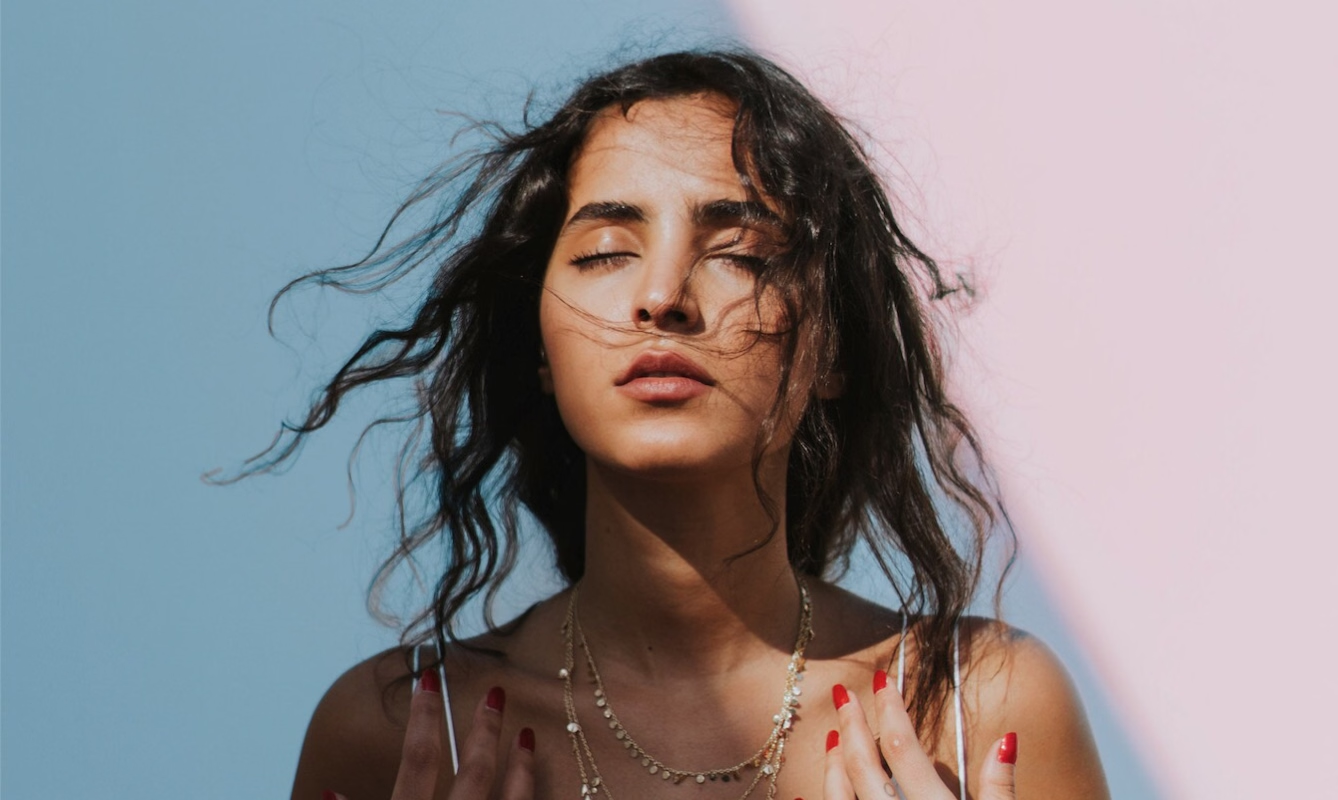
The brands that once wanted skin so smoothed it read as synthetic are now asking for texture, freckles, pores, smile lines: the specific qualities that make a face look genuinely human.
Inclusivity is now a technical requirement, not just a marketing talking point: if your lighting and color grading can't render diverse skin tones accurately, you're a liability for a brand that's committed to real representation.
None of this makes breaking into beauty photography easier. It is a crowded, relationship-driven market, and entry requires a portfolio that immediately communicates your aesthetic point of view and commercial competence.
But the photographers who understand that beauty brands right now want intention over surface perfection, and honesty over generic flattery, have a real edge.
This guide covers how to define your position in the beauty market, build a portfolio that demonstrates real commercial capability, make yourself discoverable and pitchable, and build the client experience that generates repeat work and referrals.
What you'll learn in this guide:
- Define Your Beauty Photography Niche
- Know What Beauty Brands Need
- Build Your Beauty Photography Portfolio
- Curate a Portfolio That Communicates Your Point of View
- Make Your Work Easy to Find
- Build the Right Relationships
- Create a Process That Makes Clients Want to Come Back
- Frequently Asked Questions
"Beauty photographer" describes a range as wide as the industry itself.
Narrowing your position makes it easier for the right clients to find you and immediately understand whether your approach fits their brief, without limiting the work you can take.
Start with the types of work and clients that genuinely interest you:
- Makeup artists and creative directors. Portfolio, lookbook, and editorial imagery that documents craft. The client is a creative who needs their work shown with precision and flair. Every detail of their execution needs to read clearly in the photograph.
- Skincare brands. Product and campaign photography where accuracy matters as much as aesthetics. Clients evaluating a skincare photographer want to know you can capture texture, translucency, and finish without distorting the product's actual appearance.
- Salons and spas. Brand photography that communicates environment, expertise, and the specific feeling of being in the space. These clients need imagery for websites, social, and client-facing materials on a recurring basis.
- Cosmetics companies. Social, e-commerce, and advertising content across a wide range of deliverables and platforms. The most content-intensive client type, with production scales that range from small DTC brands to major campaign work.
- Beauty founders and independent brands. Personal brand imagery, launch content, and the cohesive visual identity an emerging brand needs to look established. These clients are often the most responsive to outreach and the most willing to collaborate.
Then think about the kind of images you make.
A photographer who gravitates toward high editorial contrast and dramatic lighting serves different clients than one whose natural instinct is soft, naturalistic imagery with minimal intervention.
Both have a market. The clearer you are about which one you are, the faster potential clients can recognize you as the right fit.
Before pitching any beauty client, understand what a successful brief looks like from their side.
A beautiful image is the baseline expectation. What they're buying beyond that is a set of images that does a specific marketing job: driving purchases on a product page, filling a content calendar, launching a new SKU, or establishing a brand identity.
The core deliverable types:
Product photography. Clean, accurate images that show the product honestly, since metallic packaging reflects everything in the room, and liquid products or pressed powders have specific light-to-finish relationships that require controlled environments. Getting the product right is the baseline that everything else builds on.
Skin and beauty portraits. The most technically demanding category in the beauty niche. Accurate, flattering skin rendering across diverse complexions requires specific understanding of how light interacts with melanin, how color grading affects skin tone, and how retouching choices land differently depending on the subject. Brands in 2026 expect photographers to have visual fluency across the full range of human skin as a genuine technical and creative capability, not a checkbox.
E-commerce imagery. Consistent, platform-ready product and model shots optimized for the contexts where someone decides whether to buy. These need to work as thumbnails, in carousel format, and in mobile layouts, which shapes composition decisions from the start.
Editorial and campaign imagery. High-concept, high-production work for advertising, press, and launch materials. The brief here is typically more developed, the creative expectations higher, and the usage licensing more significant.
Social content. Platform-native imagery with specific aspect ratios, visual rhythms, and the kind of immediate legibility that works on a fast-scrolling feed. Social-first beauty content has its own aesthetic logic that's distinct from what works in print or on a product page.
Before any project, confirm:
- Where the images will appear and in which formats and dimensions
- Which products, shades, or collections are being featured
- The retouching philosophy: how much correction is expected, what the brand's position is on natural skin texture
- Usage terms: which channels, for how long, and whether paid advertising is included
- Number of final images, revision rounds, and delivery format
The retouching conversation in particular is worth having explicitly.
Some beauty clients want visible texture, natural skin detail, and minimal intervention.
Others want a more polished aesthetic. Mismatched expectations here, more than anywhere else in beauty photography, lead to difficult deliveries.
The standard advice for building a beauty portfolio is "do test work."
The advice that's useful is more specific: create test work that functions like a real brief, not like a personal project.
The difference is visible to any creative director who looks at your portfolio. A personal project shows what you like. A test work that functions like a brief shows that you know how to think through commercial requirements, collaborate with a creative team, and deliver a cohesive set of images that serves a defined purpose.
Build mini-campaigns, not collections of images. Develop a concept with the clarity you'd bring to a paid brief: a visual direction, a color palette, a lighting approach, a defined set of deliverables, and a reason for those choices.
The portfolio piece should be presentable as a case study: what the goal was, how you approached it, what the images accomplish.
Build a collaborative team. Reach out to makeup artists, hairstylists, models, stylists, and nail artists whose work you genuinely admire and whose aesthetic aligns with where you want to position yourself.
Be specific about the concept, what you're asking them to bring, and what they'll receive in return: images delivered by a specific date, credits for any posting, and clear usage terms.
Before any collaborative session, align in writing on:
- The creative concept and what each contributor is responsible for
- Call times, run-of-show, wardrobe, hair and makeup direction
- How final images can and can't be used by each party
- When and how images will be delivered
- Credits and social media posting expectations
- Any model releases or usage releases needed
These conversations are especially important when the work might attract commercial interest later. Clear usage terms upfront prevent awkward conversations afterward.
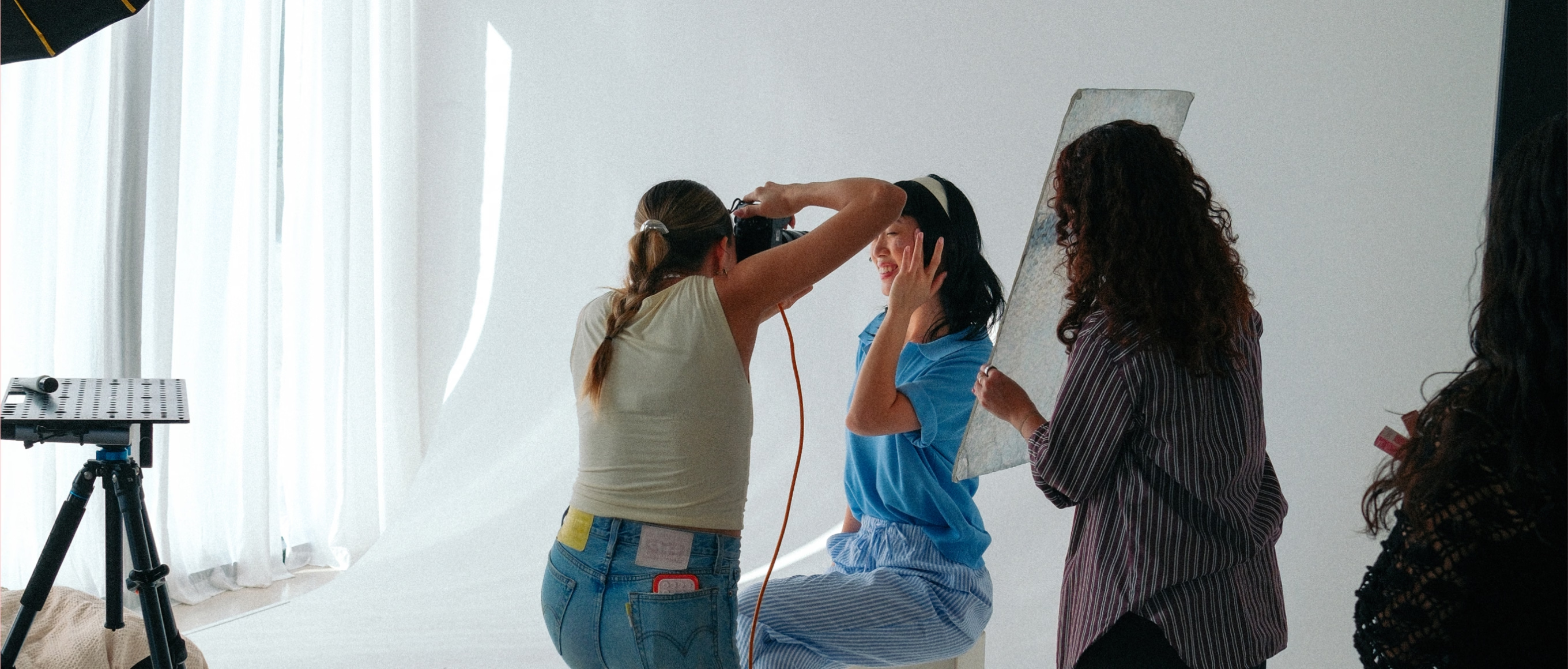
Treat the session like a professional project. Keep a timeline, build in buffer for makeup adjustments and lighting refinements before the subject is camera-ready, keep the set organized and the energy focused, and deliver images when you said you would.
That professionalism is visible in the work and in the experience of collaborating with you. The makeup artist or stylist who worked with you professionally will remember it when a client asks for a photographer recommendation.
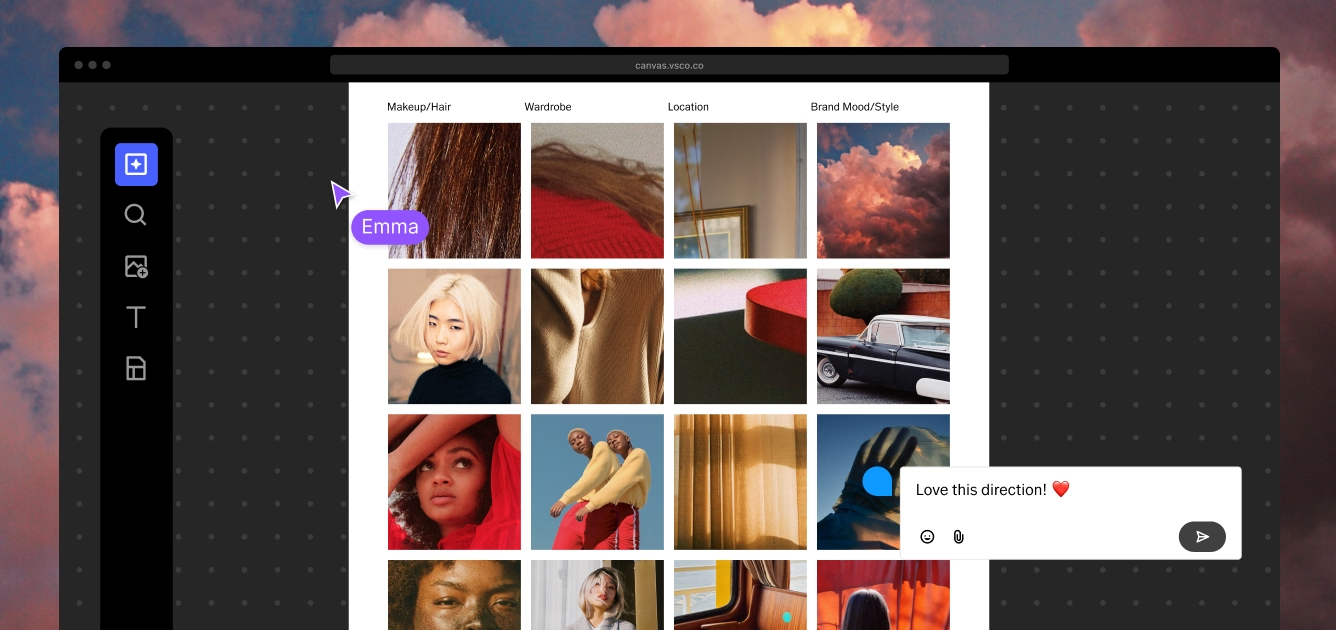
VSCO Canvas is useful in pre-production: gather visual references, share the concept with collaborators before the session, and invite feedback.
A shared moodboard that everyone can see and respond to before the day means the team arrives aligned rather than interpreting the direction individually.
A beauty client who opens your portfolio should understand your aesthetic within the first few images.
Everything else they look at either confirms or complicates that first impression. A scattered portfolio leaves them doing work that should have been done in the curation.
Lead with your strongest image. Not your most recent, not the technically safe one. The image that best represents your point of view and the kind of work you want to attract.
Build a sequence with purpose. A close-up skin portrait followed by a product interaction, a wider editorial frame, and a hair-focused image demonstrates range without feeling random. The images can vary; the perspective behind them should feel connected.
Demonstrate the technical capabilities beauty clients evaluate.
A portfolio that doesn't address these questions leaves clients to guess:
- Can you render accurate skin tones across different complexions?
- Can you handle reflective or metallic packaging without losing detail?
- Can you capture fine product finishes (powder, shimmer, gloss) accurately?
- Can you photograph hair movement and complex styling with the precision they require?
- Can you produce clean, consistent e-commerce compositions alongside more editorial work?
If your current portfolio has gaps, fill them deliberately through test work. A portfolio that answers all of these questions clearly is doing the job that a cover letter used to do.
Organize work as projects, not individual images. A series from one concept demonstrates that you can maintain visual consistency across a full deliverable. VSCO Galleries is practical for this: organize images by project, curate the sequence deliberately, and share a focused gallery link (or add them to your Site) when pitching so a client sees your commercial thinking immediately.
VSCO Sites gives you the portfolio website that makes all of this professionally accessible: a clean, photography-first layout, an About page where you articulate your beauty specialty, and a contact form that routes inquiries directly into VSCO Workspace as managed leads.
A strong portfolio only generates work if potential clients can find it. Your online presence should make your specialty and location clear without a client needing to search for them.
Use language that reflects your actual niche: "beauty photographer," "skincare campaign photographer," or "cosmetics product and lifestyle photographer" outperforms "professional photographer" in both search results and immediate comprehension.
If you're building a geographic client base, include your city in your bio, site title, and any relevant copy.
Keep your presence current. Adding new work regularly, sharing projects as they're completed, and posting some process content signals to potential clients that you're actively working, not a photographer who updates their portfolio once a year.
Process content also does something finished images can't: it shows how you work, how the set is organized, and what the experience of collaborating with you looks like.
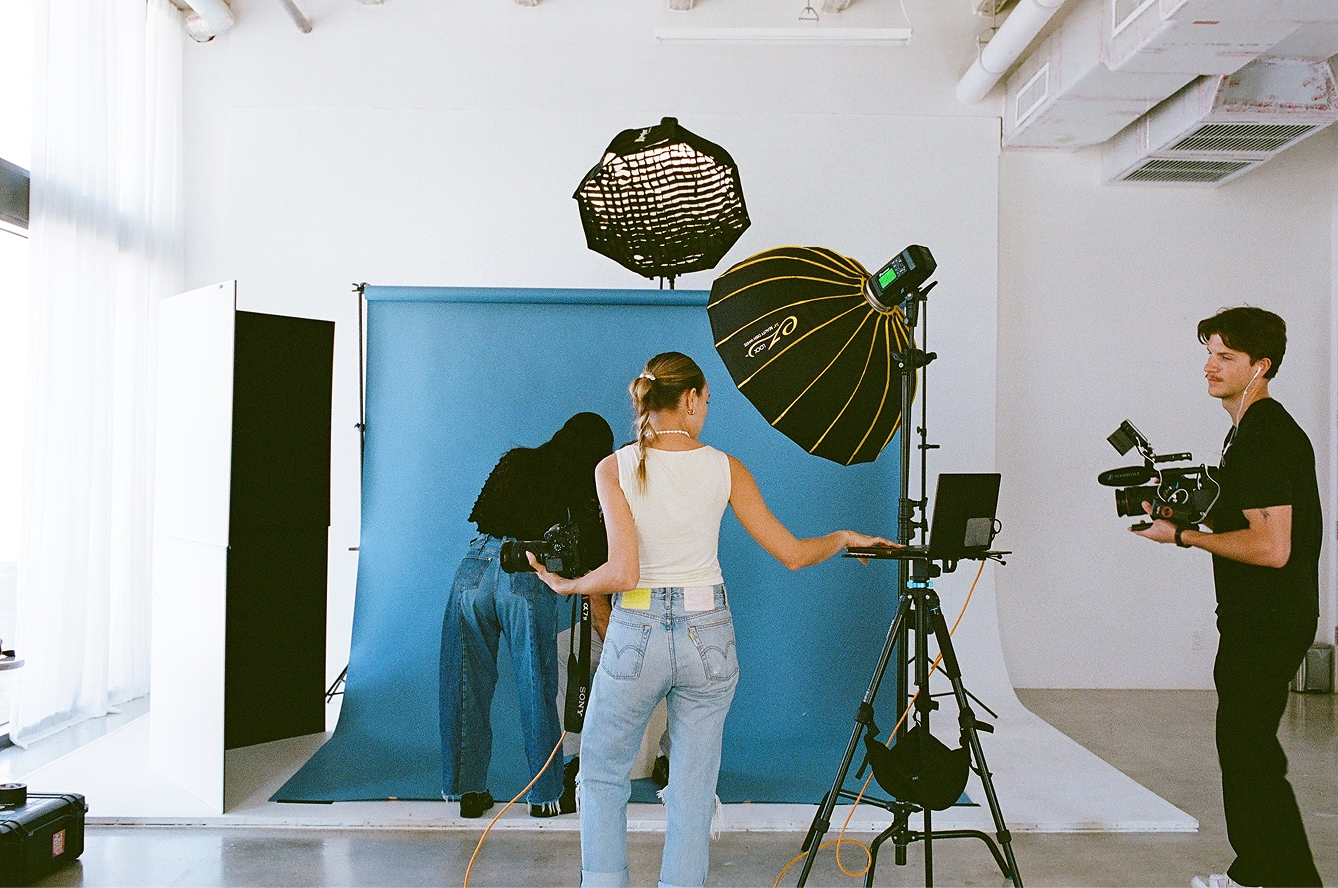
Beauty photography is an especially relationship-driven industry: much of the work comes through referrals and collaborations rather than cold outreach, so the most efficient path to paid clients is building the right relationships before you need them.
The most direct path: collaborate with the people who are already working with the clients you want.
Makeup artists, hairstylists, stylists, and creative directors have existing relationships with brands and agencies. When those clients ask for a photographer recommendation, the names that come to mind are the people they've enjoyed working with on a set. A collaborative test session that goes well is one of the most effective ways to build both your portfolio and your network at once.
When you reach out to collaborators, skip the formal pitch: lead with the work, share a concept you're genuinely excited about, explain specifically why their aesthetic fits the direction, and make the ask concrete and fair.
Over time, the makeup artist you collaborated with might recommend you to a cosmetics founder she works with regularly, a stylist might invite you onto a campaign where she's already been hired, or a fellow photographer might refer a beauty client when they're unavailable or outside their niche. The referral network compounds, but only if the relationships are built on real creative collaboration rather than transactional outreach.
Landing the first booking is the objective.
Creating an experience that makes the client call you for the next launch, the next campaign, and the seasonal content push after that is how a beauty photography practice sustains itself.
Before the project: Confirm everything in writing before the session. A clear brief covering the creative direction, shot list, timeline, products, and any specific technical requirements means the day can run without surprises. VSCO Canvas for pre-production moodboards and pitch templates gives clients something to respond to and approve in advance. The more aligned you are before production begins, the less time gets consumed by re-direction on the day.
During production: The quality of how you manage a session is part of what clients are evaluating. A set that runs to schedule, where the photographer is calm and confident, where the client's feedback is integrated smoothly, builds the case for rebooking before any image has been delivered.
Delivery: Send a polished gallery, not a file dump. VSCO Galleries provides a clean, professional presentation: the client receives a single link, can review and download on any device, and doesn't need to create an account. Password protection is available for sensitive pre-launch work. Delivery that feels considered reinforces the quality of the images themselves.
After the project: Follow up, ask how the campaign performed, and look for the natural next moment: an upcoming product launch, a seasonal content refresh, a new SKU that needs imagery. The photographer who reaches out with a specific, relevant idea at the right moment is far more likely to be rehired than the one who waits for the client to initiate.
Ask for referrals directly, at the moment when the client is most satisfied: after delivery, when the work is good and the experience was smooth.
A specific ask ("if you know any other founders or brands who need similar work, I'd love an introduction") converts more reliably than hoping clients think to mention you.
How do I start in beauty photography with no beauty clients?
Create test work that functions like a real brief: develop a concept with a clear direction, collaborate with makeup artists and stylists, and deliver images that could reasonably appear in a brand campaign. Treat every collaborative session professionally and deliver on time. Those collaborators become your referral network.
What technical skills matter most in beauty photography?
Accurate skin rendering across diverse complexions, the ability to photograph reflective product packaging without losing detail, and a clear retouching philosophy that you can articulate to clients. Today, lighting and color grading that works across the full range of skin tones is a differentiator, not an afterthought.
How is beauty photography different from general portrait photography?
Beauty photography exists to serve a brand's marketing goals, so every image needs to be evaluable for its commercial purpose. That means thinking about platform-specific formats before you compose, understanding product accuracy requirements, and having a clear retouching approach that matches the brand's positioning.
How do I get a beauty brand to respond to a cold pitch?
Reference something specific, like a recent launch or a visible gap in their content, and share one gallery link that's directly relevant to what you're proposing. Keep the email short with an easy next step; generic availability messages rarely earn a response.
How do I build recurring relationships with beauty clients?
Deliver well, follow up after delivery with a question about how the work performed, and reach out before the next natural content moment: a seasonal campaign, a new SKU, a launch event. The clients who rebook are the ones you stayed present with, not the ones you delivered to and disappeared from.
The Photographer Who Understands the Brief
Every serious beauty photographer has a strong portfolio.
What separates the ones who build a sustainable practice is positioning specific enough that the right clients recognize them immediately, and a working experience that makes clients want to come back.
The beauty photographers who do the best work know the difference between perfection and presence, and can translate a client's brief into images that feel both intentional and real.