If you asked me what the most important part of landscape photography is, most people would probably expect me to start talking about cameras, lenses, or settings. The truth is, I almost never do.
Before I think about any of that, I look at the weather.
For me, that is where every photograph begins. Not with the camera in my hand, but with a feeling that the conditions might be doing something interesting. Over the last decade, I have realised that great landscape photography is rarely about chasing the most famous locations or owning the newest gear. It is about recognising those small windows when light, weather, and landscape come together, and being in the right place when they do.
Whenever I press the shutter, my goal is simple. I want the person looking at the photograph to feel like they were standing there with me. I want them to feel the cold air before sunrise, or the moment the sun breaks through after a storm. That is what has always kept me coming back.
In this guide:
- Where I Learned to Think Like a Landscape Photographer
- Planning Landscape Photos Around Weather
- Reading a Landscape Before Photographing It
- Trusting Your Gut
- Patience, Repetition and Returning to Places
- Scotland, Switzerland and the Hunger to Explore
- Editing to Match the Experience
- Gear, Settings and What Really Matters
- Telling a Story Beyond One Frame
- Final Thoughts
I grew up only around twenty minutes from the Peak District National Park and, looking back, I could not have asked for a better place to learn. It became my classroom.
At first, I think I was probably doing what most people do when they start out. I was looking for big views, obvious compositions, and dramatic conditions. But the more time I spent there, the more I started noticing the smaller things. A wall catching the last bit of light. A path leading into mist. A gate that suddenly became interesting because of the way the light hit it.
That is where I learnt that landscape photography composition is not always about the widest view or the most dramatic scene. Sometimes the best image is something most people would walk past. The Peak District taught me to slow down and look properly. It taught me that you do not always need to travel far to make meaningful photographs. You need to return, observe, and give yourself the chance to see something differently.
People often ask me about landscape photography planning, and of course there are practical things I always check. I will look at maps, access, trails, sunrise and sunset times, and I will think about possible viewpoints before I go. If I am somewhere new, scouting locations in person beforehand makes an even bigger difference. Walking a place in flat light at midday shows you things no map can.
But if I had to simplify my whole photography planning process into one sentence, it would be this: I plan around the weather, and then I take that and run with it.
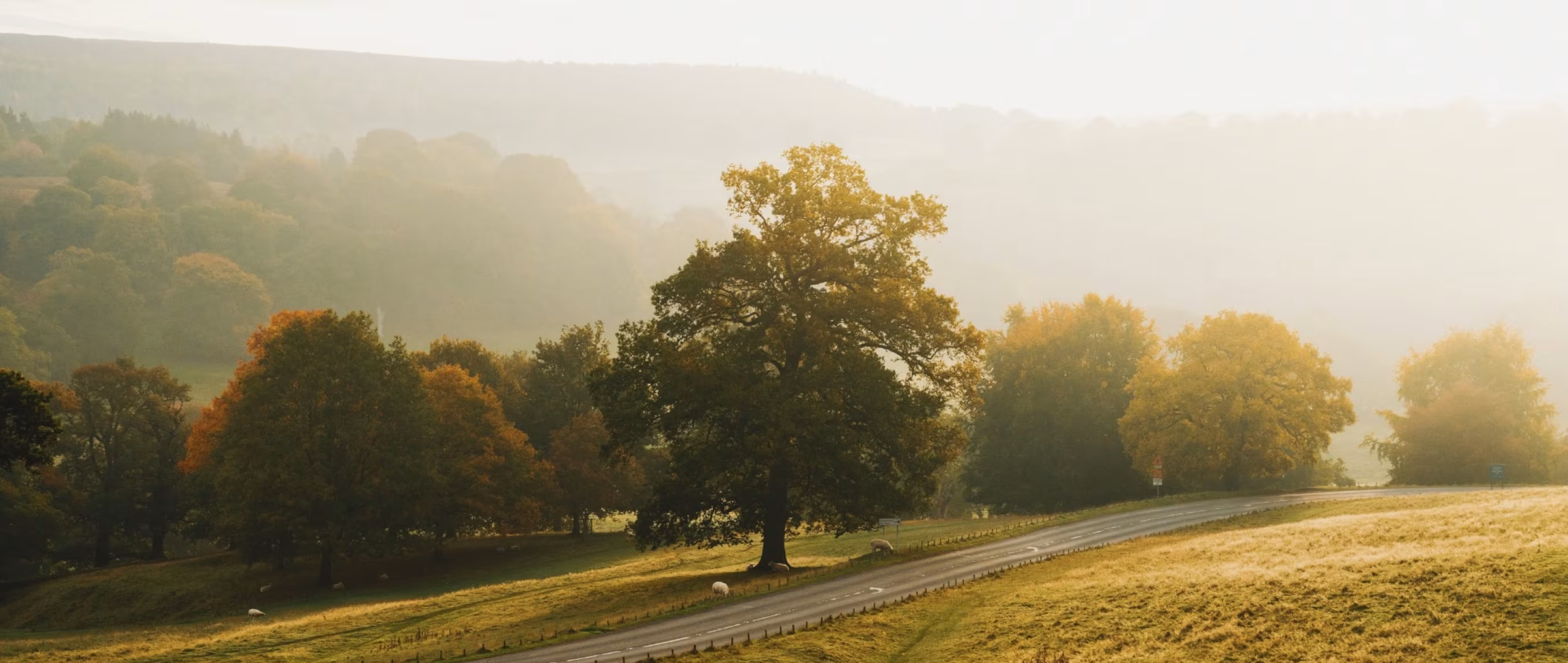
When I first started, I was really drawn to moody conditions. Fog, low cloud, rain. Those darker conditions gave everything atmosphere, and I still love that. But as I have developed as a photographer, golden hour has probably become my favorite time to photograph. That first or last light of the day adds colour, shape, and depth in a way that can completely change how a place feels. It creates directionality. Shadows become part of the composition, textures come alive, and the warmth it brings to a scene is something you simply cannot replicate later in the day.
Rain makes woodland look incredible. The wet surfaces bring out colour in the leaves and bark, the light becomes softer, and there is a freshness to everything that you cannot replicate in dry conditions. Storms, especially the moments just before or just after, produce some of the most dramatic skies I have ever photographed. The light that breaks through under a clearing storm front is unlike anything else.
That does not mean I only go out when the forecast looks perfect. The truth about weather is that some of my least favourite forecasts have produced my favourite photographs, and some perfect-looking days have delivered nothing. You can predict the broad conditions, but you cannot always know what the light is going to do with them. The more time you spend outside in different conditions, the better you get at reading what might happen next.
One of the biggest landscape photography tips I could give is to spend more time looking before you start photographing. When I arrive somewhere, I rarely take my camera out straight away. I like to walk, look around, and get a feel for what the landscape is doing. Where is the light falling? What is the weather likely to do next? Is there a foreground that helps tell the story?
I am not really a traditional landscape photographer in the sense of setting up a tripod and waiting in one position for hours. I do use a tripod when I need to, but most of the time I prefer to move. I like to react to the conditions and keep searching. Sometimes the best thing you can do is turn around, walk ten minutes further, or step away from the viewpoint everyone else is photographing.
I think photographers can sometimes become too fixed on one shot. They arrive, set up, and wait for the image they already had in their head. Waiting and moving are both important. Sometimes patience means staying still; other times it means exploring until something feels right.
Finding compositions is about being open to what the landscape gives you. It might be a huge mountain scene, or it might be a small patch of light on a wall or a curve in the road. Good landscape photography is having the eye to see what others might miss.
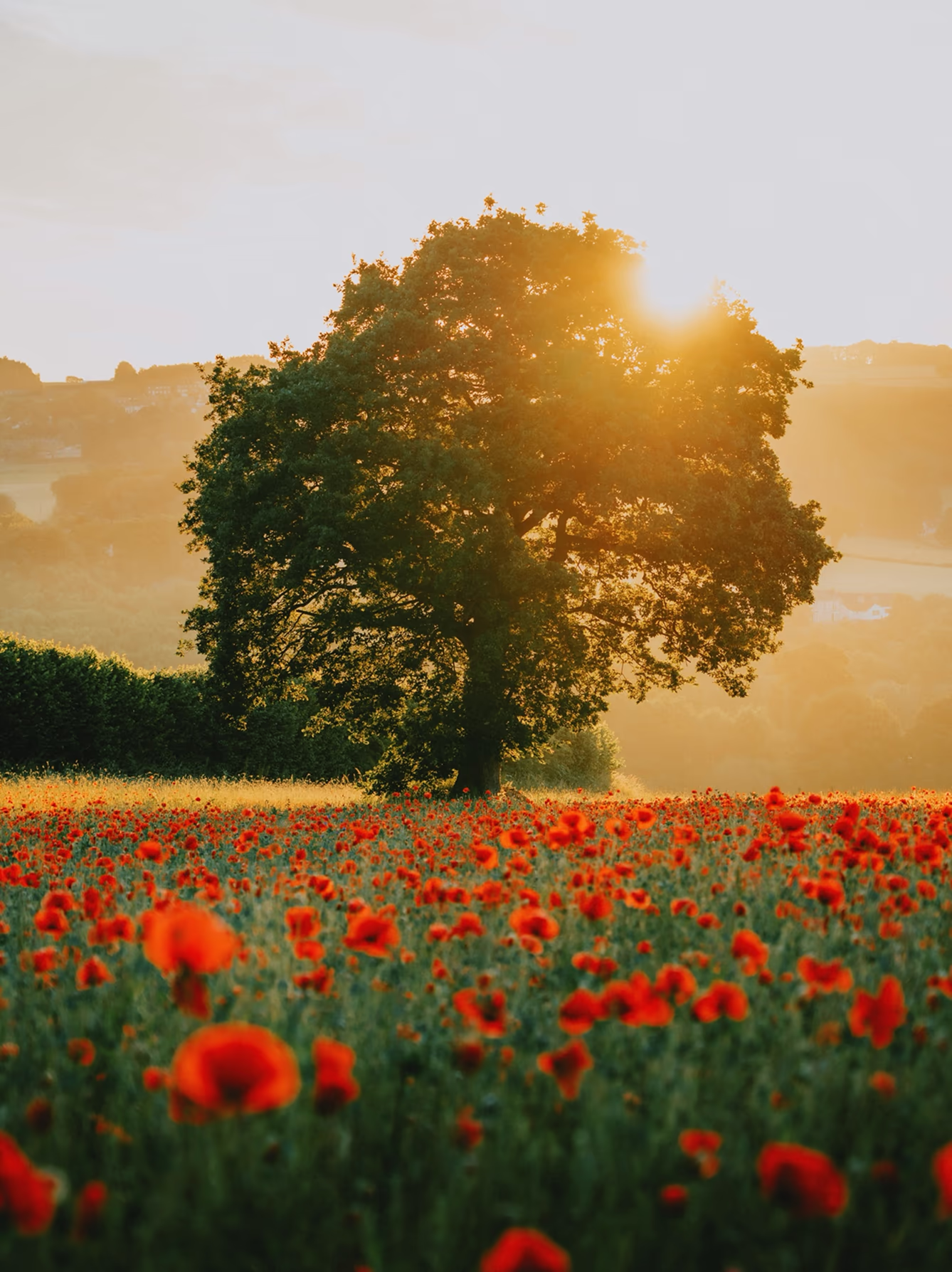
One of my favorite photographs came from a moment where I simply trusted my instinct. A spring storm had just passed close to home and sunset was approaching. Something about the sky felt different. I could see the storm beginning to clear and had that feeling the light might do something special.
So I grabbed my camera, jumped in the car, and chased it. A spur-of-the-moment decision: get out, find somewhere that looked good, and hope the conditions lined up. A few minutes later, the setting sun broke through underneath the cloud and lit up a rainbow stretching across the landscape.
That image is still one of my favourites because it could so easily have not happened. I could have stayed home. I could have decided the weather was too uncertain. Instead, I trusted the conditions and gave myself a chance. It has never happened in quite the same way since, and maybe it never will.
That is one of the things I love about landscape photography. You can plan everything and still need a bit of luck. But the more you understand weather and light, the more often you put yourself in the right place.
Another image that means a lot to me is a cloud inversion at Mam Tor. I had been several times trying to see the inversion cover Hope Valley, with early alarms and plenty of trips where nothing happened.
Then one morning it did. The valley disappeared beneath the cloud, and suddenly all those previous attempts felt worth it. That is why returning to locations is such a big part of my landscape photography workflow. You learn something every time, even when you come home without the photograph.
The Peak District taught me that better than anywhere. Because it was close to home, I could go in the morning, in the evening, or anywhere in between. I could see how the same place changed through the seasons. That repetition made me better at predicting light.
Not every photoshoot needs to result in a portfolio image. Sometimes the value is simply in being out, learning the landscape, and understanding what to try next time.
After years of photographing the Peak District, Scotland changed the way I saw landscape photography. No matter the weather, no matter the season, it always gives you something. It is somewhere I will always go back to.
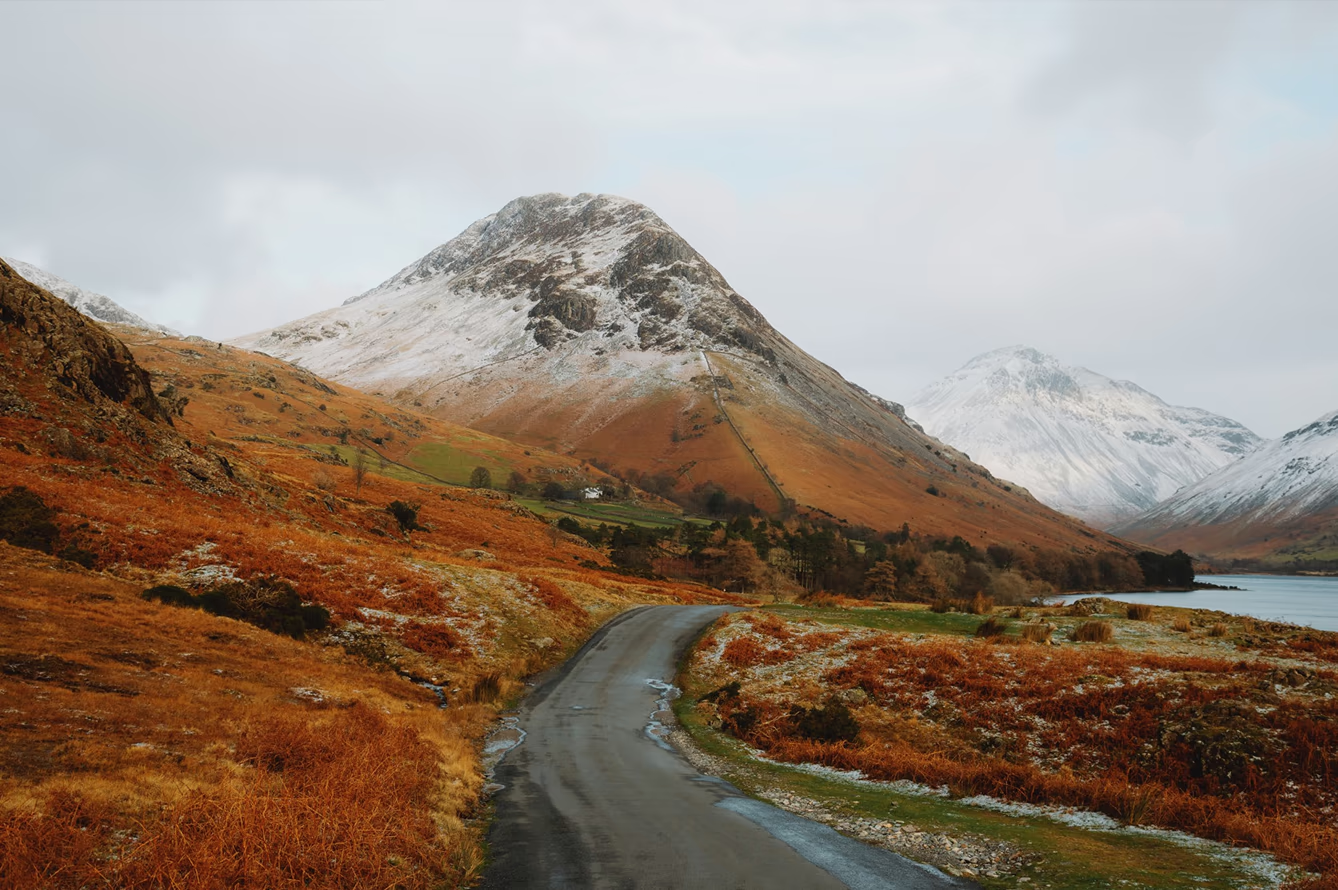
The Lake District is another place I would always recommend. In the right light it looks extraordinary in any season. That mix of lakes, hills, woodland, and small details works so well for storytelling. But if someone asked me where to go for a landscape photography trip in the UK, Scotland would still be my first answer. It just has everything.
Last year I finally visited somewhere that had been on my list for a long time: Switzerland. I stayed in Wengen, high in the mountains, and it was everything I had hoped for. The peaks, the villages, the scale of it all, and the way the weather moved through the mountains made it feel like a photographer's dream. It also reminded me that after years of photographing the UK, there is still so much more out there to see. Switzerland gave me even more hunger to travel and explore. Iceland is high on that list.
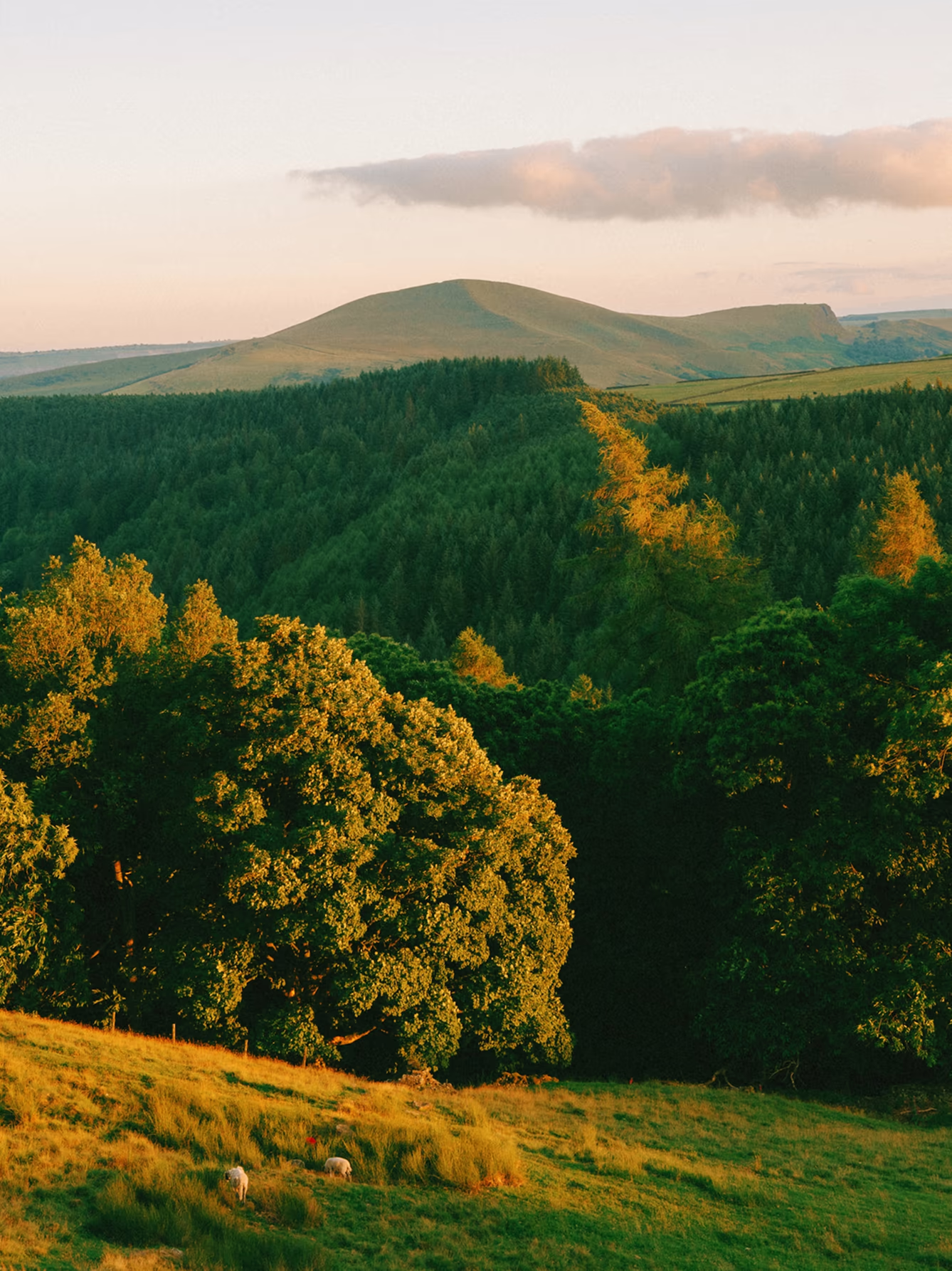
For me, landscape photography editing is not about creating something that was never there. It is about bringing the image back to life in a way that feels true to the moment. I enjoy editing almost as much as taking the photograph.
My landscape photography workflow is roughly ninety percent on desktop and the final ten percent in VSCO. VSCO is where I like to finish the mood and tone, there is a quality to the way it handles colour and grain that I find hard to replicate elsewhere, and it is where my images tend to find their final character. The goal is always consistency. I want people to recognise my work before they see my name.
The colours, light, and composition will always change depending on the time of day, season, or weather, but the feeling should stay connected. When editing landscape photos, I always come back to one question: does this feel like how I remember it? Not literally, a photograph is never literal, but emotionally. That is why editing is such a personal part of the process. You are not just correcting an image. You are deciding how the memory should feel.
People naturally ask about landscape photography settings and gear, and I understand why. I have recently upgraded to a Sony a7 V with the Sony 28-70mm F2, and that has become my go-to setup. It is perfect for the way I like to work. It's flexible, handles low light brilliantly, and lets me move quickly.
But I never want gear to become the main focus. Good equipment helps, but it will not make decisions for you. It will not tell you where the strongest composition is or what the light is about to do. Learning how to take landscape photos is much more about understanding conditions, building your eye, and knowing when to press the shutter.
The camera records the moment. You still have to find it.
When I share photographs, especially on socials, I rarely post just one image. I will usually have a main image, but then I will include another two to five photographs from the same place or the same morning. That is because one photograph can be powerful, but a small set can take people on the journey.
One image might show the main landscape. Another might show the light changing. Another might be a smaller detail, a different angle, or something that gives a sense of being there. That sequencing is part of the storytelling. I am not just trying to show a location, I am trying to capture the feeling of a place. The atmosphere, the effort, and the timing.
Developing a recognizable style comes from this same process over time. Go back through your images regularly and look honestly at what is working. Where are your compositions strongest? What do the images you are most proud of have in common? Those patterns are your visual language forming, and the more you pay attention to them, the more intentional your photography becomes. Sharing your work somewhere considered, whether that is a portfolio built on VSCO Sites or anywhere else you can present images without clutter, helps you see your own body of work more clearly too.
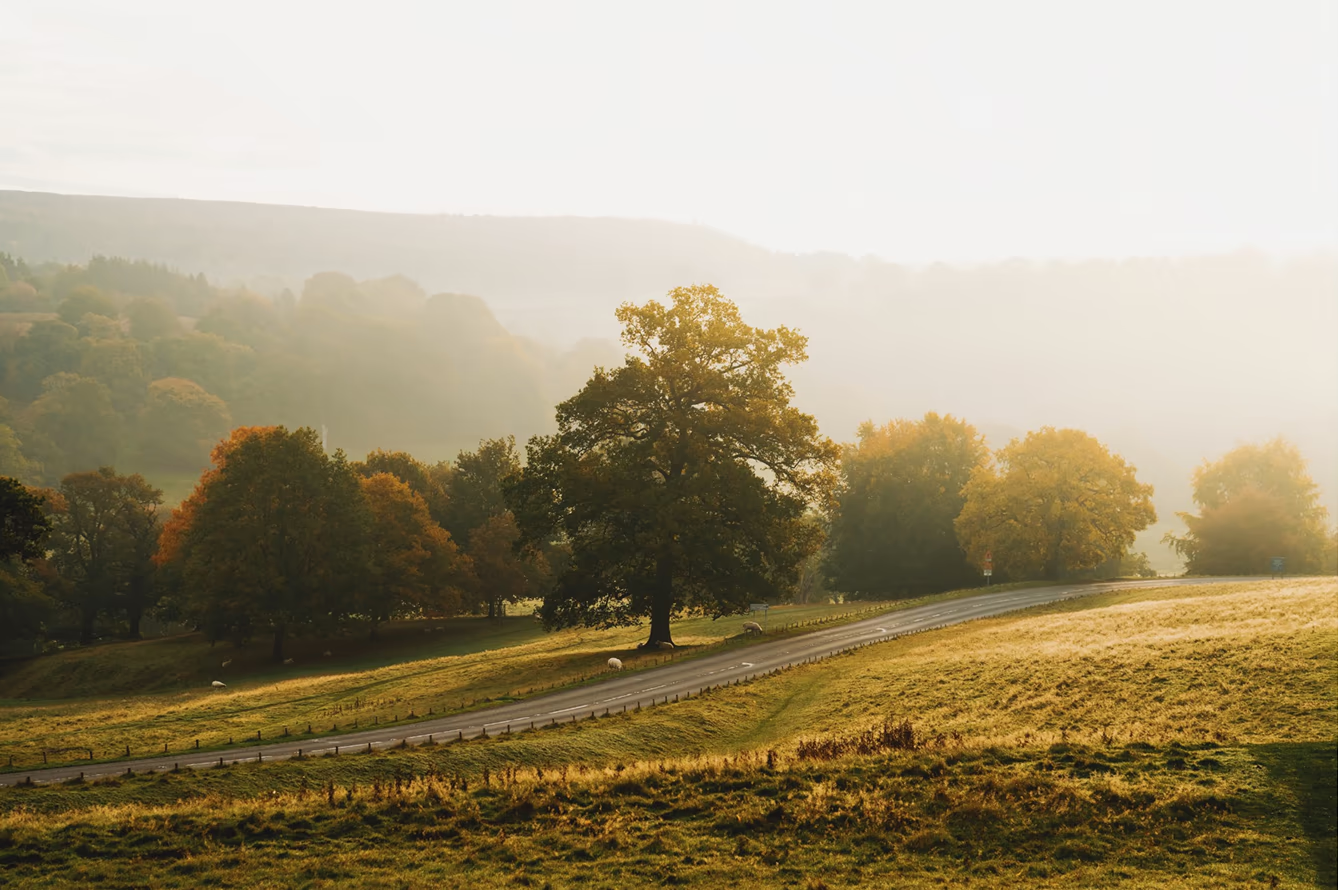
There is so much beauty in the world and I want to capture as much of it as I can while I can. That is what still excites me after more than ten years of photography. Seeing new places, returning to familiar ones, and knowing that the next shift in light or weather could create something completely different.
If I could leave every new landscape photographer with one piece of advice, it would be to trust your gut. If you are at home and the light looks right, go. If the weather is doing something different, go. If it means getting up at 3am for a 4am sunrise, do it. You have to be willing to do what ninety percent of people will not.
People often ask how I always seem to get the best light. The truth is, I do not always get it. I just give myself the best chance of being there when it happens.
Whether I am twenty minutes from home in the Peak District, standing somewhere in Scotland, or looking out across the mountains of Switzerland, my goal never really changes. I want my photographs to make people feel like they were there with me. If an image can do that, then it has told the story I wanted it to tell.