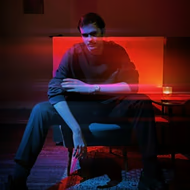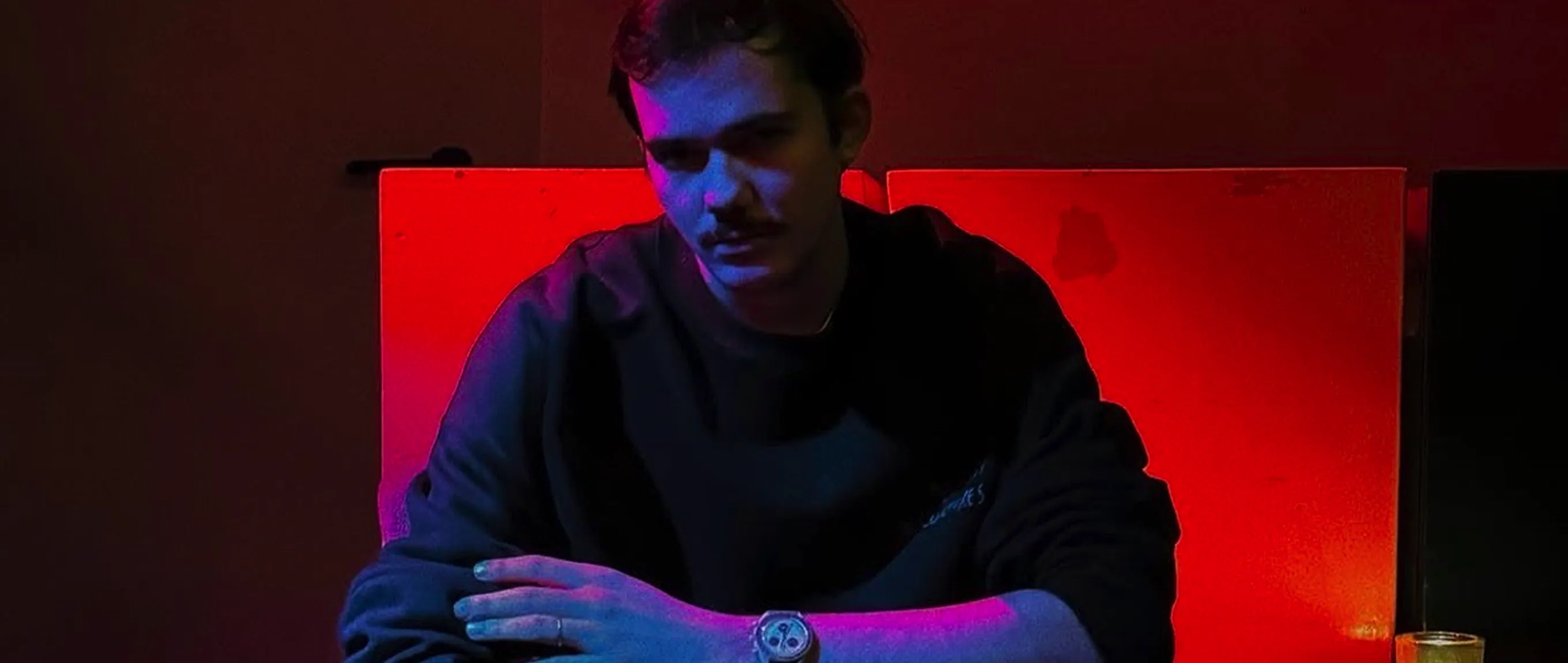
“I'm drawn to clean lines, subtle details, and moments where light interacts with structure in a way that creates a sense of stillness or distance.”
Kaan Bicen photographs the parts of cities most people walk through without stopping. Empty staircases, light falling across concrete, the stillness inside a busy street. Based in Bochum, Germany, his work is quiet, atmospheric, and precise about the details that shift a scene from ordinary to something more.
His practice has been building slowly and intentionally. It started as a way to document what he noticed. Over time, particularly after returning to VSCO during the pandemic, it's become something more deliberate, shaped by instinct, refined by community, and given new direction by VSCO Prompts that pushed him to engage more carefully with what he was making.
The turning point came through a hashtag. Submitting to the #FullSpectrum prompt led to two of his images being selected for VSCO's Afterglow digital exhibition in Los Angeles—a moment he describes as "honestly quite emotional." In this conversation, Kaan talks through what that recognition unlocked and how he uses prompts without letting them override his own perspective.
1. How would you describe your photography?
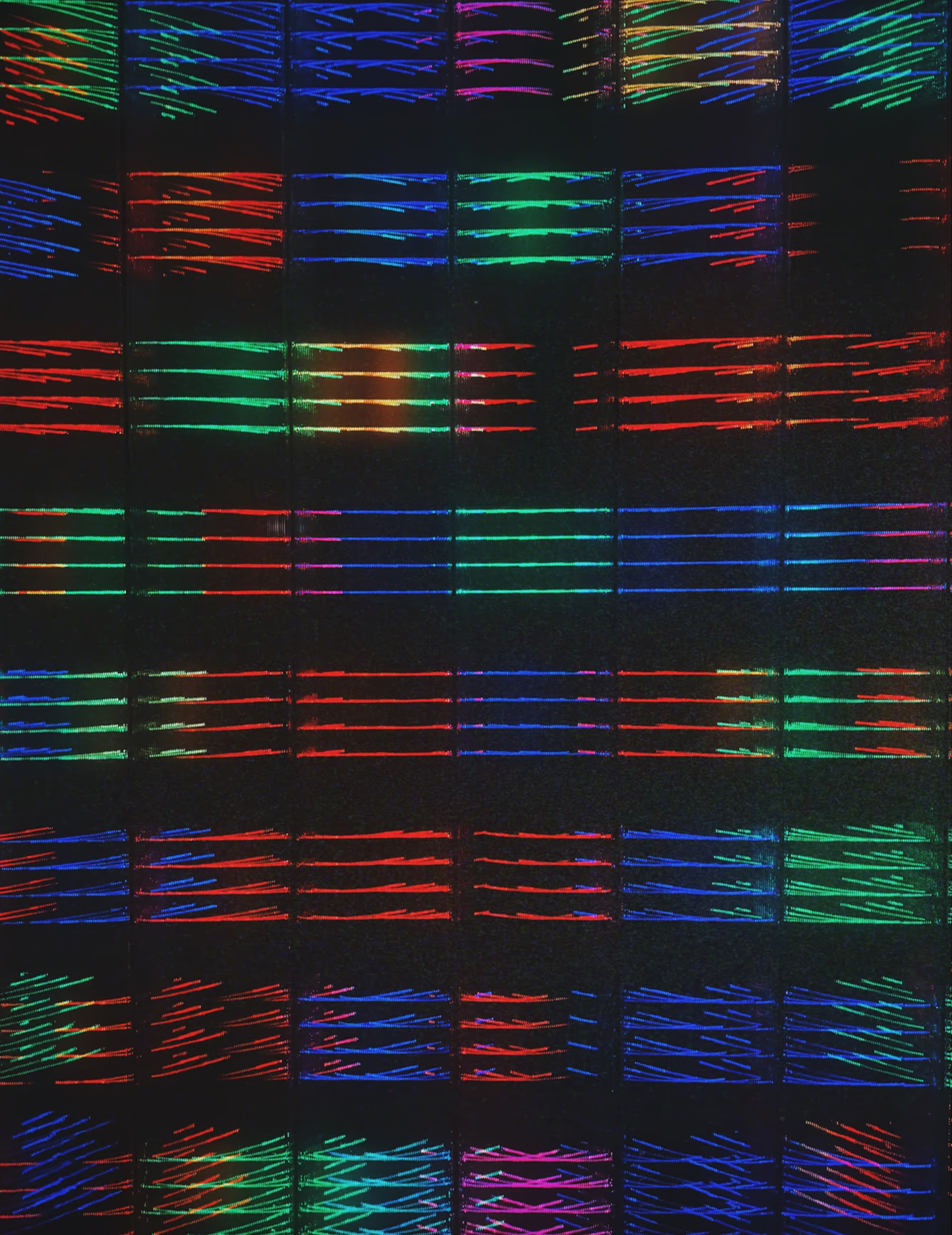
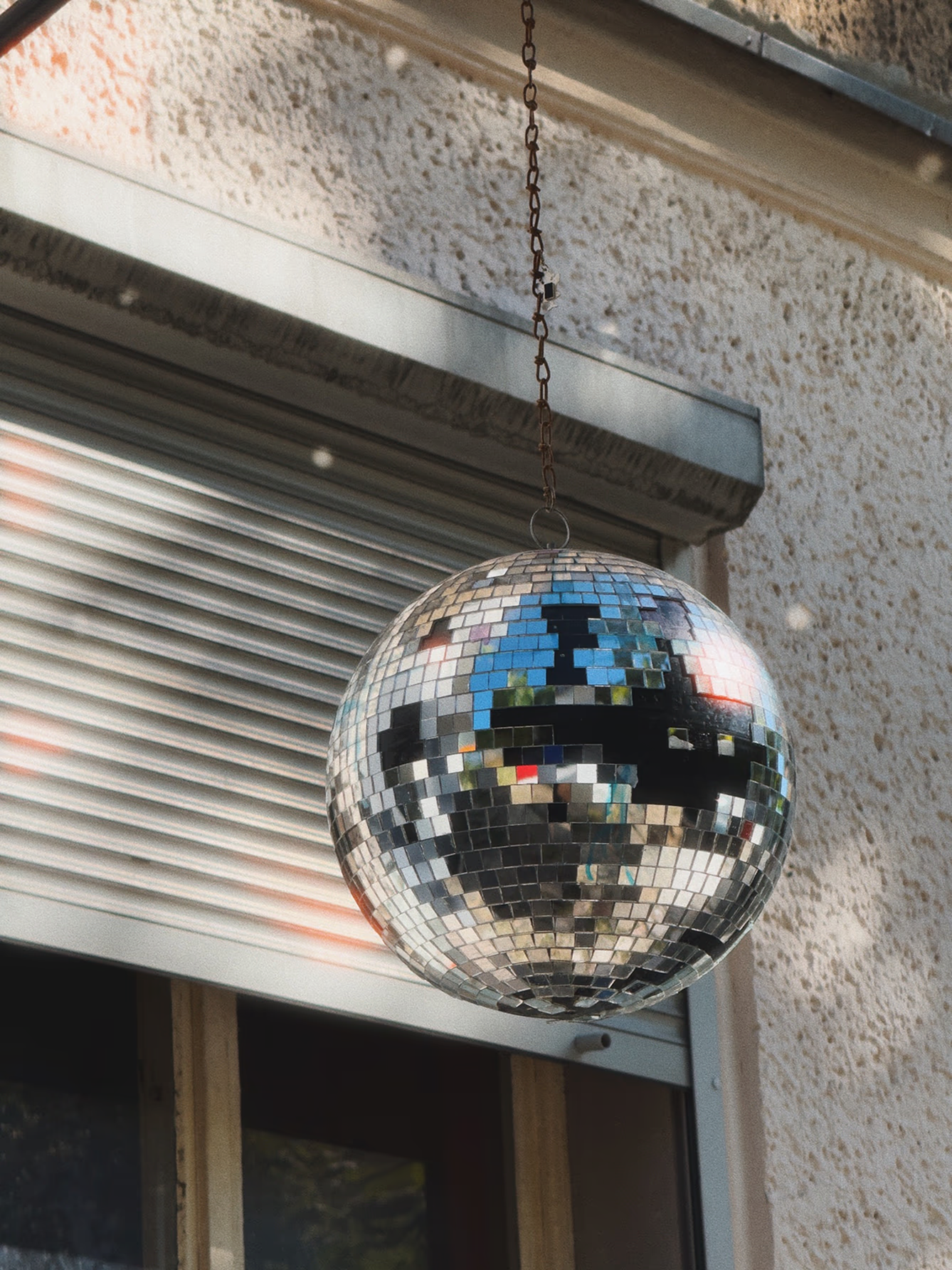
I would describe my photography as quiet, atmospheric, and often centered around urban spaces and architecture. I'm drawn to clean lines, subtle details, and moments where light interacts with structure in a way that creates a sense of stillness or distance.
There's often a feeling of isolation or calm in my images, even in busy environments. I'm especially interested in how color can shift the mood of a scene, sometimes making something ordinary feel a bit more abstract or distant.
2. How about your photographic practice?
At the moment, I see my photographic practice as something between a personal passion and an emerging artistic direction. It started as a way to capture what I notice in everyday life, but over time it has become more intentional.
I'd like to develop it further into a more professional space in the future, but for now, it's mostly driven by my aesthetic instincts and the desire to translate what I see into something visual.
3. How have you come across VSCO prompts?
I usually come across prompts directly through VSCO. I follow the platform quite closely, so I often see them there, and I also spend a lot of time exploring the community through the explore section.
4. How do you decide a prompt is interesting to submit to?
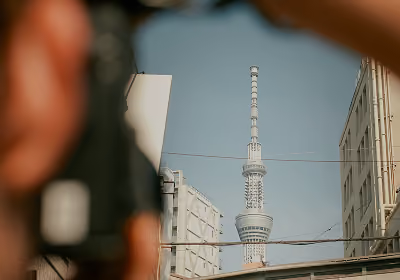
I'm usually drawn to prompts that feel open and flexible. If I can connect the theme to something I've already captured, or something I naturally notice in my surroundings, it immediately feels interesting to me.
“If I can connect the theme to something I've already captured, or something I naturally notice in my surroundings, it immediately feels interesting to me.”
5. What are two prompts that have stayed with you, and why?
One of the most memorable ones for me was “Full Spectrum.” I really liked how it focused on color as something that can completely reshape the meaning of an image, whether it sharpens a memory or transforms something ordinary into something more abstract.
Another one I enjoyed was centered around “My Community.” I found it interesting how it could be interpreted in very different ways, from people to environments, or even subtle cultural details. It felt very open-ended.
6. Has submitting to prompts ever led to connections with other photographers, professional opportunities, or exhibitions?
Submitting to prompts has definitely led to meaningful moments for me. One of the most significant was being selected for the “Afterglow” digital exhibition in Los Angeles through the “Full Spectrum” prompt. Having two of my images featured there was incredibly special and honestly quite emotional for me.
It also encouraged me to start sharing my work more seriously on Instagram. I was already using VSCO regularly, but feeling seen and recognized by the platform motivated me to take it further and become more consistent with my photography.
It also allowed me to connect with other photographers through the platform, even in small ways, which made the experience feel more shared and meaningful.
7. If any, what would you say is the biggest impact that prompts have on your photography?
The biggest impact prompts have had on my photography is making me more intentional. At first, even small things like getting reposted by VSCO felt really exciting, and over time that pushed me to engage more carefully with prompts and think more about what I'm submitting.
They've helped me see my work differently, refine my eye, and feel more connected to a wider community of photographers.
8. Do you mostly go to your archive, or do prompts ever change what you're looking for while you're out photographing?
Most of the time, I work with my archive and revisit images that resonate with the prompt. Sometimes that also means re-editing them or seeing them in a slightly different way.
But it really depends. There are also moments when a prompt makes me more aware while photographing, and I end up creating new images with it in mind.
9. If you could create a prompt for other photographers, what would it be and why?
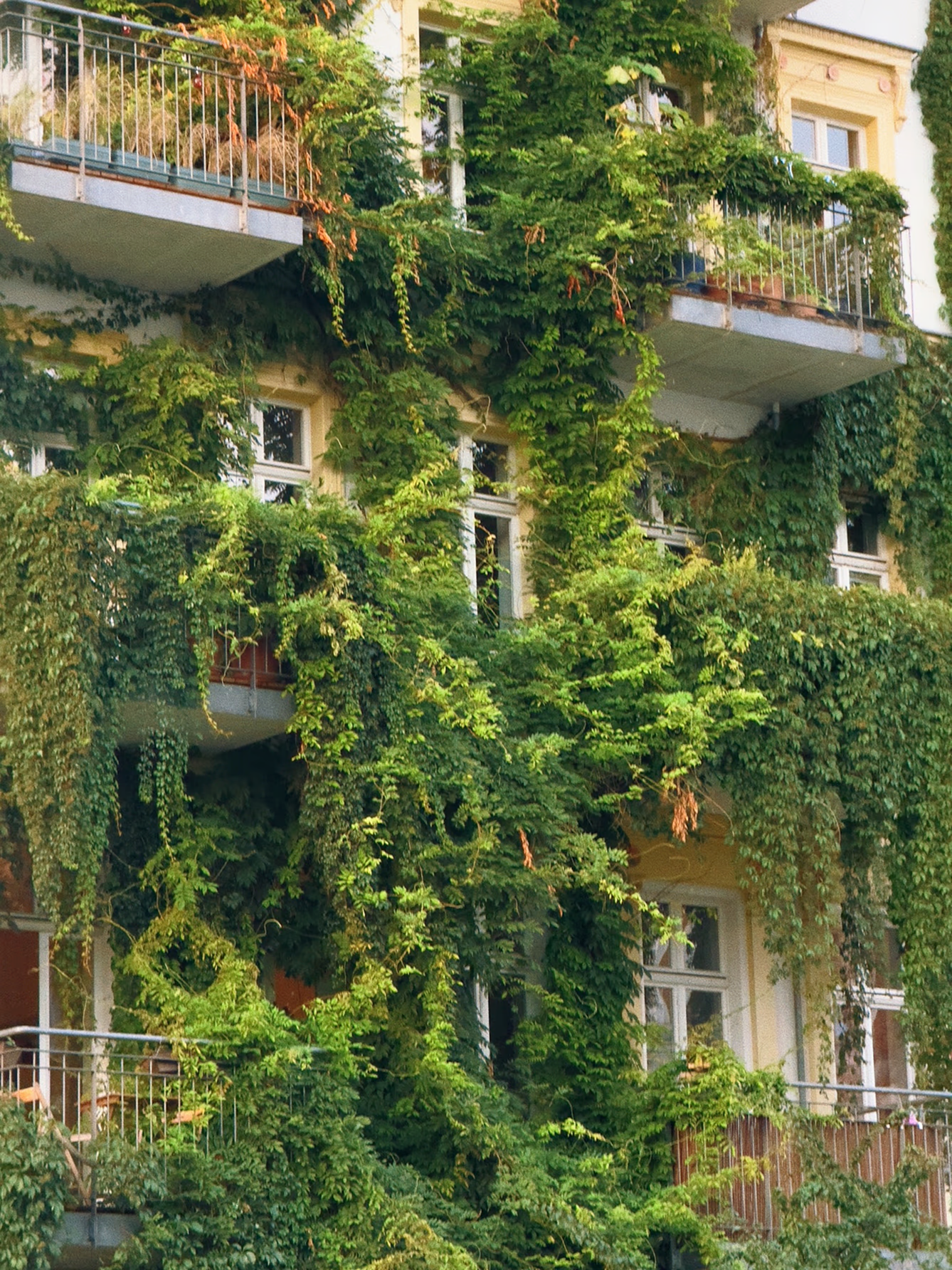
If I could create a prompt, it would be something like “in-between moments.” I'm really drawn to quiet transitions, empty spaces, small details, or moments that often go unnoticed.
I think these in-between states can feel more honest and emotionally resonant, especially in urban environments where everything is constantly moving.
10. Have prompts influenced, inspired, or changed how you think about photography? Or the types of photos you create?
I was already quite intentional with how I approach photography, but prompts have definitely added another layer to that. Over the years, especially after returning to VSCO during the pandemic, I've noticed how both the platform and the prompts have evolved.
In a way, it feels like there's been a shared growth between the community and the prompts themselves, which has encouraged me to think more carefully about what I create and submit.
11. When you submit to a prompt, do you ever look at the other photographer submissions?
When I'm submitting to a prompt, I usually don't look at other photographers' work beforehand. I prefer to approach it without too much external influence, so that my response stays more personal.
After submitting, I do explore other contributions. I think prompts shouldn't limit creativity, but rather create a space where different perspectives can exist and inspire each other.
Sharing perspective through prompts
For Kaan, the value of a prompt isn't in the theme, it's in what the theme makes him look for, and what it makes possible when he finds it.
That's how a hashtag led to a digital exhibition in Los Angeles. Not because he chased an opportunity, but because engaging carefully with a prompt—revisiting his archive, thinking about what he was actually submitting and why—produced work that was ready to be seen.
VSCO Prompts create that space every month. A shared theme, open enough to interpret across every style and subject. Respond with work from your archive, or let the idea change what you notice on your next shoot. Standout submissions get curated and highlighted by the team, and the galleries themselves are worth spending time in, after you've already submitted.
Because the best reason to look at other photographers' work isn't just to inspire your own work, but to also stay curious about what photography can be.
“I think prompts shouldn't limit creativity, but rather create a space where different perspectives can exist and inspire each other.”