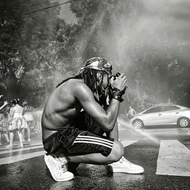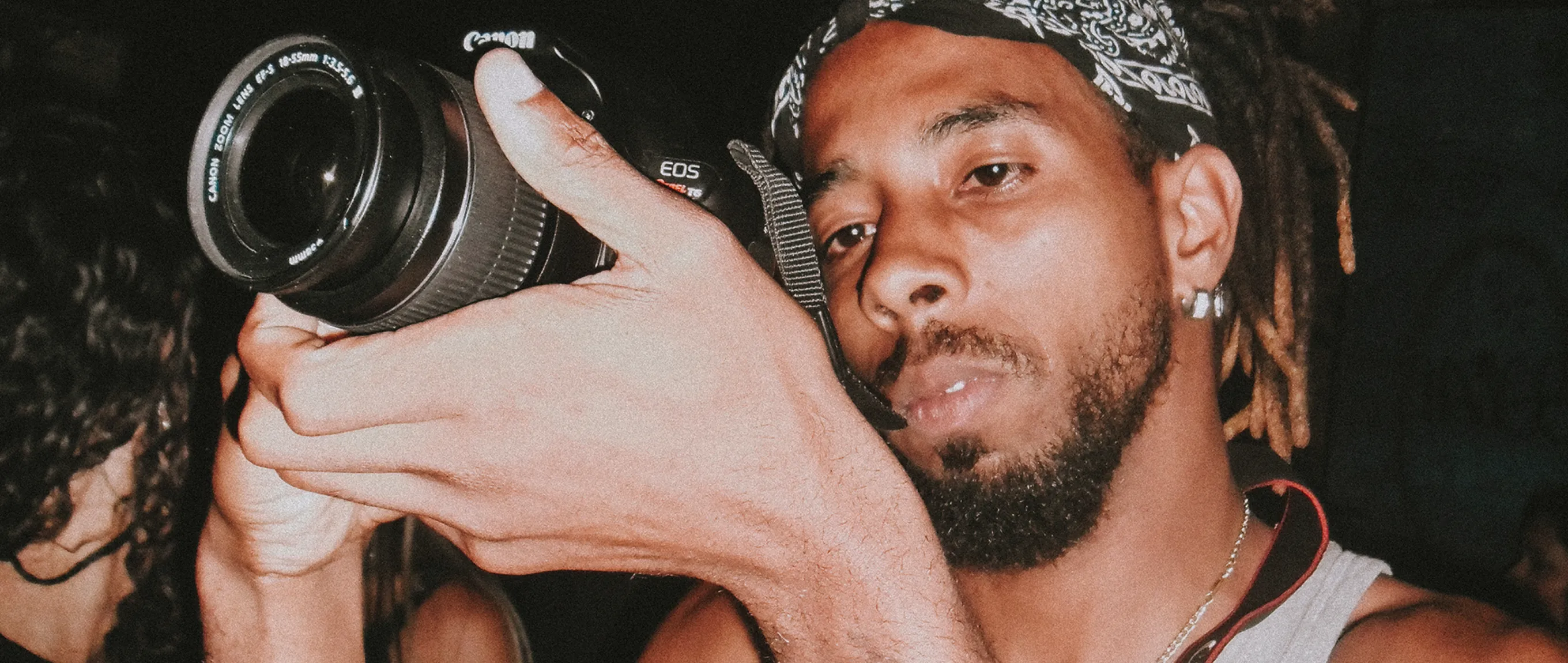
“My photography comes from lived experience. It's about moments I experience in my neighborhood and in the places I move through.”
Mano Batom doesn't go looking for photographs. He moves through his neighborhood, through music venues and performances, through the places that make up his daily life. The images are already there, waiting.
His practice sits somewhere between personal and professional, between hobby and commissioned work. That in-between space is actually where his photography lives best: rooted in observation, shaped by instinct, and connected to the artists and communities around him.
VSCO Prompts fit naturally into that. Not as assignments, but as themes that help him stay consistent, look at his archive differently, and occasionally push him toward images he wouldn't have gone after on his own.
In this conversation, Mano talks through how prompts work for him, and why the most important thing he's taken from them has nothing to do with gear.
1. How would you describe your photography?
My photography comes from lived experience. It's about moments I experience in my neighborhood and in the places I move through.
From those real situations, I create my images. It's less about staging and more about observing, feeling, and translating everyday life into photography.
2. How about your photographic practice?
I see myself as someone between amateur and professional. I have professional knowledge, but my work is still deeply connected to personal exploration and artistic expression.
Sometimes I photograph daily life as a hobby, and other times I work in a more professional context when I'm commissioned.
So my practice moves between hobby, artistic work, and professional projects.
3. How do prompts fit into how you move through the app?
I usually find prompts directly through the app, and I pay attention to what the community is creating. I look at what people are posting to see if I already have images that fit, or if I can create something based on that.
That process helps me decide when to participate and keeps me connected to what's happening.
4. How do you decide a prompt is interesting to submit to?
I choose prompts that connect with what I'm already trying to express. I look for themes that match the feeling or message I want to communicate in my images.
Sometimes I already have photos that fit naturally, and other times the prompt pushes me to create something new.
For me, it's about whether the prompt allows me to stay true to my perspective and my reality.
“For me, it's about whether the prompt allows me to stay true to my perspective and my reality.”
5. What are two of your all-time favorite prompts, and why?
Two of my favorite prompts are #MyVision and #FaceToFace.
#MyVision challenged me to pick up the camera and point it at a place, just capturing the moment. Then I work on the colors, which is a part I really enjoy, because it helps me shape the feeling of the image.
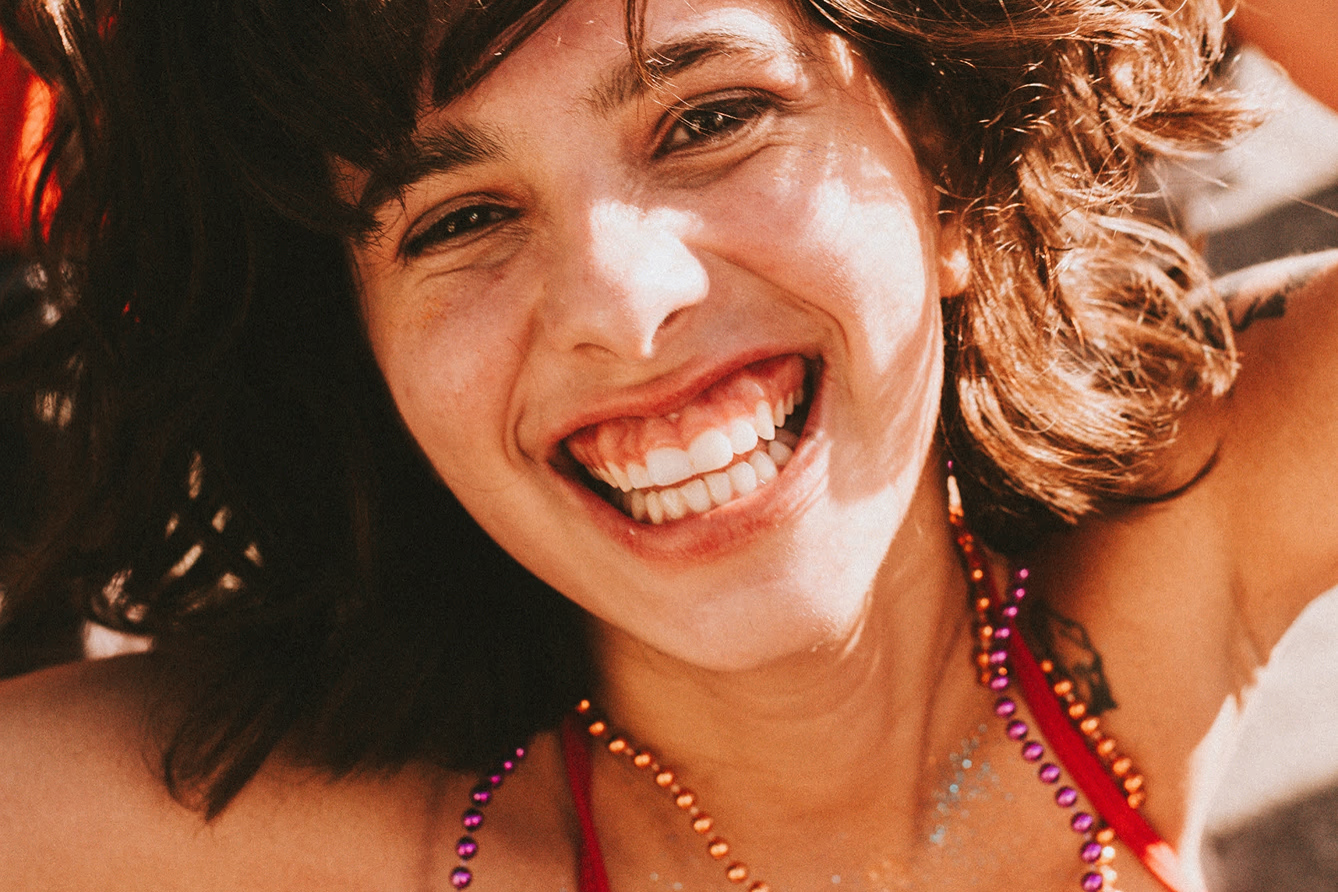
#FaceToFace stood out to me during Brazilian Carnival. It made me focus more on people's expressions and emotions up close, and I really connected with that.
6. Has submitting to prompts ever led to connections with other photographers, professional opportunities, or exhibitions?
I haven't had direct professional opportunities or exhibitions come from prompts yet. But I have had my work reposted by the platform, which brought more visibility to my portfolio and my profile.
7. What would you say is the biggest impact that prompts have on your photography?
The biggest impact for me has been motivation and direction. Prompts push me to keep creating, to look at my work in different ways, and to stay consistent with my photography.
8. When you submit to prompts, do you use archive images or take new ones?
Most of the time, I look into my archive and find images that naturally fit the prompt. But when I don't have something that matches, I use it as an opportunity to create.
When I'm out photographing—whether it's events, music, or following bands—I also keep the prompts in mind and try to capture images that could connect with those themes. It becomes part of my process.
9. If you could create a prompt for other photographers, what would it be and why?
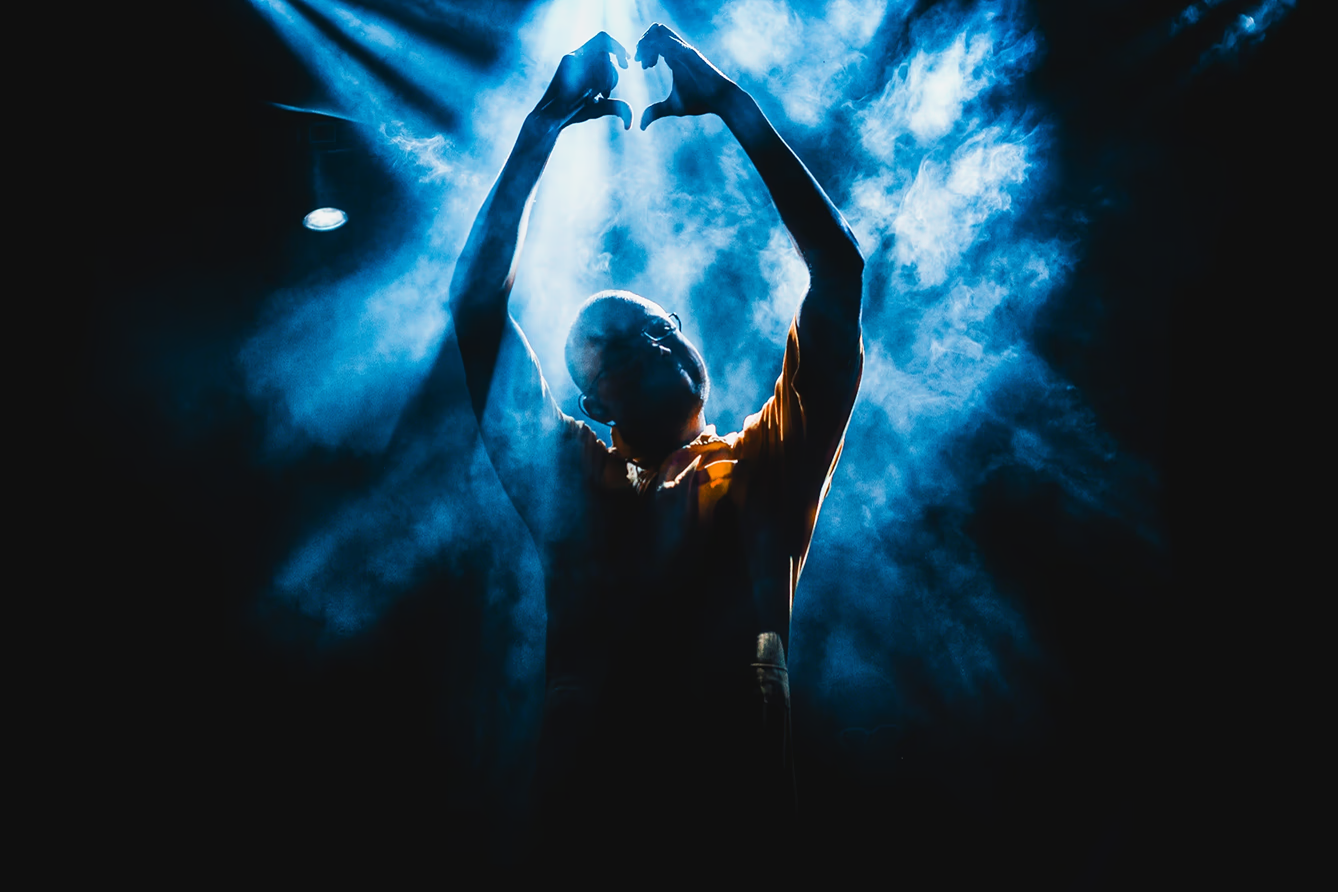
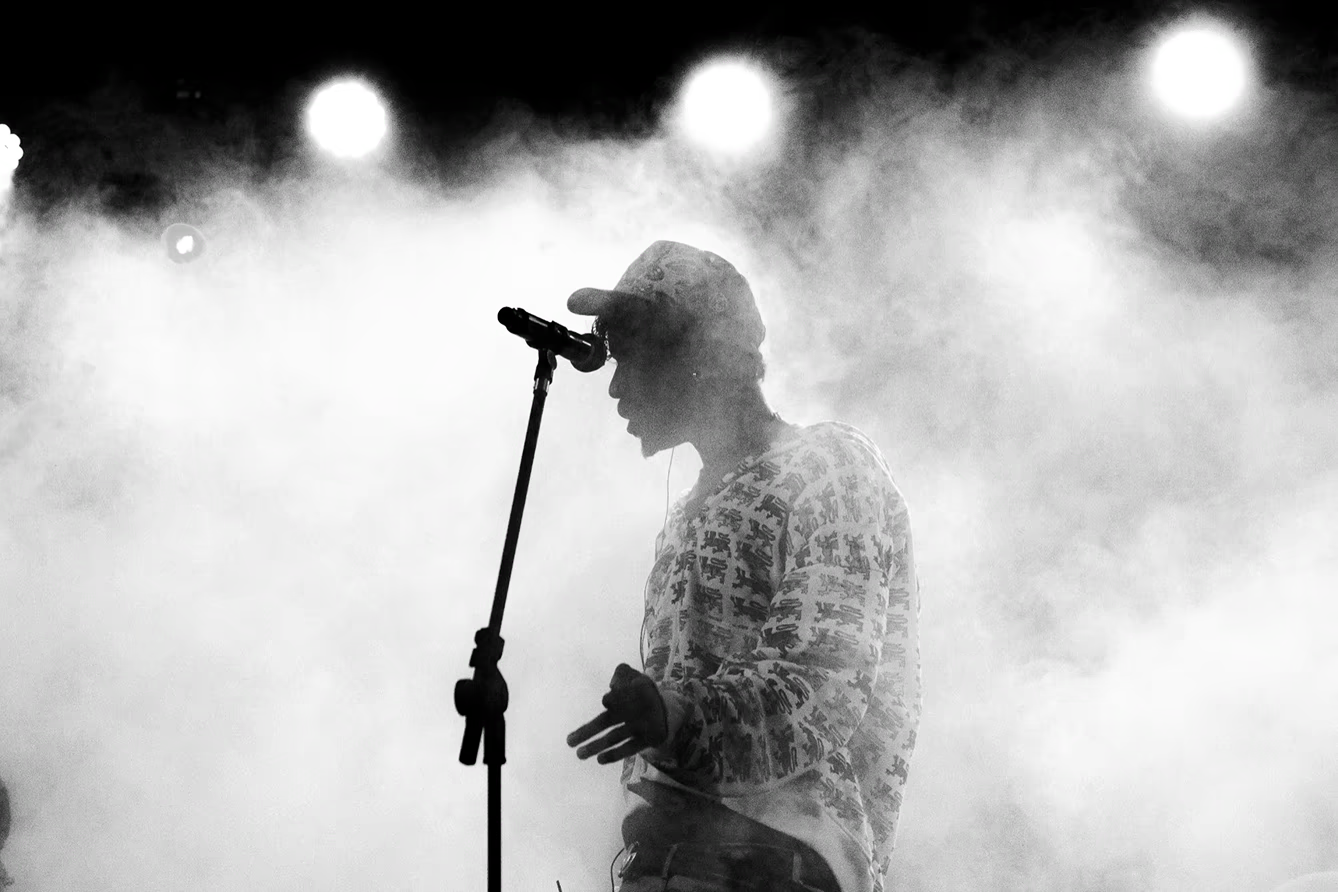
If I could create a prompt, it would be about the artistic world and the people who create. I have a strong connection with art, so I would focus on capturing artists in their moment.
It could be a live performance, someone playing music, singing, dancing, or even painting. The idea would be to show the artist's expression, energy, and creative process through photography.
10. Have prompts influenced or changed how you think about photography?
Yes, prompts have definitely influenced the way I think about photography. When I look at what other people are creating in the challenges, I see a wide range of approaches—from analog photography to digital, from professional cameras to simple ones.
That made me think outside the box and not limit myself by equipment. It showed me that the most important thing is the perspective and the idea behind the image, not just the gear. That mindset has influenced the way I create.
11. When you submit to a prompt, do you look at other photographers' submissions?
Yes, I like to look at other photographers' work. I do it both to find inspiration and to connect with what others are creating.
Sometimes I see something I haven't done before, and it becomes a reference that inspires me to create in my own way.
Staying motivated and connected through prompts
Mano doesn't wait for the right moment or the right equipment. He stays in motion, and VSCO Prompts give that motion a direction.
For photographers who work the way Mano does—from instinct, from observation, from the world immediately around them—prompts are less about creative exercises and more about staying engaged. A theme to check your archive against. A reason to look differently at what you're already photographing. Occasionally, a push toward something you wouldn't have gone after on your own.
Each month, VSCO Prompts give the community a shared idea to respond to through hashtags, with standout submissions curated and highlighted by the team. Your work reaches a wider audience. And watching how photographers from Brazil to Michigan to Japan interpret the same word differently is its own kind of education.
The perspective behind the image matters more than the camera in front of it. Prompts have a way of reminding you of that.
“It showed me that the most important thing is the perspective and the idea behind the image, not just the gear. That mindset has influenced the way I create.”