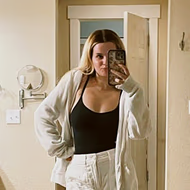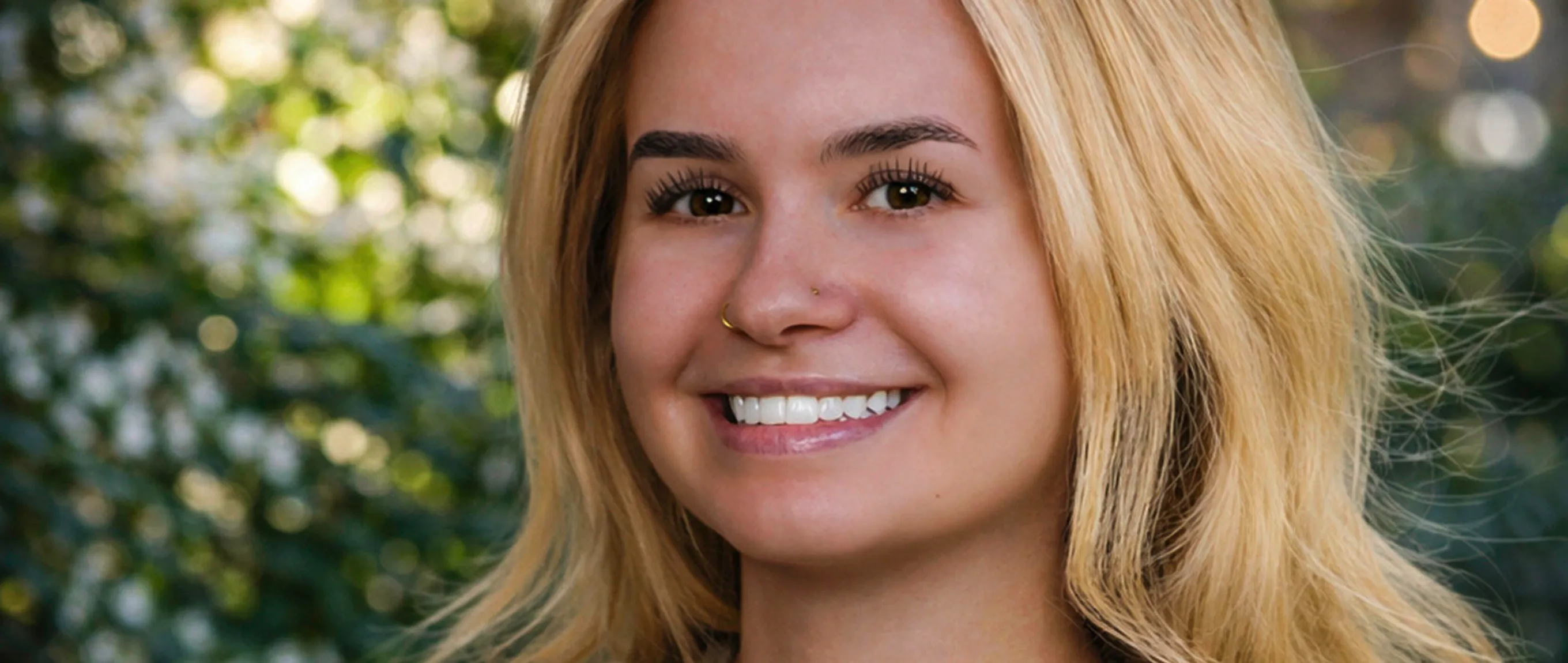
“My photography is really about capturing how a moment felt, not just how it looked. I use the camera as a way to hold onto how I experienced something, or how it stayed with me.”
Marin Kirkman photographs what most people walk past. The mundane detail, the quiet moment, the thing that doesn't demand attention but carries weight. That's what she's drawn to, and what she's built her practice around.
She started as a hobbyist. Over the past year she's been building her portfolio, booking photoshoots, and taking her work more seriously. VSCO Prompts are a meaningful part of how that shift happened, not just as a creative spark, but as a door that opened into a community she didn't know she was looking for.
In this conversation, Marin talks through how prompts became central to her process, and how a single hashtag led to a photo walk, a creative network, and eventually being featured in an exhibition at WPPI in Las Vegas.
1. How would you describe your photography?
My photography is really about capturing how a moment felt, not just how it looked. I use the camera as a way to hold onto how I experienced something, or how it stayed with me.
I'm often drawn to the mundane, the things that don't demand attention but carry a certain weight that can be felt through the lens.
2. How about your photographic practice?
I'd describe my photographic practice as emerging and transitioning into professional.
I started as a hobbyist, but over the past year I've been taking it more seriously, building my portfolio, booking photoshoots, and being more intentional with my work. I'm still experimenting and growing, but I'm actively working toward establishing myself professionally.
3. How do prompts fit into how you spend time on VSCO?
I spend a lot of time on the Discover page. It's part of how I get out of creative ruts.
I'll go through the prompt galleries and see such a wide range of styles, perspectives, and ways people approach photography. That often inspires me to explore new and more creative directions within my work.
Because of that, I almost always notice when prompts rotate. It's less that I'm waiting for them and more that I'm already in that space, using it as part of my process. I'll see a new prompt and immediately start thinking about how I'd interpret it or what feeling I'd want to capture.
I also keep up with the blog and social, but the Discover page is where I actually sit with the work and where most of my ideas start forming.
4. How do you decide a prompt is interesting to submit to?
The ones I end up submitting to are the ones that feel open enough to make it my own. I like when a prompt gives direction but still leaves room to bring my own perspective into it.
I like having that balance where there's an idea to work from, but it's still flexible enough that it can become something different depending on who's behind the camera.
“I like when a prompt gives direction but still leaves room to bring my own perspective into it.”
5. What are two of your all-time favorite prompts, and why?
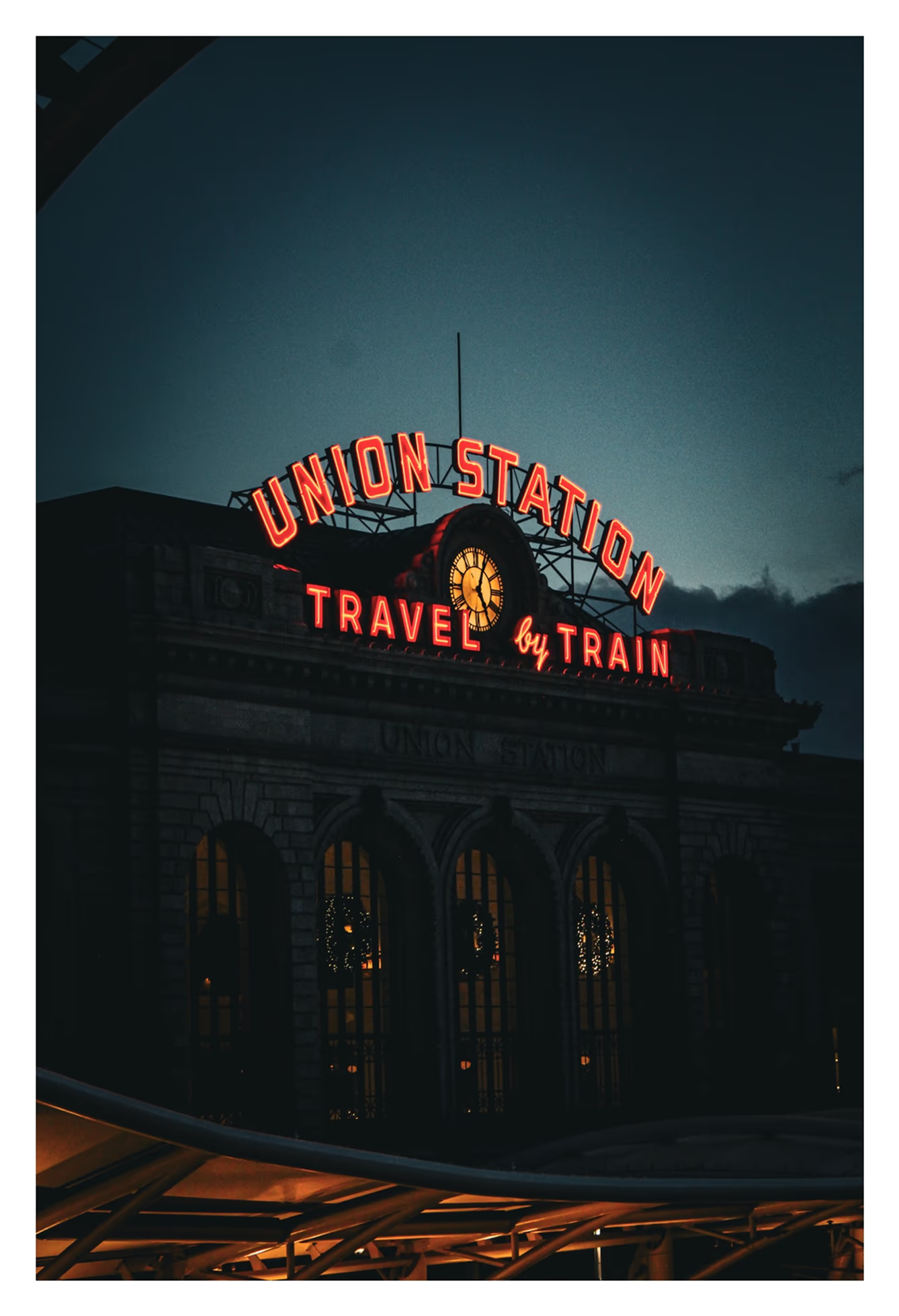
One of my favorites is #withvsco. It was one of the first prompts I ever submitted to, and it really shifted things for me. That's around the time I started taking photography more seriously and paying closer attention to the community.
It led me to find out about the VSCO photo walks, and the Denver one happened to be just a few days later. I decided to go, and that's where I met an amazing group of creatives that have had a huge impact on me, both as a person and a professional. That whole moment felt like a turning point in how I approached photography.
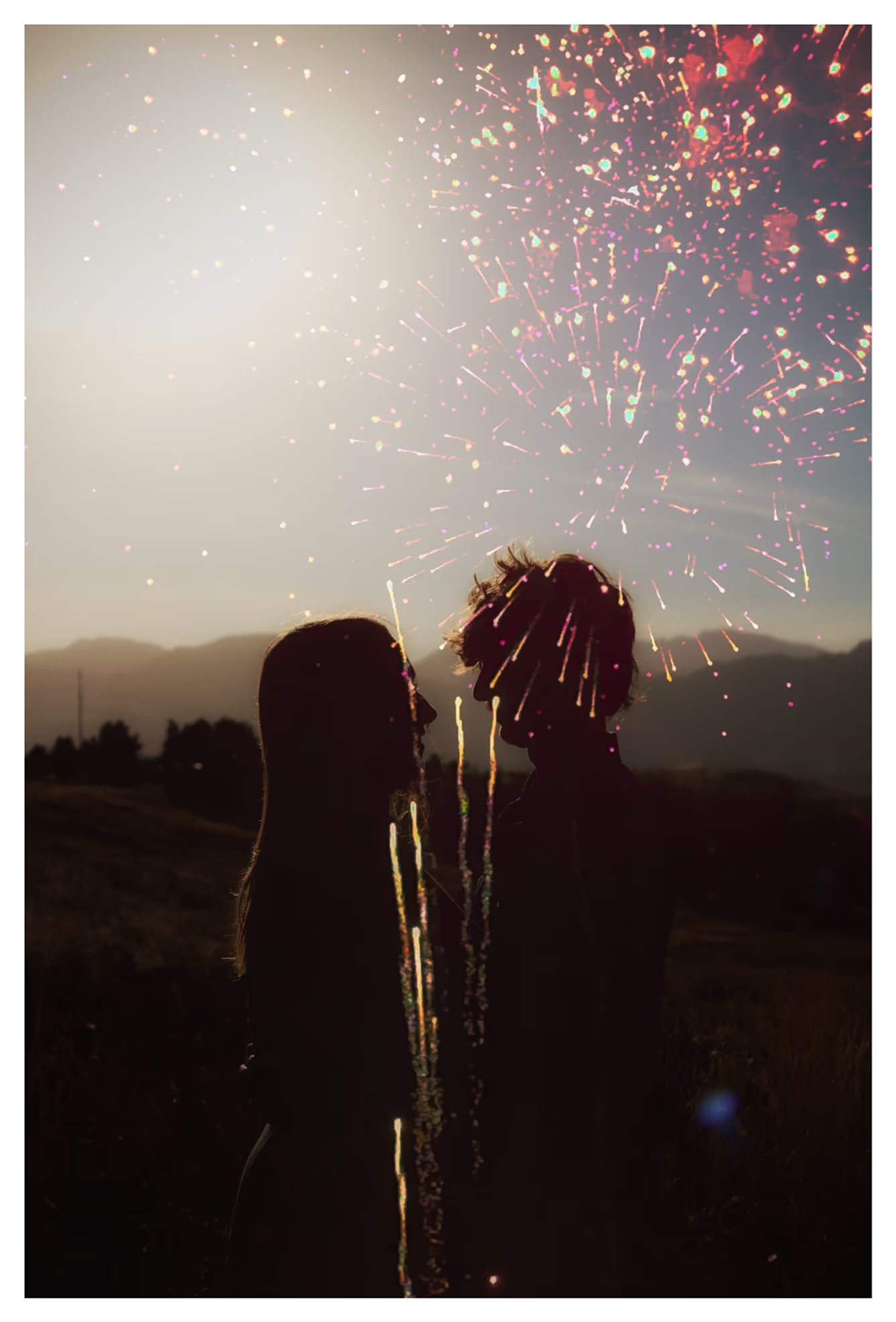
The second is #facetoface. It came at a time when I was starting to get more interested in portrait work but hadn't really pushed myself into it yet. It gave me a reason to actually go out and photograph, so I booked some sessions and started experimenting more.
I ended up creating a double exposure edit with fireworks layered into the image using some of VSCO's tools in the process, and it was one of the first times I felt like I made something that was both technically intentional and creatively different for me.
6. Has submitting to prompts ever led to connections, opportunities, or exhibitions? What has been the biggest impact?
Yes. Submitting to #facetoface led to my work being featured in the Converge exhibition party at WPPI in Las Vegas, which was a huge moment for me. It introduced me to a side of the photography world I hadn't really been exposed to before and made everything feel a lot more real in terms of where this could go. It also gave me a lot more confidence in my work and made me start believing in myself in a way I hadn't before.
The biggest impact, however, has been the community. There really isn't a substitute for that. Through prompts and spending time in the galleries, I became part of a phenomenal network of photographers who are consistently creating, inspiring, and building each other up.
That environment has been just as valuable professionally as it has been creatively. It's opened me up to collaborations, new opportunities, and a clearer understanding of how people are actually shaping their work and growing within the industry.
Being part of a space like that makes everything feel more possible. It's pushed me to take my work more seriously while also encouraging me to take more creative risks.
7. When you submit to prompts, do you use archive images or take new ones?
It's a mix. Sometimes I'll look back at something I recently shot and it lines up with a prompt, which I like because it shows where my head was at and where I was already leaning creatively. It gives those choices a bit more meaning.
A lot of the time, though, a prompt will push me to go out and capture something new, and that's my favorite part. They're really inspiring in that way and give me a reason to create more intentionally.
I like having both sides of that process, either recognizing something in work I've already made, or using the prompt as a reason to go create something new.
8. If you could create a prompt for other photographers, what would it be and why?
#YourPointOfView. Show how you see the world.
I like this idea because it's simple but completely open. It allows for a wide range of perspectives, styles, and subjects, while still keeping the focus on what makes each photographer's work their own.
9. How have prompts changed the way you see your own work?
Significantly. Prompts made me more intentional about what I'm photographing and why. They've opened me up to a much wider range of people, perspectives, and ways of working than I would've found on my own.
Being exposed to so many different styles, approaches, and levels of experience has expanded how I think about what photography can be.
It's also changed how I see my own place in it. Being around that much creativity has made me more aware of what draws me in, what I keep coming back to, and where I want to grow.
10. When you submit to a prompt, do you look at other photographers' submissions?
Every time! It's one of my favorite parts of the process. I love seeing the range of work that comes out of a single prompt.
It really shows how much room there is to approach something in your own way, and it always pushes me to think a little differently or try something new with my own work.
Looking through the community submissions always leaves me wanting to go out and create something.
Growing through community and shared themes
For Marin, prompts weren't just a creative exercise, they were an entry point. Into a community, a network, and a version of her photography practice she hadn't imagined yet.
That's what VSCO Prompts make possible. Each month, an open-ended theme gives photographers a shared starting point—specific enough to give direction, flexible enough to make entirely your own. Respond with something from your archive or use it as a reason to go capture something new. Standout submissions get curated and highlighted by VSCO's team, putting your work in front of a broader audience of photographers.
But beyond the images, it's the community that compounds. The Discover page, the prompt galleries, the photo walks. They're all part of the same space. A place where seeing how others interpret the same idea pushes you to think differently about your own.
Your next turning point might start with a hashtag.
“Being part of a space like that makes everything feel more possible. It's pushed me to take my work more seriously while also encouraging me to take more creative risks.”