Ask any experienced photographer what gear decision has the biggest impact on their image, and chances are, they’ll mention focal length. It’s one of the most important yet misunderstood aspects of photography, and once you get a feel for how it works, it’ll change how you approach every shot you take.
In this guide, we’ll break down everything you need to know about focal length in photography— from focal length basics to understanding how it impacts perspective, compression, and style. We’ll also share some real-life examples, creative tips, and a bit of post-processing advice to bring it all together. Whether you’re rocking a full-frame DSLR, an APS-C mirrorless, or just your smartphone, this article has something for you.
What is Focal Length in Photography?
Let’s start with the basics. The focal length of a lens (measured in millimeters) tells you two main things:
- How wide or narrow the field of view is
- How magnified your subject appears
It’s basically the distance from the optical center of the lens to the sensor when the subject is in focus. But let’s not get too technical — the most important thing to understand is how focal length affects your composition and storytelling.
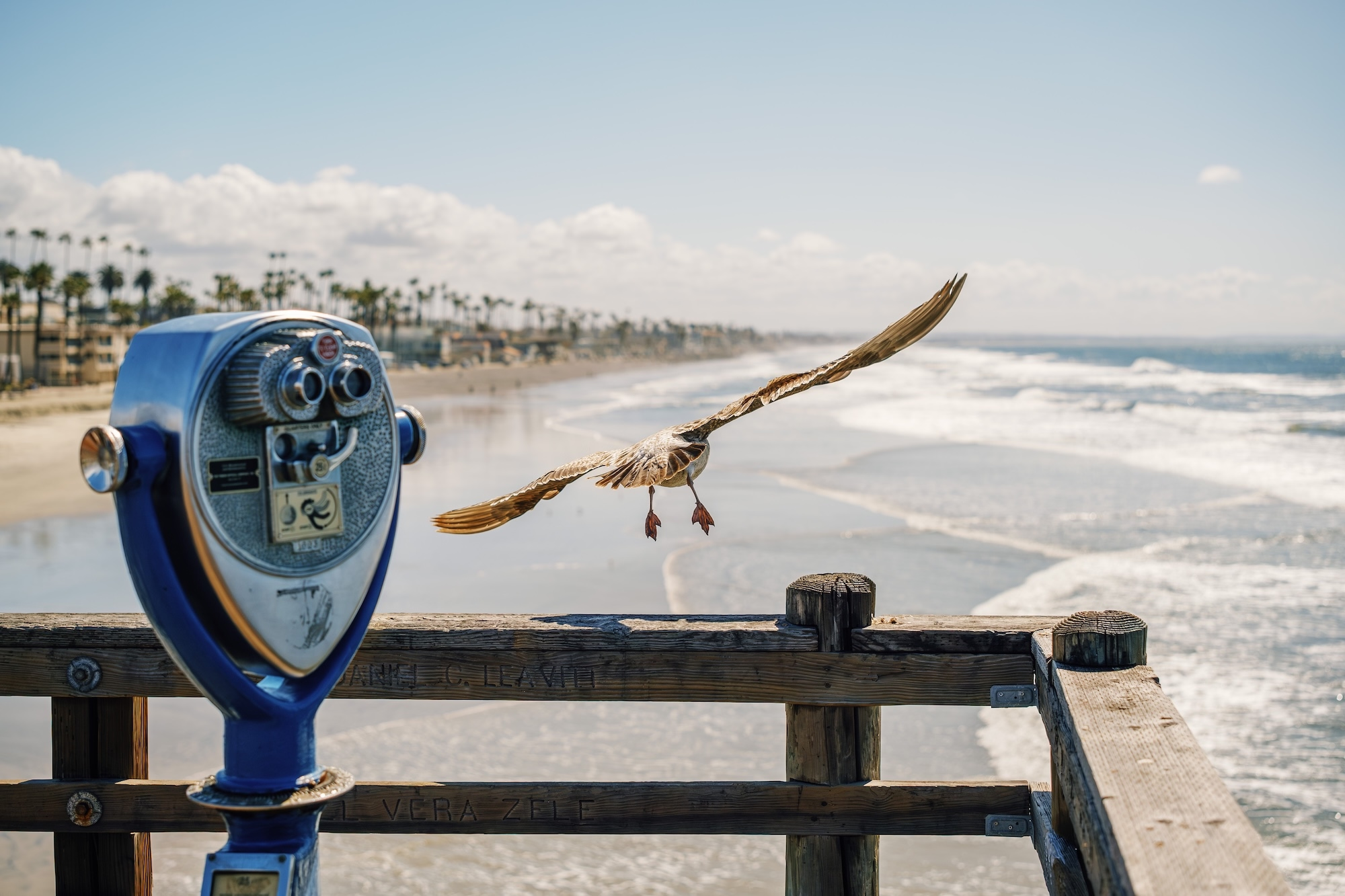
Think of focal length like your eyes on a zoom dial. Wide-angle lenses are like having your eyes stretched wide open, taking in everything. Telephoto lenses are like using binoculars — they narrow your view but bring things in close.
Focal Length Categories: Wide, Normal, and Telephoto
Photographers usually divide focal lengths into three general categories. These are all based on full-frame camera standards, so if you’re using an APS-C camera, you’ll need to multiply the focal length by 1.5 to get the full-frame equivalent (more on that in a bit).

Wide-Angle (<28mm)
- Common focal lengths: 14mm, 20mm, 24mm, 28mm
- iPhone equivalent: 0.5x or 1x lens
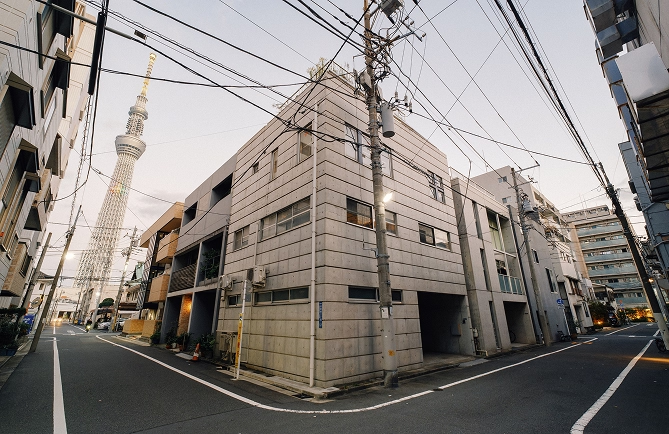
Wide lenses are ideal when you want to show the full environment. Think sweeping landscapes, dramatic architecture, or getting up close to a subject while still capturing their surroundings. They also exaggerate distance, making background elements appear farther away. This adds a dynamic, sometimes surreal look to your shots.
Creative tip: Use a wide lens close to your subject to make the viewer feel like they’re right there. This works great for street photography or intimate moments.
Normal (35mm - 50mm)
- Common focal lengths: 35mm, 40mm, 50mm
- iPhone equivalent: 2x lens
Normal lenses offer a field of view that feels the most like what we naturally see. These lenses are popular for everyday photography, street photography, and even environmental portraits. They don’t have the exaggerated look of wide or the compressed feel of telephoto lenses.
That “natural” perspective is part of why the Fuji X100 series (with its built-in 35mm-equivalent lens) is so beloved by pros and enthusiasts alike. Read more on choosing the right camera for you.
If you're unsure what lens to use, a 35mm or 50mm is often a safe and versatile choice.
Telephoto (>85mm)
- Common focal lengths: 85mm, 135mm, 200mm, 300mm+
- iPhone equivalent: 3x, 4x, 5x, 8x lens
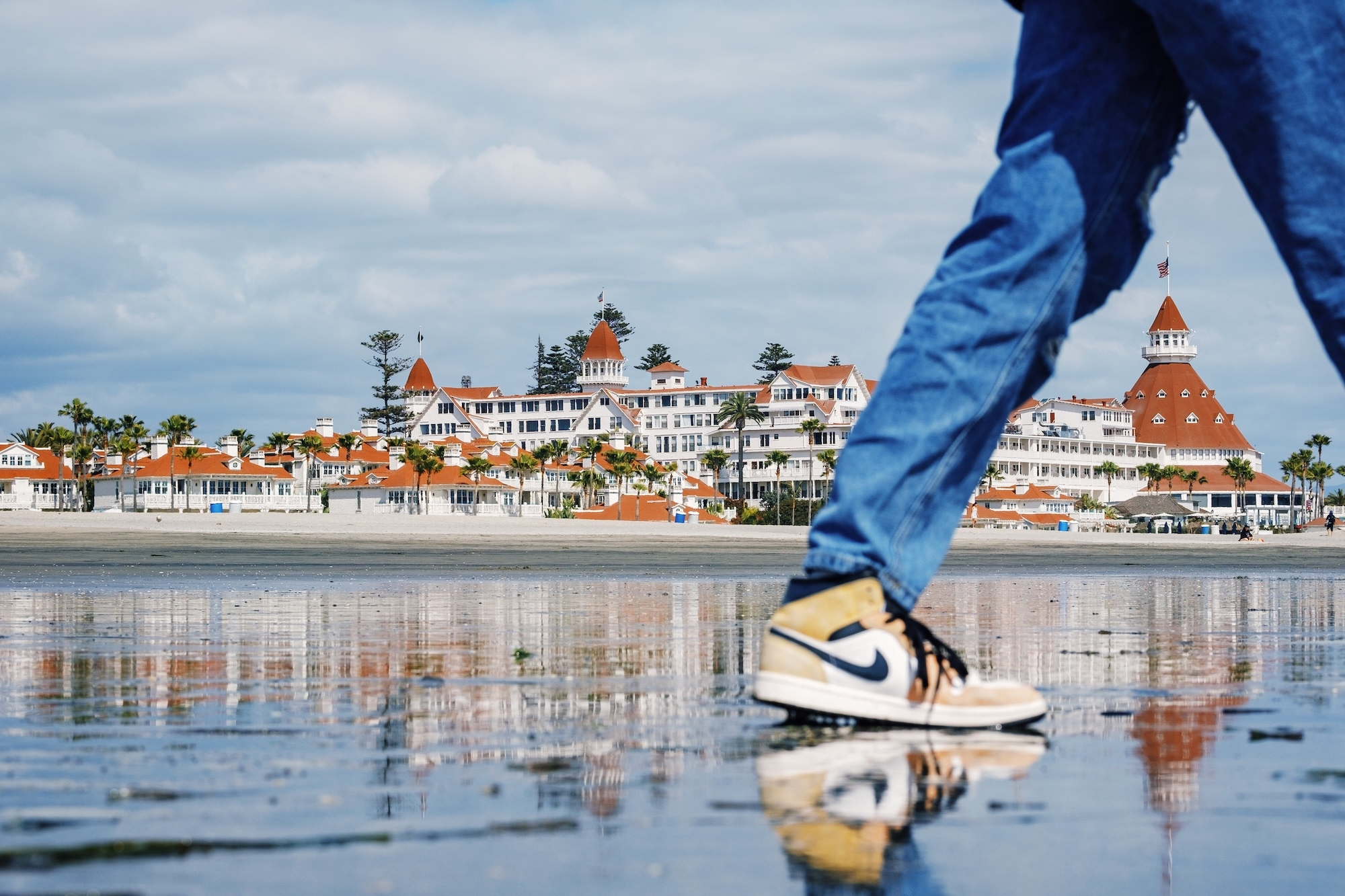
Telephoto lenses are your go-to when you need to bring distant subjects closer. Wildlife photography? Sports? Candid portraits from a distance? This is your zone. But there’s more:
- They compress the background, making it feel closer to your subject.
- They blur backgrounds (bokeh), helping isolate your subject.
- They reduce perspective distortion, making them flattering for portraits.
Creative tip: Use an 85mm or 135mm for portraits to make your subject pop without distortion. This is why professional headshots are often taken with longer lenses.
Focal Length and Sensor Size: Don’t Forget the Crop Factor
If you’re using a crop-sensor camera (APS-C), your lens’s focal length will behave a bit differently. Multiply the lens focal length by 1.5 to get its full-frame equivalent.
Example: A 23mm lens on an APS-C camera behaves like a 34.5mm lens on full frame. That’s why many APS-C cameras ship with 23mm or 35mm lenses — to give you that sweet spot "normal" focal length.
Real-Life Focal Length Examples for Different Photography Types
- 14mm (Ultra Wide): Great for real estate, architecture, or dramatic sky shots. Use it with caution on faces unless you're going for a comedic effect.
- 24mm (Wide): Landscape and lifestyle staple, with just a hint of distortion to create a dynamic image
- 28mm: Classic street photography look, being wide without appearing stretched.
- 35mm: Street photography staple. Versatile, intimate, and natural-looking.
- 50mm: Classic choice for portraits, food photography, and day-to-day shooting.
- 85mm: Stunning for head-and-shoulder portraits with creamy background blur.
- 200mm+: Sports, wildlife, or anything you can’t physically get close to.
Focal Length Formula (If You’re Curious)
Technically, the focal length is calculated using this formula:
Focal length = distance from the optical center of the lens to the sensor when the subject is in focus.
But unless you're designing lenses, you don't need to worry about the math. Just know that bigger numbers = more zoom/compression, smaller numbers = wider view.
Focal Length Affects Perspective, Not Just Zoom
One of the biggest misconceptions is that focal length just makes things bigger or smaller. In reality, it changes the spatial relationship between objects in your frame.
- Wide lenses exaggerate space: Objects look farther apart.
- Telephoto lenses compress space: Objects look closer together.
This has a massive impact on the feel of your image. A wide-angle landscape feels expansive and dramatic. A telephoto portrait feels intimate and cinematic.

How to Choose the Right Focal Length for the Job
Think about what you’re trying to say with your image. Do you want to include the background, or eliminate it? Do you want the viewer to feel close to the subject or observe from afar?
Here’s a cheat sheet for focal lengths by type of photography:
- Landscape photography: 14mm to 35mm
- Street photography: 28mm to 50mm
- Portraits: 85mm to 135mm
- Sports/Wildlife: 200mm and up
Photo Editing Tips Based on Focal Length
Post-processing can help you emphasize the strengths of your chosen focal length, or even fix minor issues caused by it.
Wide-Angle Shots
- Correct distortion: Use perspective correction tools, like VSCO’s skew tool.
- Enhance depth: Use image contrast adjustments, clarity, and texture sharpening to add separation.
- Crop with care: Cropping too much defeats the purpose of a wide-angle lens.
Telephoto Shots
- Sharpen your subject: Use selective image sharpening to draw attention.
- Tame the bokeh: Sometimes background blur can be too strong; increase your aperture if it's distracting.
- Clean up noise artifacts: If you used a high ISO with your telephoto lens to maintain a good shutter speed, use noise reduction carefully to clean up the image.
Using the Power of Focal Length
Understanding focal length is like unlocking a superpower. Once you get a feel for how different lenses affect perspective, composition, and emotion, your creative options explode. You’ll know when to use a wide lens for storytelling, when to reach for that telephoto to isolate a moment, and how to work with normal lenses for a more documentary feel.
So whether you're wondering what the focal length of a lens is or you just want focal length examples that help you choose your next lens, remember this: Focal length is more than just numbers. It's a storytelling tool.
Now go out there and experiment. Zoom with your feet. Try new lenses. Explore how focal length changes not just what you see, but how your viewer feels about what they see.