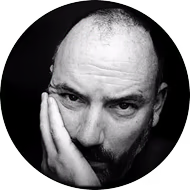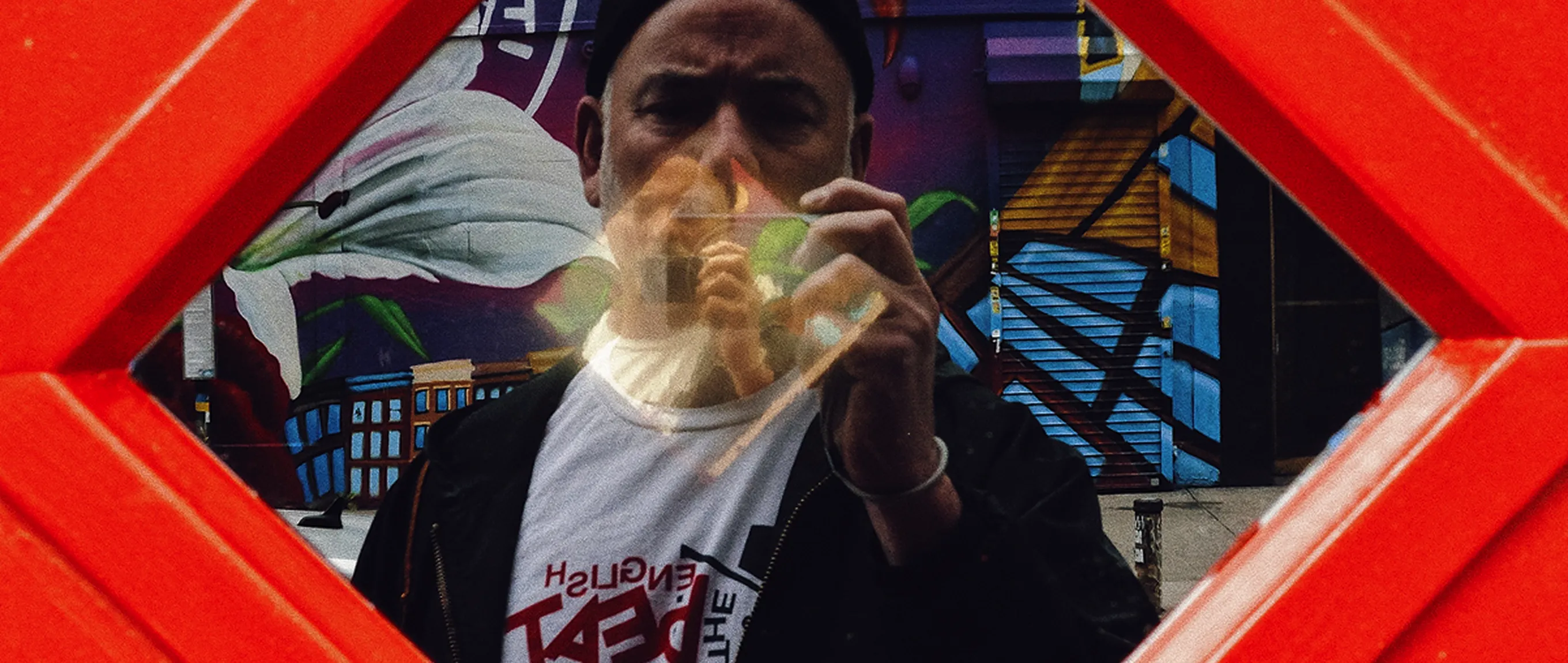
VSCO already has some really great presets inspired by those stocks, but I wanted something more personal. Not just “this looks like film,” but something that felt like my memory of film.
Greg Schmigel spent his high school years in a darkroom, watching prints come alive in developer trays, learning patience through the smell of chemicals and the slow reveal of an image. That experience didn't leave him when he switched to digital. It went into his recipes.
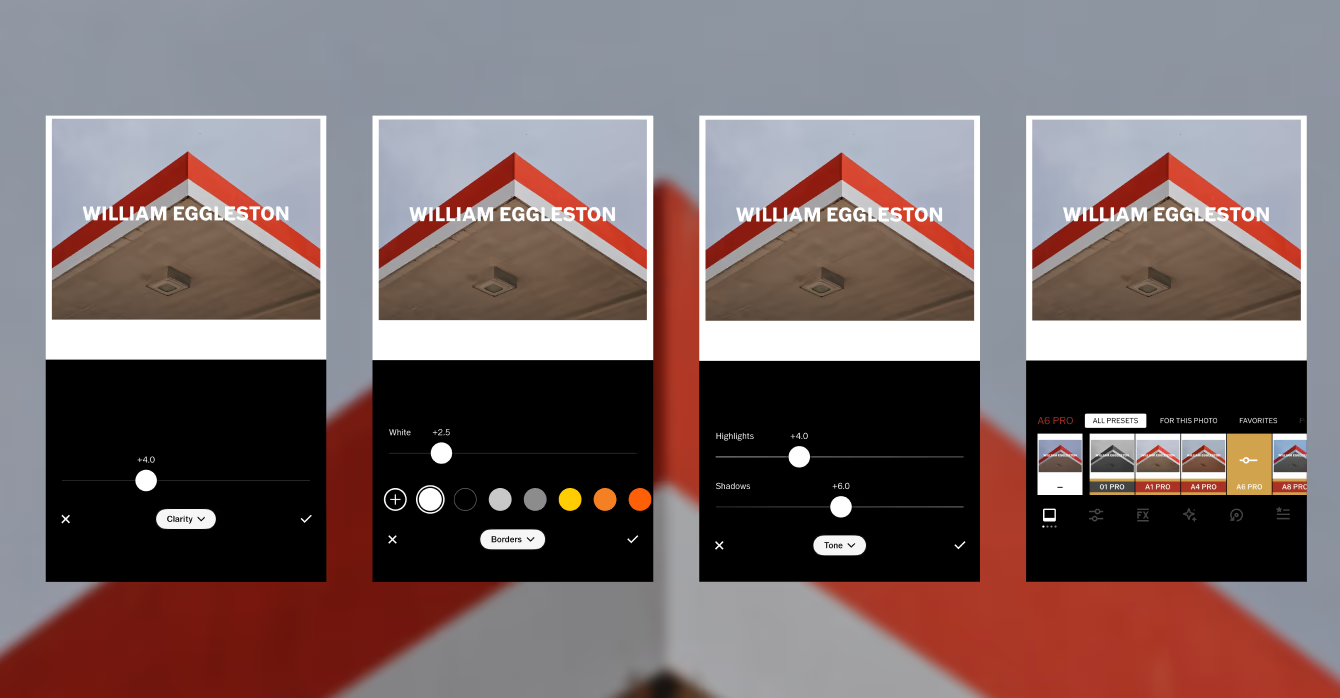
For Greg, VSCO Recipes isn’t a productivity tool. It’s a way to chase a feeling, specifically, the feeling of film stocks he grew up shooting, and the visual language of photographers he's studied deeply. Garry Winogrand's gritty blacks, William Eggleston's aggressive color honesty, Saul Leiter's soft layered light bleeding into itself.
In this conversation, he walks through how building recipes became a form of photographic study, and how that process changed not just how he edits, but how he shoots.
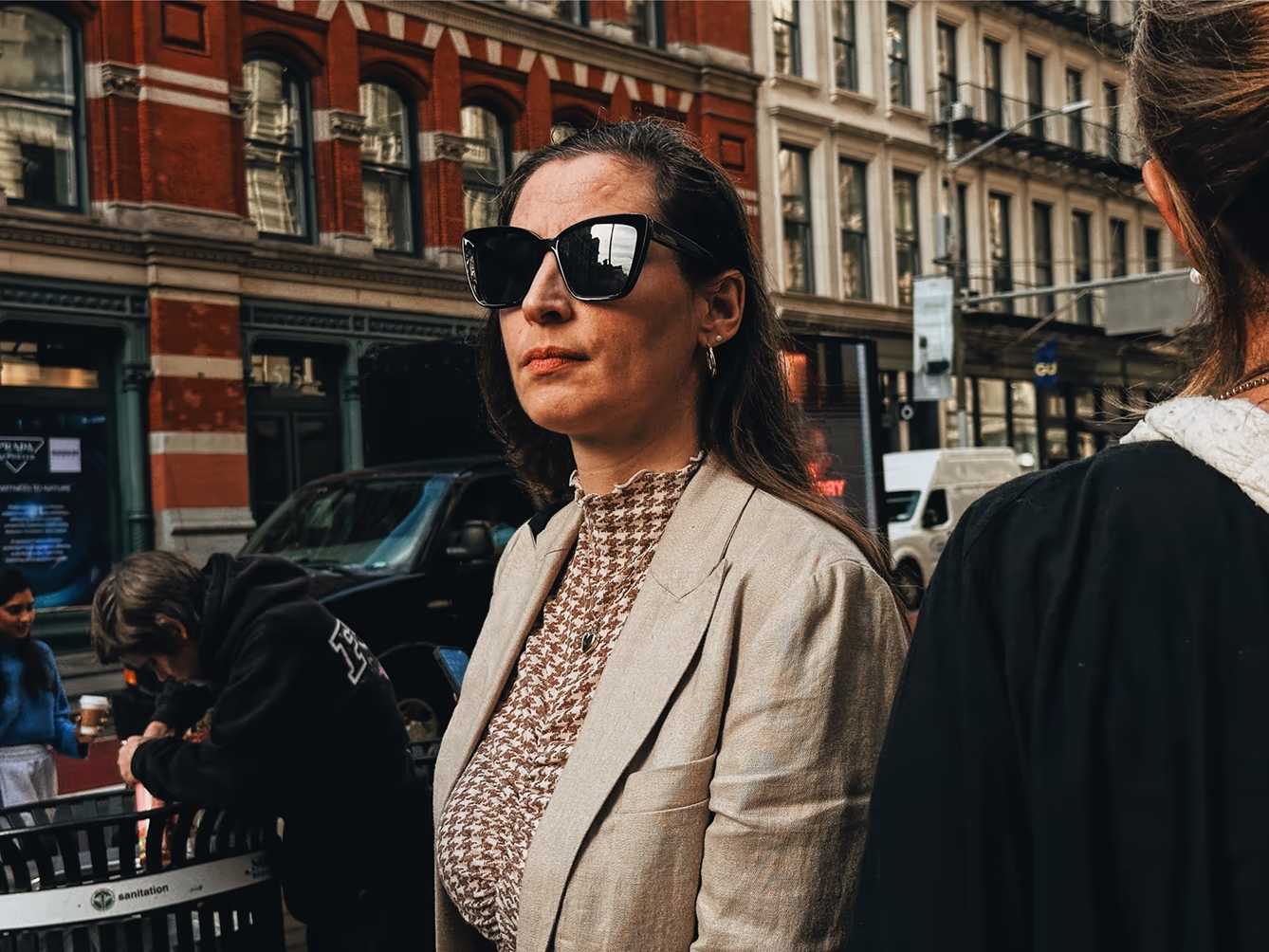
1. What was the first recipe you created? Why did you create it and how did it inspire your creativity?
I’ve always been into the classic black and white film look. Film stocks like Kodak Tri-X 400, Ilford HP5, and Fujifilm Acros. Those films just speak history to me. The grain, the contrast, the tonality, all of it.
VSCO already has some really great presets inspired by those stocks, but I wanted something more personal. Not just “this looks like film,” but something that felt like my memory of film.
It pulled me back to my high school days, standing in the darkroom, watching a print slowly come alive in trays of developer. That smell, that patience… you don’t forget it.
The first recipe I built was a Tri-X 400 inspired setup. Honestly it came out of frustration more than anything. I was chasing that nostalgic feeling that I mentioned, not just a clean preset look. And everything online just felt too perfect, too polished. So, I just started messing with settings until it felt a bit more raw, and a bit more human. And somewhere in that process I realized I wasn’t just editing photos anymore—I was building a repeatable way to feel something through images.
That first recipe opened the idea box. Editing stopped being a last step and became part of the creative process itself. More intention, much less autopilot.
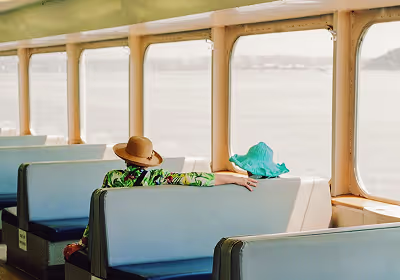
2. Which recipe have people responded to most? What do you think they're connecting with when they see it?
People reached out after I shared a few, mostly asking for Tri-X and Kodachrome type looks. Kodachrome 64 especially. That one’s still a work in progress for me, it’s tricky.
But yeah, I think people gravitate toward them because they’re not trying to be perfect film copies—they’re more like memory versions of film.
3. How often are you creating recipes? What do they help you accomplish in your creative practice?
I’m always making them, just not always on purpose. And many of them often find their way to the trash bin.
Sometimes I’ll sit down and build something from scratch, other times I’ll tweak one recipe for hours, slowly nudging it in a direction without really thinking too hard about it. At first, I was like most people—trying to recreate specific film stocks.
But over time I started shifting more toward photographers instead of just film. People like Garry Winogrand, William Eggleston, Saul Leiter.
Winogrand, for example, shot mostly on Tri-X. I’ve studied his images thousands of time—how the blacks fall, how fast the highlights clip, the grit in the grain.
Eggleston is different, very direct color, almost aggressive in how honest it is.
And Leiter… Leiter is softer, more layered. Reflections, fogged windows, color bleeding into color. Same Kodachrome base, but totally different emotional outcome.
Their lenses matter too, their timing, everything. I digress a bit here, but basically recipes help me slow down. They make me ask why a photo feels a certain way instead of just fixing it. Over time they’ve become like a toolkit I can return to when I want a certain mood, not just a look.
Recipes help me slow down. They make me ask why a photo feels a certain way instead of just fixing it.
4. Have recipes made you think differently about photography and the creative process? Have they inspired any new ideas?
Yeah, definitely.
They changed how I see photography overall. It’s not just about capturing something anymore—it’s about how you interpret it after.
Back in the film days, that interpretation happened in a darkroom. Now it’s on a phone or a laptop, but the idea is the same. You’re still “developing” the moment, just digitally.
Working with recipes also made me think more like a filmmaker sometimes. Or even a painter. You start thinking in terms of tone, consistency, mood across a set of images instead of just single shots. And weirdly, it even changes how I shoot.
If I know I’m using a certain recipe later, I might look for different light, or stronger colors, or deeper shadows. So the editing idea actually starts influencing the photo before I even take it.
5. Do you check out recipes from other VSCO photographers? If so, what are some of your favorites and who created them?
Yeah I do, and honestly it’s one of my favorite parts of the VSCO community.
What I like most is when recipes are subtle. The kind where you don’t really notice the edit at first, but you feel it. Those are usually the best ones.
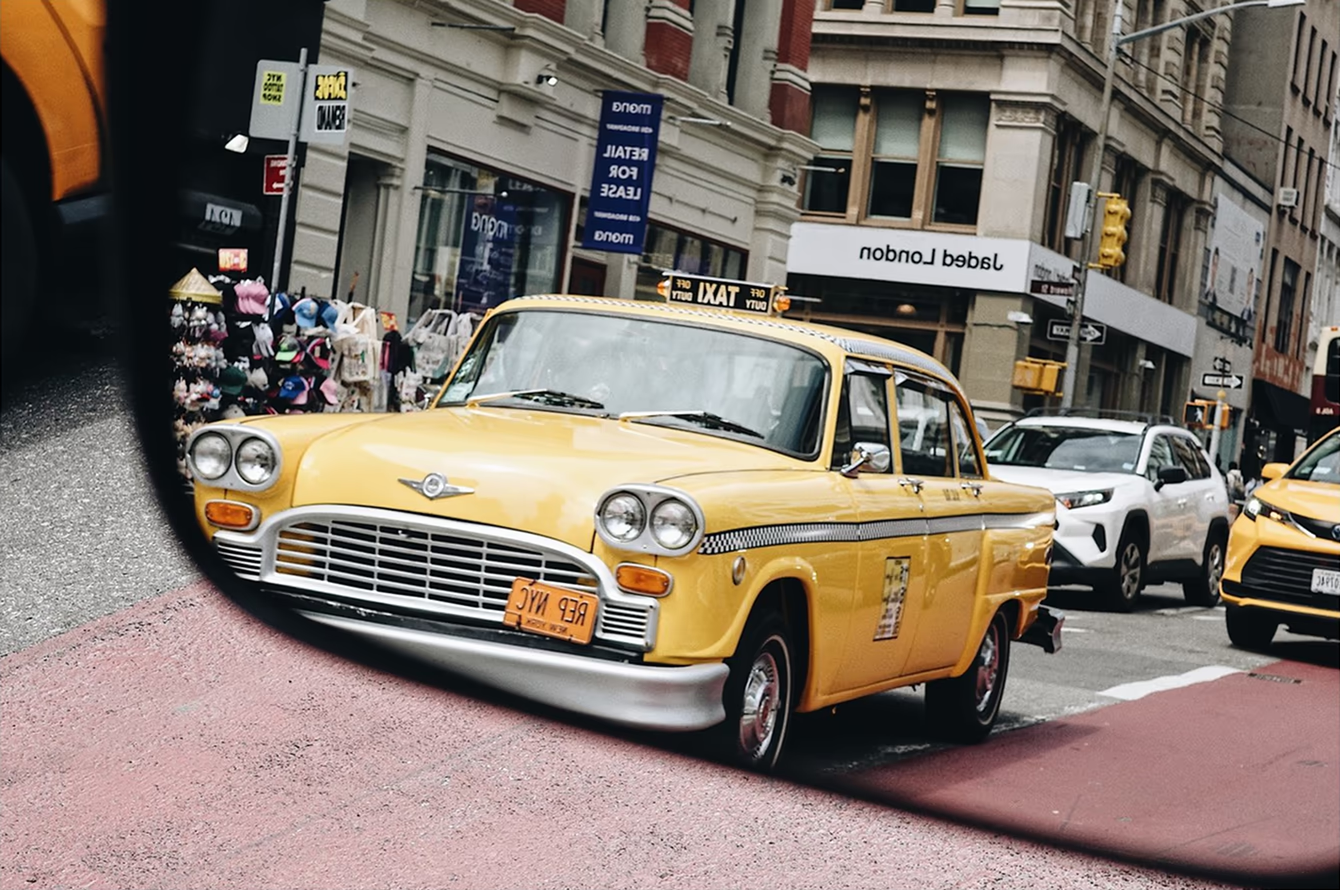
Some people are really strong at straight film emulation, others go more experimental, pushing color in strange directions or flattening tones in interesting ways. Both approaches are inspiring, just in different moods.
For me, the best recipes feel like they come from a person, not just a settings list. You can kinda tell when someone is expressing how they see the world, not just copying a film stock.
6. How often do you share your recipes with other photographers?
Not super often, honestly. I’ve posted a few on my VSCO blog and shared some bits on Instagram here and there. But I don’t really focus on promoting them.
When someone reaches out, I’m always happy to share though. It’s nice hearing that something you made connected with someone else’s work.
I’ve had some good feedback, and yeah, also a bit of criticism too—but that’s fine. Not everything lands with everybody, and that’s just how it goes.
Most of my recipes are really built for my own use first. If someone else finds value in them, that’s a bonus. I also like leaving some space for interpretation. Not everything needs to be fully explained. Sometimes it’s better when people take it and bend it into their own thing.
7. This piece made me smile for so many reasons. Can you tell me a bit more about what inspired you to create recipes around all of these photo-history heroes?
That idea came from a mix of respect and curiosity. I’ve always been drawn to photographers who didn’t just take pictures, but changed how we see pictures.
People like Winogrand, Eggleston, Leiter… they weren’t just documenting life, they were shaping visual language.
So the recipes weren’t about copying them. More like translating them.
Like, what would their way of seeing feel like if it passed through modern tools? What parts still hold up today? And honestly it made me study their work way deeper than I normally would.
When you try to recreate a feeling, you notice tiny things you’d usually miss—how light hits a wall, how color shifts in shadow, how chaotic or calm a frame really is. It felt a bit like a conversation across time.
Like borrowing a voice from the past and seeing how it still speaks today.
And in a way, just saying: this still matters.
Building a visual language with VSCO Recipes
Greg's recipes aren't shortcuts. They're the result of endless hours looking at great photographs and asking what makes them feel the way they do.
VSCO Recipes isn’t just about saving a look, but building a repeatable way to feel something through images. Save any combination of presets, tools, HSL adjustments, and effects as a single recipe. Apply it in one tap. Refine it as your eye develops. Share it if you want, or keep it for yourself and let it evolve.
The best recipes, as Greg puts it, feel like they come from a person. Getting there takes time, study, and a willingness to sit with an image until you understand why it works. Recipes give you a place to store that understanding, and a faster way to bring it to the next shot.
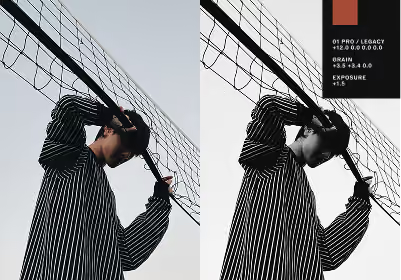
The best recipes feel like they come from a person, not just a settings list. You can kinda tell when someone is expressing how they see the world, not just copying a film stock.