Hotels need compelling photography to showcase their properties, attract guests and bring their brand to life. For photographers, that creates opportunities to work with independent hotels, boutique properties, resorts and hospitality groups.
Getting hired takes more than knowing how to photograph beautiful spaces. Hotels need photographers who understand their brand, can create images for different marketing channels and know how to manage a commercial project from planning through delivery.
You don't need an established hotel portfolio to get started. With relevant work, a targeted outreach strategy and a clear understanding of commercial photography, you can start building relationships with hospitality clients.
Here's how to build your portfolio, find hotels to pitch, price your work and turn your first assignment into a lasting client relationship.
Key Answers
- Build a targeted hotel photography portfolio. Showcase interiors, guest rooms, amenities, architecture, and lifestyle images that demonstrate your ability to capture a property's brand and guest experience.
- Find hotels with a reason to hire a photographer. Look for property renovations, new openings, rebrands, and seasonal campaigns that create demand for updated photography.
- Personalize your outreach. Contact hotel owners, marketing directors, or communications teams with a specific photography opportunity, relevant portfolio examples, and a clear proposal.
- Price projects based on scope and usage rights. Account for production time, editing, expenses, deliverables, and image licensing rather than charging by image count alone.
- Start small and build long-term relationships. A paid gallery refresh can lead to larger assignments, seasonal updates, referrals, and repeat business when paired with reliable delivery and consistent communication.
In this guide, you'll learn how to:
- Understand what hotel clients need from a photographer
- Build a hotel photography portfolio that opens doors
- Find hotels with a reason to hire you
- Pitch hotels and win your first assignment
- Price and license your hotel photography
- Plan and deliver a hotel photography session
- Turn first assignments into repeat business
- Build relationships and get referrals
- Manage your hotel photography business
- FAQs
Hotel photography does two jobs at once. It sells the experience of a stay, and it shows prospective guests exactly what they're booking. A beautiful image of a room communicates atmosphere, but the marketing team also needs images that accurately show the layout, bathroom, view, amenities and differences between room categories. That distinction changes how you plan a project.
Most hotels need a mix of images to showcase their property, including:
- Guest rooms and suites: Highlight layouts, furnishings, and design details
- Exteriors: Capture architecture and surrounding landscapes
- Amenities: Showcase pools, fitness centers, and spas
- Food and beverage: Feature restaurants, signature dishes, and bars
- Lifestyle photography: Show guests enjoying the property and its experiences
A varied gallery gives hotels content for their websites, social media, and booking platforms while helping potential guests imagine their stay.
Know the Three Jobs Hotel Images Do
- Brand and editorial: communicate the property's personality, atmosphere and guest experience
- Booking and property imagery: show rooms, layouts, amenities and features accurately
- Lifestyle and campaign imagery: show people enjoying the property and create aspirational marketing content
Build a Shot List Around What Guests Will Book
A useful hotel shot list covers each of these areas:
- Guest rooms: every room category, not just the most attractive suite, from multiple angles, with bathrooms, views and distinctive features
- Architecture and interiors: the property's defining spaces, including the lobby, entrance, restaurant and common areas
- Amenities: the pool, spa, fitness center, outdoor spaces, meeting and event spaces and other facilities guests might consider when booking
- Food and beverage: restaurant interiors, signature dishes, drinks and the overall dining experience
- Lifestyle: guests or models using the spaces naturally, with attention to the experience the hotel wants to sell
- Details: materials, furnishings, architectural features and smaller touches that communicate the property's identity
Before you build the list, ask the hotel which room categories and amenities are priorities. A hotel needs to represent what guests will actually receive, not just produce beautiful images. A library is most useful when it gives the marketing team options, such as establishing images for headers and booking pages, detail images for social and campaigns, and both horizontal and vertical compositions.
Match Your Style to the Property's Brand
Every hotel has its own personality. A luxury resort might favor polished architectural images, while a boutique property may prefer candid lifestyle photography and warmer, editorial edits. Before you pitch, research the hotel's website, booking pages, social media and recent press releases. Note its photography style, featured amenities and target audience. That helps you explain why your work fits and share examples that complement its branding.
Your portfolio is often a hotel's first impression, so make it easy for a marketing team to picture hiring you. Choose images that show you can:
- Photograph different kinds of spaces
- Work in varied lighting conditions
- Capture both polished interiors and candid moments
Technical craft matters as much as taste. Hotel marketing teams look for straight vertical lines, clean wide-angle compositions, balanced exposure in rooms with bright windows and color that stays consistent from space to space.
Build Hospitality Work Without Hotel Clients
Haven't photographed a hotel professionally yet? You can still build a relevant portfolio with vacation rentals, boutique bed-and-breakfasts, restaurants or styled interior sessions. Personal travel projects can also show you can capture inviting spaces. Get permission before you photograph a property, and agree in advance on how you can share the images.
Eight to 12 carefully selected images is a suggested starting point, not a universal standard. A focused set is more useful than 50 unrelated photos, so choose work that reflects the projects you want to book. If you're still deciding where to specialize, this guide to choosing a photography niche can help.
Turn Your Portfolio Into a Way to Get Hired
Your portfolio should do more than display your best work. It should help potential clients understand what you offer and make it easy to get in touch. Alongside your images, include a short about section, an overview of your services, easy-to-find contact information and testimonials once you have them.
VSCO Sites lets you build a photography website with no code from your VSCO Profile, uploaded photos, public Galleries, and Blogs, then connect a contact form that sends inquiries directly to VSCO Workspace. Bring your own custom domain with VSCO Pro and One memberships.
Before you share your portfolio, ask a fellow photographer or mentor for feedback. A fresh perspective can help you catch inconsistent editing or distracting compositions.
Outdated photography alone doesn't mean a hotel has the budget or intention to hire a photographer. A renovation, opening or upcoming campaign combined with obvious imagery needs is a much stronger prospect. To identify hotels worth pitching:
- Choose a geographic area or type of property you want to work with.
- Review the hotel's website, booking pages and social media.
- Look for outdated images, inconsistent editing, missing amenities or spaces that aren't represented.
- Check for recent renovations, new management, new restaurants or upcoming seasonal campaigns.
- Identify the person responsible for marketing or communications.
- Write down one specific photography opportunity for that property.
Signals that a hotel may be ready to invest include a recent or upcoming renovation, a new restaurant, bar, spa or event space, a rebrand or new ownership, a new property opening within a group and seasonal campaigns such as summer packages or holiday events. Keep a simple list of hotels with their contact details, the signals you've noticed and your notes, so you can personalize every pitch and follow up consistently.
Hotels receive plenty of messages from influencers hoping to arrange complimentary stays, so never lead with a request for one. Your pitch should communicate the professional value you bring.
Find the Right Contact
Who hires depends on the property:
- Independent hotels: start with the owner, general manager or marketing director
- Larger properties and hotel groups: look for property-level marketing, regional marketing, brand marketing or PR contacts. Some larger organizations also have approved vendor or procurement processes.
LinkedIn and the property's website are good places to find the right person.
Write a Pitch That Gets Taken Seriously
A strong pitch makes three things clear: what you've noticed about the property, what you'd create and why you're qualified to do it. Here's an example of a personalized hotel photography pitch:
Subject: Photography for [Hotel Name]
Hi [Name],
I came across [Hotel Name] while researching independent hotels in [location]. I noticed the recent renovation of your guest rooms, and thought there could be an opportunity to build a fresh collection of imagery highlighting the new interiors and details.
I specialize in hospitality and interior photography, creating imagery for hotel websites, marketing campaigns and social channels. You can see examples of my work here: [portfolio link].
I'd be happy to put together a short proposal outlining a photography project for the property. Would you be open to a quick conversation?
Best, [Name]
A few practical recommendations:
- Include two or three examples directly relevant to the property
- Don't attach a huge portfolio or an unsolicited 30-page presentation
- Make the proposed project easy to understand
- Follow up once after about a week with a relevant update or a smaller project suggestion, then move on unless there's a reason to reconnect
Once a hotel shows interest, a short deck can present your concept. VSCO Canvas includes a Pitch Deck template for presenting creative concepts with visual references, mood boards and creative direction, and you can invite collaborators to view or edit or share a link with access controls.
Start With a Paid Gallery Refresh
A small, paid gallery refresh is a sensible first assignment. It gives a hotel a lower-commitment way to evaluate you before commissioning a larger property-wide project. Offer a few clear options, such as a gallery refresh, a full-property session or seasonal photography updates, so the hotel can choose a service that fits its needs and budget.
Hotel photography pricing depends on the time required, the number of spaces and images delivered, production costs and how the hotel plans to use the photographs. Don't price commercial assignments by the number of delivered images alone, because production requirements and licensing can change the value and scope of the work.
A commercial photography estimate typically includes:
- Creative development and pre-production
- Photography and production days
- Travel and accommodation
- Assistants, stylists, models and other production expenses
- Editing, retouching and file preparation
- Image licensing and usage rights
Here is an illustrative estimate structure for a gallery refresh. It shows an example scope, not an industry-standard package or a recommended price:
- Pre-production: creative brief, shot list and scheduling
- Photography: eight spaces across the property
- Deliverables: 30 edited, high-resolution images
- Post-production: color correction and agreed retouching
- Revisions: one defined round of requested adjustments
- Delivery: online client gallery within 10 business days
- Usage: 12-month license for specified property marketing channels
For more on pricing commercial work around usage, see this guide to increasing commercial photography project budgets.
Understand Image Licensing
Image licensing is the permission you give a client to use your photographs in specific ways. For hotel work, establish:
- Who can use the images: the individual property, parent company, hotel group, agency or third-party partners
- Where the images can appear: website, booking platforms, social media, print, PR and paid advertising
- How long the license lasts
- Whether it covers one property or multiple locations
- Whether third-party distribution, sublicensing or exclusivity is included
Licensing is also separate from copyright ownership. A client commissioning photographs doesn't automatically mean the photographer has transferred copyright. Whether a broader use is covered by the base fee or costs extra is a commercial decision you make when you structure the license. This is general guidance, not legal advice, so have a lawyer review your standard agreement.
A hotel assignment is a production with a lot of moving parts: housekeeping, guests, light and a marketing team waiting on specific images. Planning ahead is what makes the day run smoothly.
Confirm the Details Before the Session
Before you arrive, confirm with your hotel contact:
- Which rooms and amenities must be photographed
- Whether rooms will be staged and who is responsible for preparation
- Which areas need to be photographed at particular times of day
- When restaurants, pools and common areas will be available
- Whether staff or models will participate
- Whether guests will be present and how privacy will be handled
- Whether the hotel requires insurance documentation, access approvals or specific equipment
- Which file formats, dimensions and delivery requirements the marketing team needs
VSCO Canvas lets you collect references and a shot list into a mood board you can share with the hotel team. This guide to getting started with VSCO Canvas walks through the setup. A short client questionnaire before the session also helps you confirm goals, priority spaces and how the images will be used.
Photograph for Every Channel
- Capture both horizontal and vertical compositions when the images will be used across different channels
- Photograph rooms in a way that communicates their layout, not just their most attractive angle
- Photograph exteriors and outdoor amenities when the light best represents the property, such as golden hour or twilight
- Photograph restaurants before service, when tables and styling can be controlled
- Capture establishing images and detail photographs to give the marketing team flexibility
If your plan includes aerial images, flying a small drone for work or business falls under the FAA's Part 107 rules in the US, which require a certificated remote pilot. Confirm the hotel's own requirements as well. Depending on the project, you may also need releases for identifiable people and permission to photograph the property, so confirm that with your hotel contact and your legal advisor.
Deliver the Work
Once the images are edited, organize the final selects into a VSCO Gallery and share one link with the hotel's marketing team. They can view the photos in their browser without creating an account, which makes it easy to review and access the finished work. Pro and One memberships include password protection for Galleries. For more on creating a smooth experience from first contact to delivery, see this guide to building a better photography client experience.
Identify the next opportunity before the current project ends. During planning, ask about upcoming milestones, such as a restaurant opening, a spa refresh or next season's campaign. After delivery, ask for feedback, request a testimonial and propose what's next. Natural follow-up projects include:
- Seasonal updates
- Photography for a newly opened restaurant, spa or event space
- A refresh of the property's amenities
- Images for a renovation or rebrand
If the hotel belongs to a larger group, ask whether other properties might need your services, too. For more on building ongoing client relationships, see this guide to building a long-term career in commercial photography.
Direct outreach works better alongside relationships with the people who already work with hotels:
- Interior designers and architects: they know when a property is finishing a renovation
- Hospitality marketing and PR agencies: they hire photographers for hotel campaigns
- Travel and lifestyle publications: they need photographers and know who is working
- Photographers in adjacent fields: they can refer overflow or specialized jobs
- Existing hotel clients: they can introduce you to other properties in the group
Make your work easy to find while you build those relationships. Publish your hospitality photography to your VSCO Profile, follow photographers working in travel, interiors and hospitality, and build a community that shares feedback and ideas.
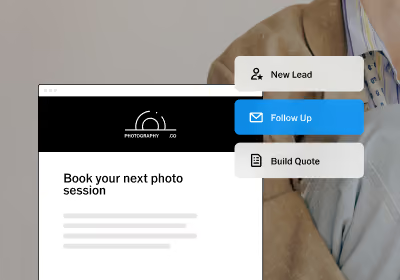
Winning hotel clients means managing more than the photography itself. You need to keep track of inquiries, prepare proposals, agree on project details, collect payments and follow up when it's time for another property refresh. VSCO Workspace is built for that workflow. A hotel booking might move through it like this:
- A hotel submits an inquiry through your website, and it lands in Workspace as a lead.
- You send a quote with tiered packages, such as a gallery refresh, a full-property session and seasonal updates.
- The hotel reviews the quote, completes a questionnaire and signs the contract from one link, without creating an account.
- You collect a deposit and the hotel books the session through your scheduling link.
- You deliver the final images in a gallery.
- An automated follow-up reminds you to reconnect before the next season.
This is a full VSCO One workflow. Every Workspace tool and feature is included with VSCO One, and you can try risk-free for 30 days.
How do I get started in hotel photography without experience?
Build a portfolio of interiors, architecture, amenities and lifestyle photography using vacation rentals, boutique properties or styled interiors. Then use those images to pitch local hotels, starting with a small paid gallery refresh.
What should a hotel photography portfolio include?
Include guest rooms, interiors, amenities, food and beverage and lifestyle images that show you can handle varied spaces and lighting. Eight to 12 strong images, organized by property type, is a good starting point.
How do I find hotels looking for photographers?
Look for hotels with an upcoming renovation, new amenities, a property opening or an active marketing campaign. Review their websites and booking listings for outdated or incomplete photography, then identify the person responsible for marketing and pitch a specific project.
Who hires photographers for hotels?
Typically the marketing director, public relations manager or communications team. At independent hotels it may be the owner or general manager, and hotel groups often route it through brand or regional marketing.
How do I pitch a hotel for photography work?
Mention something specific about the property, such as a renovation, say what you'd create and link two or three relevant examples. Propose a manageable first project and ask for a quick conversation.
How much do hotel photographers charge?
There's no standard rate. Hotel photography pricing depends on production time, the number of spaces and images, expenses and how the hotel will use the photographs, so quote the work and the license together.
What should a hotel photography contract include?
Include the scope and deliverables, schedule, fees and payment terms, revisions and image licensing. Spell out who can use the images, where, for how long and for which properties.
What usage rights should I offer hotel clients?
Offer rights that match the hotel's needs, such as website, booking platforms and social media for one property for a set term. Charge separately for broader use, such as paid advertising or multiple locations.
How do I get repeat hotel photography clients?
Deliver quality images on time and communicate consistently. Ask about upcoming milestones during the project, then propose seasonal updates, new amenities or other properties in the group.
Start With One Hotel and Build From There
You don't need an extensive client list to break into hotel photography.
Build a focused portfolio, research properties with a reason to invest in new imagery and send a pitch that shows what you'd create for them. A small, paid gallery refresh is a practical first assignment.
Once you're booking, reliable delivery and clear communication leave as strong an impression as the final images, and they're what turn one property into a long-term client.
VSCO Sites, VSCO Workspace and VSCO Galleries can help you present your work, manage inquiries and deliver projects.
That leaves more room for the work itself: photographing spaces in a way that inspires guests to book their stay.