Getting hired as a fashion photographer takes more than a strong portfolio.
Designers, fashion brands, magazines and creative agencies need photographers who understand their visual identity, can work with a creative team and deliver images that serve a specific purpose.
Your work needs to show what you can create and how you can contribute to a collection, campaign or editorial.
This guide explains who commissions fashion photography, how to build a portfolio around the assignments you want, how to create client-worthy work through test sessions, how to pitch brands with a specific idea and how to price your work around usage.
Key Answers
- Target the right fashion photography clients. Independent designers, fashion brands, magazines, e-commerce retailers and creative agencies have different needs. Focus on the markets that align with your work.
- Build a focused fashion photography portfolio. Showcase two or three cohesive projects that demonstrate your visual style, technical skills and ability to deliver consistent imagery across a collection.
- Create opportunities through collaborations. Test sessions, personal editorials and relationships with models, stylists and makeup artists help build your portfolio and professional network.
- Pitch brands with specific creative ideas. Research potential clients, identify the people responsible for hiring photographers and send personalized pitches with relevant portfolio examples.
- Price assignments based on scope and image usage. Account for creative fees, production, retouching and licensing terms, including media, duration, territory and exclusivity.
- Turn initial bookings into repeat work. Deliver a professional client experience, understand brands' production calendars and follow up with ideas for upcoming collections and campaigns.
In this guide, you'll learn how to:
- Understand who hires fashion photographers
- Decide between editorial and commercial work
- Build a fashion portfolio that earns trust
- Create client-worthy work through test sessions and collaborations
- Build relationships across the fashion industry
- Pitch brands with a specific idea
- Package and price your work around usage
- Turn first bookings into repeat clients
- FAQs
Fashion photography covers several distinct markets, each with different creative needs, production requirements and budgets.
Understanding who commissions photography and what they need helps you build a portfolio that attracts the right opportunities.
Know the Clients
- Independent designers and emerging labels: lookbook and campaign imagery that communicates a brand identity, often with smaller budgets, tighter timelines and the chance of repeat seasonal work
- E-commerce fashion brands: consistent lighting, clean product angles and large batches of images or short-form video for regular launches
- Magazines and digital publications: editorial stories with strong concepts and narratives, where budgets are often modest but published work builds credibility
- Modeling agencies: test images and digitals for models' books, which makes them a source of collaborations and referrals
- Boutiques and local retailers: product and social content for new arrivals, a practical place to build commercial experience
- Advertising agencies and creative production companies: they commission photographers on behalf of fashion brands, an important route to commercial assignments
Start with one or two of these markets. A portfolio built for emerging designers is easier to hire than one that tries to serve every kind of client, and it gives you a clear list of brands to research.
Know the People Behind the Commission
Not everyone in the creative ecosystem has the authority to hire a photographer.
Some people commission work, some influence the decision and some introduce you to opportunities, so aim your outreach accordingly:
- Creative directors: shape the visual direction and select photographers for campaigns
- Art directors: develop concepts and help assemble creative teams
- Brand marketing teams: commission photography for launches, advertising and social content
- E-commerce managers: need consistent product and model imagery for online stores
- Fashion editors and photo editors: commission editorial stories and select photographers for publications
- Producers: coordinate productions and often know which photographers are available for assignments
- Stylists and makeup artists: build creative relationships and recommend photographers to their networks
- Modeling agencies and bookers: connect photographers with models for test sessions and portfolio development
Understand How Photographers Get Hired
Getting clients isn't only a matter of sending more emails. Opportunities tend to come through several overlapping channels:
- Direct commissioning: a designer, brand or agency contacts you after seeing your work
- Creative relationships: a stylist, art director, producer or creative director recommends someone they've worked with
- Editorial assignments: you get published, build relationships with editors and use tearsheets to establish credibility
- Representation: an agent or representative promotes you to prospective clients
- Self-initiated work: personal editorials and test sessions demonstrate a visual direction that attracts commercial commissions
- Online discovery: brands and creative professionals find you through your website, social platforms and professional portfolio
The goal is to become visible to the people who commission photography and to give them a reason to remember and recommend you.
Editorial and commercial photography differ mainly in purpose, and many photographers work across both:
- Editorial photography: communicates a visual story, explores an idea or interprets a fashion trend. It may be commissioned by a magazine or created independently for publication.
- Commercial photography: serves a brand's objectives, whether that's introducing a collection, communicating its identity or selling products.
Neither is inherently more creative or more profitable. Editorial work can be commissioned and paid, and commercial work can be highly conceptual. What matters is that your portfolio demonstrates the assignments you want to attract: imaginative storytelling and a recognizable point of view for editorial work, or consistent color, light and detail across an entire collection for commercial work.
A client reviewing your portfolio is asking whether you can deliver their project. A strong fashion portfolio shows:
- Visual identity: a recognizable aesthetic and point of view
- Technical ability: control of lighting, exposure, color, composition and detail
- Direction: the ability to direct models and work with stylists to bring a concept to life
- Range: adaptability across different collections, subjects and environments
- Consistency: the ability to deliver an entire series of strong images, not one exceptional photograph
- Commercial understanding: images that work for a campaign, lookbook, editorial or e-commerce environment
Remove unrelated images, even personal favorites. Family portraits, architecture and lifestyle photography can live elsewhere, and a dedicated fashion portfolio gives designers, agencies and art directors a clearer picture of your strengths.
Show Complete Projects
Start with two or three cohesive projects and select the strongest images from each. Around 10 to 20 photographs is a useful starting point, not an industry rule, and it should include a mix of portraits, full-length looks, styling details and wider environmental images where they support the concept.
A client commissioning a lookbook or campaign needs confidence that you can deliver a cohesive collection, and a sequence demonstrates that better than a feed of unrelated favorites. Think of each project as a mini editorial:
- Open with a compelling image
- Build interest through different perspectives and styling details
- Close with a memorable photograph
Published work is also an important form of social proof in fashion. When you have them, add tearsheets, the published pages from a magazine or campaign, to your portfolio.
Organize Your Work for Discovery and Inquiries
Group your work into four to six collections with straightforward names like Editorial, Studio, Lookbooks and Campaigns, so a brand can go straight to the work that matches its needs.
VSCO Sites lets you build a photography website with no code from your VSCO Profile, uploaded photos, Galleries, and Blogs. Organize each project into its own public Gallery, then bring them together on your site. A Gallery lets a brand see the full story of a collection, including different looks, details and environments, and not just your best single frames. Keep navigation simple, check that everything looks right on mobile and name your city and specialty in your bio and site copy so local brands searching for a fashion photographer can find you.
Most importantly, include a clear way to get in touch. A VSCO Workspace contact form on your site sends each inquiry into Workspace as a lead with the details already filled in, so a brand's first message turns into something you can track. Full Workspace is included with VSCO One, but you can also get started for free.
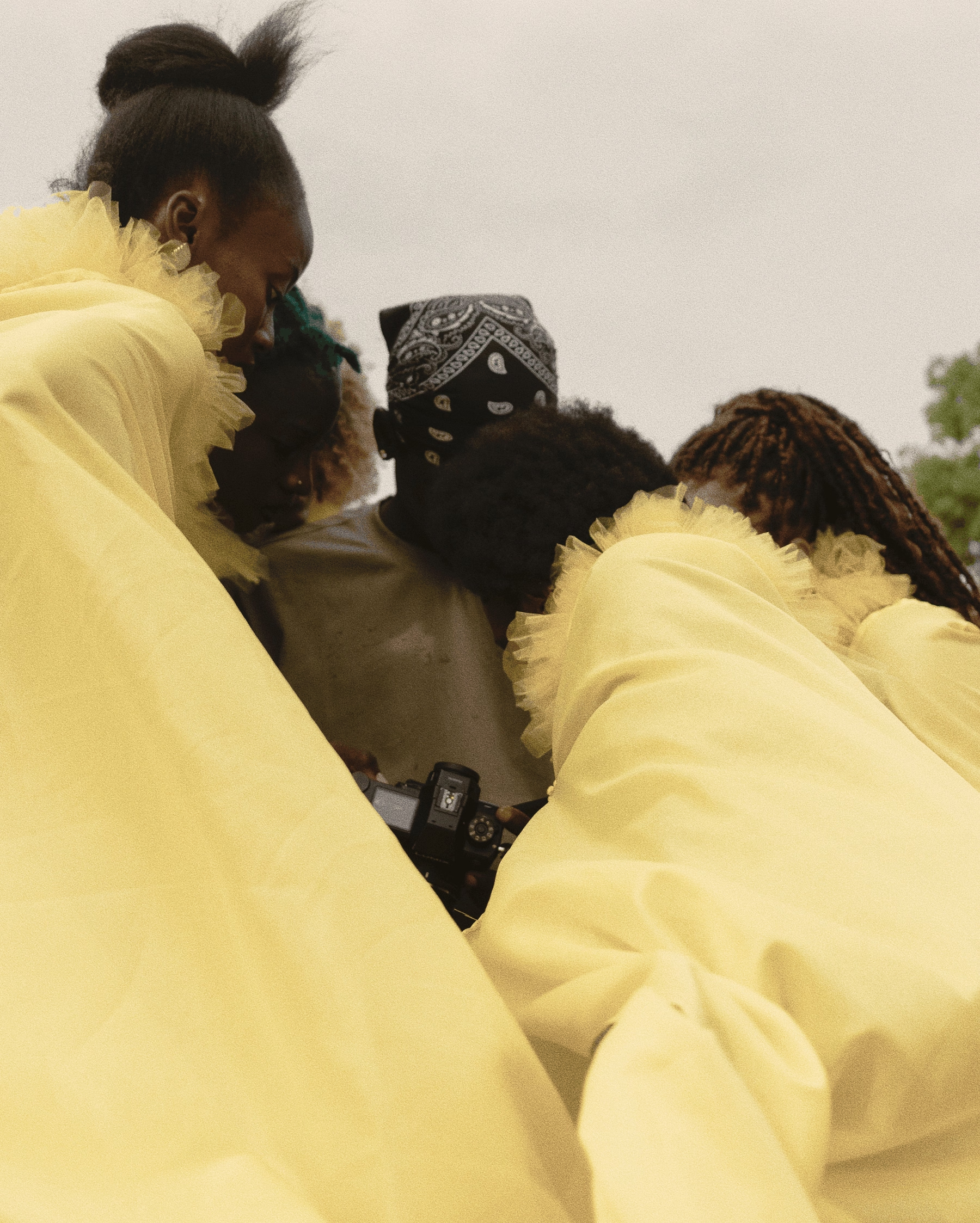
You don't have to wait for a brand to hire you before creating fashion work.
Test sessions give you room to experiment without the constraints of a commercial brief, strengthen your portfolio and build relationships that can lead to paid opportunities.
They are intended for creative development and portfolio building, not unpaid commercial assignments.
If a brand wants to use the resulting images in a campaign or for product marketing, negotiate a separate agreement covering usage and compensation. Read more on negotiating spec work in our guide.
Choose the Right Kind of Portfolio Work
These categories overlap, but each serves a different purpose:
- Test sessions: collaborative sessions with models, stylists and makeup artists to develop portfolios and experiment creatively
- Editorial tests: more developed concepts that demonstrate you can execute a complete fashion story
- Personal projects: self-directed work that establishes a distinctive visual style and creative ambition
- Paid test assignments: work commissioned by a brand or agency to evaluate a photographer before a larger project
Approach Collaborators Professionally
- Have a clear concept before you contact anyone
- Show references instead of sending a vague description
- Explain what each collaborator will receive from the session
- Establish who can publish and use the resulting images
- Agree on credits, tagging and portfolio usage
- Don't assume everyone is working for free or has the same expectations
Plan Sessions With Client-Worthy Intent
- Create a mood board: define the color palette, lighting, styling and overall aesthetic you want to explore
- Assemble a creative team: connect with emerging models, stylists, designers and makeup artists who also want to expand their portfolios
- Prepare your equipment: choose lighting setups, lenses and backdrops that support your concept
- Direct the process: guide posing and styling, and capture behind-the-scenes content that shows how you collaborate
- Confirm expectations in writing: agree on image usage, collect model releases, credit collaborators and settle privacy considerations before anything is published
A shared mood board helps your team agree on the visual direction before the session. Use VSCO Canvas to collect reference images, organize styling and lighting ideas, and invite collaborators to view or edit, review the concept and leave comments. Canvas includes a Creative Direction Guide template to start from.
Sharing the finished editorial alongside behind-the-scenes content gives potential clients a view of both your creative abilities and how you work with a team.
Work With Modeling Agencies
Modeling agencies represent models and may arrange test sessions to build a model's book, though availability and policies vary.
Start with smaller local or boutique agencies and study the faces on their boards, especially their new faces.
Then send a short introduction with a few images and a link to your portfolio, and propose a specific concept.
Test sessions should benefit everyone involved. The model builds their book, while you develop portfolio work and relationships with the creative team.
Agree on the number of edited images each person will receive, how everyone will be credited and where the photographs can be used.
Always clarify agency requirements before the session, particularly when images will appear publicly or be submitted for publication.
Creative teams often recommend photographers they have already worked with, so the relationships you build can lead to commissions long before you pitch a brand. Start by:
- Assisting established fashion photographers: hands-on experience on real productions builds skills and connections that can lead to paid assistant work and referrals
- Attending local fashion events: shows, launches, workshops and exhibitions put you in the room with people who commission and influence photography
- Connecting with creative teams online: follow the people whose work you admire and engage with what they publish
- Joining photography communities: publish projects to your VSCO Profile, follow other photographers and build a community that gives you feedback and connection
When you reach out, make the introduction personal. Share a relevant portfolio link, mention a project you admire or offer a thoughtful creative idea, then follow up within a few days to keep the conversation going.
Consider Photographer Representation
As your portfolio and client list develop, you may also consider working with a photography agent or representative.
These agencies promote photographers to brands, advertising agencies and editorial clients, help negotiate assignments and manage business relationships.
Representation is generally more relevant once you have an established body of work and a clear creative identity, and it isn't a prerequisite for getting fashion photography clients.
Don't wait for a brand to discover your work.
Research labels whose visual identity aligns with your photography, identify the people responsible for creative decisions and approach them with a relevant idea.
A thoughtful pitch gives a potential client a reason to consider you for an upcoming collection or campaign.
Build a Prospect List
A repeatable exercise turns research into a pipeline:
- Identify 15 to 20 brands whose visual identity aligns with your work
- Review their latest campaigns, collections and product photography
- Identify a specific opportunity where your photography could contribute
- Find the relevant creative director, art director, marketing contact or producer
- Save the contact, the brand's needs and the date of your outreach in a spreadsheet or your Workspace leads
- Follow up with a relevant project or a new idea
Write a Pitch That Shows Real Fit
A strong pitch includes four elements:
- Specific subject line: try "Creative idea for your upcoming collection" instead of a vague introduction
- Personalized opening: mention a recent campaign or collection and explain what caught your attention
- A visual concept: describe one idea, not just an offer to send ideas, and link a collection of work that shows the approach
- Simple next step: offer a brief introductory call or to share more details
Here is an example you can adapt:
Subject: Creative idea for your upcoming collection
Hi [Name],
I noticed the strong use of natural light and architectural backgrounds in your latest collection. I'd love to explore that direction with a series of location-based portraits that bring the collection's structure and movement into focus. I'm a fashion photographer based in [city] working with independent labels on lookbooks and campaigns, and I've linked a collection of related work: [link].
Would you be open to a short call this week, or would you rather I send a few more details by email?
Keep the first message concise. A more developed treatment or mood board makes sense once a client expresses interest, and sending one to every prospect rarely pays off.
When a brand asks to see more, build the concept in VSCO Canvas, which includes a Pitch Deck template, and share it view-only or with full access so the team can review your references and ideas in one place.
If you don't hear back, follow up once or twice with something new, such as a recent project that fits the brand's style, then move on.
Fashion photography assignments involve more than the time spent taking pictures.
A brand may need creative development, casting, styling, production, photography, retouching and permission to use the final images across multiple channels.
Build your estimates around the full scope of the assignment so clients understand what they're paying for and you account for the work involved.
Build a Clear Estimate
A photography estimate separates the parts of an assignment:
- Creative or photographer's fee: your time, skill and creative direction on the day
- Pre-production and creative direction: concepts, references, casting, scouting and planning
- Production costs: models, stylists, hair and makeup, studio or location costs, assistants and travel
- Post-production and retouching: selects, editing and retouching
- Image licensing: the commercial value of how the client will use the images
Rates vary considerably by experience, market, production requirements and usage, so there is no universal figure. Price from the scope of each assignment.
Define the License
The same photographs are worth more to a brand running them in paid advertising than on its own website. Spell out four factors in every quote:
- Media: website, organic social, paid social, print, outdoor advertising and other channels
- Duration: three months, six months, one year or another defined period
- Territory: local, national or worldwide use
- Exclusivity: whether the brand has exclusive rights within a category or market
Granting a license to use images is different from transferring copyright ownership, so state clearly which one the agreement covers.
A request for broader use can become an add-on instead of a free extra.
Clarify Deliverables and Terms
Before you quote, clarify whether the client expects:
- All images or a defined number of final selects
- Retouched or unretouched files
- Different crops and aspect ratios
- Behind-the-scenes content
- Raw files
- Additional usage beyond the original agreement
Then put the terms in a written agreement that covers the number of final images, retouching and revision limits, delivery timeline, additional image fees, overtime and rescheduling, when the license becomes effective and whether the client can sublicense images to retailers, publications or other partners.
That last point matters in fashion, where a brand may expect imagery to be distributed across several retail and marketing partners.
Collect model releases where needed, and ask about any agency or talent restrictions before you quote.
This is general guidance, not legal advice, so consider having a qualified legal professional review your standard contract and release templates.
Landing your first fashion client is exciting, but a sustainable business comes from relationships that extend beyond a single project.
A smooth client experience, reliable communication and thoughtful follow-up give brands a reason to come back.
For more on building a lasting practice, see this guide to building a long-term career in commercial photography.
Learn the Client's Production Calendar
Fashion brands work around collection launches, seasonal campaigns, product drops and other planned marketing activity.
Photographers who understand those cycles can follow up with a relevant idea at the right time:
- A designer preparing a new collection might need lookbook photography
- An e-commerce brand preparing a product launch might need consistent product imagery
- A label planning a seasonal campaign might need concept development and a larger production
- A brand refreshing its website might need updated campaign and lifestyle photography
Instead of asking whether a client needs another session, learn what they're planning and identify where photography can help.
Ask for Feedback That Builds Your Reputation
After you deliver, send a thank-you message and invite the client to share feedback.
Ask whether they'd be comfortable giving a testimonial or recommending you to another brand, and encourage specific answers:
- Did your creative direction help bring the collection to life?
- Did your product imagery make content production easier?
Concrete details help future clients understand the value you bring.
When the work is published, save the pages as tearsheets and add the project to your public Galleries and your portfolio website so visitors can find your latest fashion work.
How do I get my first fashion photography client?
Build a focused portfolio from test sessions, collaborations and personal editorials, then send personalized introductions to independent designers, emerging brands and modeling agencies. Networking with stylists and other creatives can also lead to referrals.
How do I become a fashion photographer with no experience?
Start by creating portfolio work through test sessions, collaborations and personal projects, and assist an established fashion photographer if you can. Then use that work to approach emerging designers and local brands.
Where can I find fashion photography jobs?
Look to independent designers, e-commerce brands, boutiques, magazines and agencies, and build relationships with the creative directors, art directors, producers and marketing teams who commission photography. Follow brands online, attend fashion events and keep your portfolio easy to find.
How do I approach a fashion brand as a photographer?
Research the brand, find the person responsible for creative decisions and send a short pitch with one specific visual concept and a link to related work. Offer a simple next step, such as a brief call.
What should a fashion photography portfolio include?
Two or three cohesive projects with around 10 to 20 strong images that show your visual identity, technical ability, direction and range. Include tearsheets when you have them.
Do fashion photographers need an agent?
No. Representation is generally more useful once you have an established body of work and a clear creative identity, and many photographers find early clients through their own portfolio and relationships.
How much should I charge for fashion photography?
There's no standard rate. Build your estimate around your fee, pre-production, production costs, post-production and the image license, and price the usage separately from your time.
Do I need a model release for fashion photography?
A model release is important when you plan to publish, promote or license photographs for commercial use. It documents the model's permission for agreed uses of their likeness, so clarify the intended usage before the session and have your template reviewed by a qualified legal professional.
How do I work with modeling agencies as a photographer?
Start with smaller local agencies, send a short introduction with a few images and propose a specific test concept. Clarify usage, credits and deliverables with the booker before the session.
Do I need professional equipment to get fashion photography clients?
No. A capable camera, a solid understanding of light and composition and thoughtful styling can produce client-worthy work, and you can invest in more equipment as your projects and budget grow.
Start With One Brand and Build From There
Building a fashion photography business starts with making your work relevant to the people you want to reach. Develop a focused portfolio, collaborate with other creatives, get your work published and approach brands with ideas that reflect their visual identity.
Every project gives you another opportunity to strengthen your portfolio, expand your network and build relationships with clients who may need you again. Start with one brand you'd love to work with, study its latest collection, identify an opportunity and put together a pitch that shows what you could bring to the project.
VSCO supports that workflow in one place: plan the creative on Canvas, show complete projects with your Profile, Sites and Galleries, and let inquiries land in Workspace.
With VSCO One, you can send a questionnaire, build a quote with packages and add-ons, attach a contract for e-signature and collect a deposit through an invoice, with automated reminders to keep payments and follow-ups on track.
Learn more in our guide on Automating Your Photography Business.