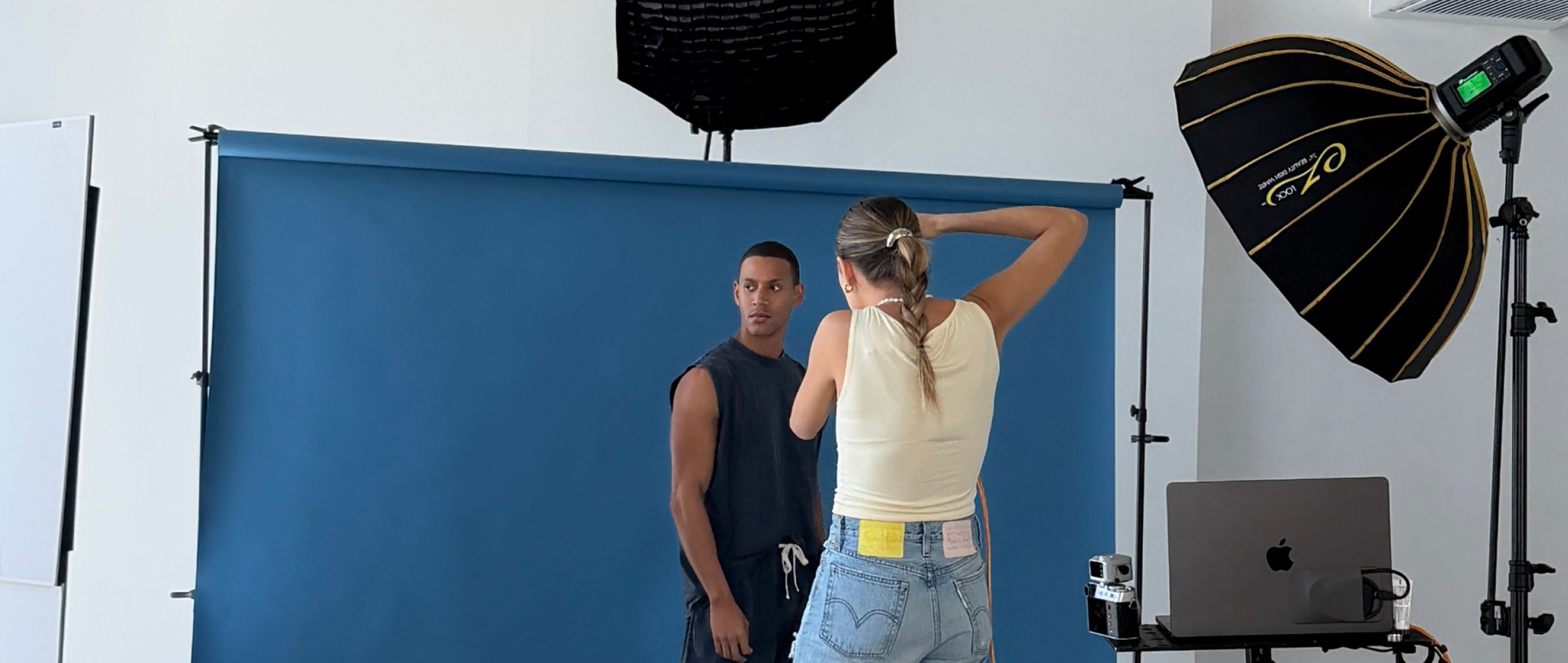
A photography retainer is an ongoing agreement in which a client pays a recurring fee for a defined set of photography services.
It might include a monthly product session, a quarterly brand refresh or reserved availability for a company's ongoing campaigns.
For photographers, retainers can mean more predictable revenue, fewer gaps between bookings and stronger client relationships.
For businesses, they mean consistent access to a photographer who already understands their brand. Getting one takes more than offering a monthly discount.
You need a business with recurring photography needs and an offer that makes ongoing work worthwhile for both sides.
Key Answers
- Photography retainers provide recurring revenue through ongoing agreements for defined services, deliverables or reserved availability.
- The best retainer prospects are existing clients and businesses with consistent photography needs, including ecommerce brands, restaurants, hospitality businesses and marketing agencies.
- A profitable photography retainer package should clearly define sessions, deliverables, revisions, licensing and additional fees, with pricing based on total costs and desired profit.
- Photography retainer agreements should outline the scope of work, payment terms, usage rights, cancellation policies, renewals and how unused services are handled.
- To secure retainer clients, identify recurring content needs, pitch a specific solution and consider starting with a paid trial project before proposing a longer-term agreement.
- Retaining clients requires consistent delivery, proactive communication, fresh creative ideas and regular reviews of the partnership's value and profitability.
What you'll learn in this guide:
- Understand How Photography Retainers Work
- Find Businesses That Need Ongoing Photography
- Build a Photography Retainer Package
- Price Your Photography Retainer
- Write a Photography Retainer Agreement
- Pitch Clients and Win Your First Retainer
- Keep Clients and Build Long-Term Partnerships
- Photography Retainer FAQs
Photographers structure ongoing agreements in different ways, and each one handles payment, unused work and cancellation differently:
- Fixed monthly services: a defined package delivered each month, such as one session and 25 edited images for an ecommerce brand
- Prepaid balance: the client pays in advance, and you deduct work and expenses from that balance as projects come in
- Reserved availability: the client pays to secure your time, whether or not every reserved hour is used, which suits marketing agencies with unpredictable deadlines
- Scheduled campaigns: photography planned around quarterly launches, menu changes or seasonal campaigns, which suits restaurant groups and hotels
These are commercial arrangements you define, not fixed industry categories. Choose the one that matches how your client buys content.
What's the Difference Between a Retainer and a Repeat Booking?
A repeat booking is an individual project the client chooses to book again. A retainer is an ongoing commitment with a defined scope, payment terms and agreed availability.
A retainer also isn't the same as recurring billing. Invoicing monthly for a service, collecting monthly payments against an agreed project and reserving availability for a fee carry different obligations.
Not Every Client Needs a Retainer
A retainer works best when a client has recurring needs and you can reasonably forecast the work.
If a business needs photography twice a year, individual project bookings make more sense.
Recurring revenue is only valuable when the agreement is profitable and the commitment works for both sides.
The fastest way to find retainer clients is to look for businesses that publish new visual content on a regular schedule. Four questions help you qualify a lead:
- Frequency: Does the business regularly publish new products, campaigns, menus or promotional content?
- Visual importance: Does photography directly influence how it attracts customers or sells products?
- Capacity: Does it have the budget and organization to hire a photographer consistently?
- Consistency: Would working with the same photographer improve its visual identity or production process?
A business that answers yes to all four is a strong prospect. Different industries need different things:
- Ecommerce brands: updated product imagery, seasonal campaigns and lifestyle photography
- Restaurants and hospitality: menus, interiors, events and ongoing social content
- Marketing agencies: a dependable creative partner across multiple client accounts
- Real estate and interior design firms: photography for new listings, completed projects and portfolio updates
Start With Clients You Already Have
Existing clients are often your best retainer prospects. They already know your work, communication style and delivery process.
Look for clients who book you repeatedly, request similar work each season or send small requests between projects.
Those patterns point to a need a retainer can simplify.
Spot Signs a Business Needs Consistent Imagery
When you research new prospects, look for:
- Outdated, inconsistent or incomplete imagery on their website, social channels or Google Business Profile
- Frequent product launches or seasonal campaigns without cohesive photography
- Social channels that post often but with a mix of styles
Community connections can lead to opportunities, too.
Get involved in local business groups, online creator communities and industry events, and ask past clients and collaborators for introductions. If you're still deciding which industries to focus on, this guide to choosing a photography niche can help.
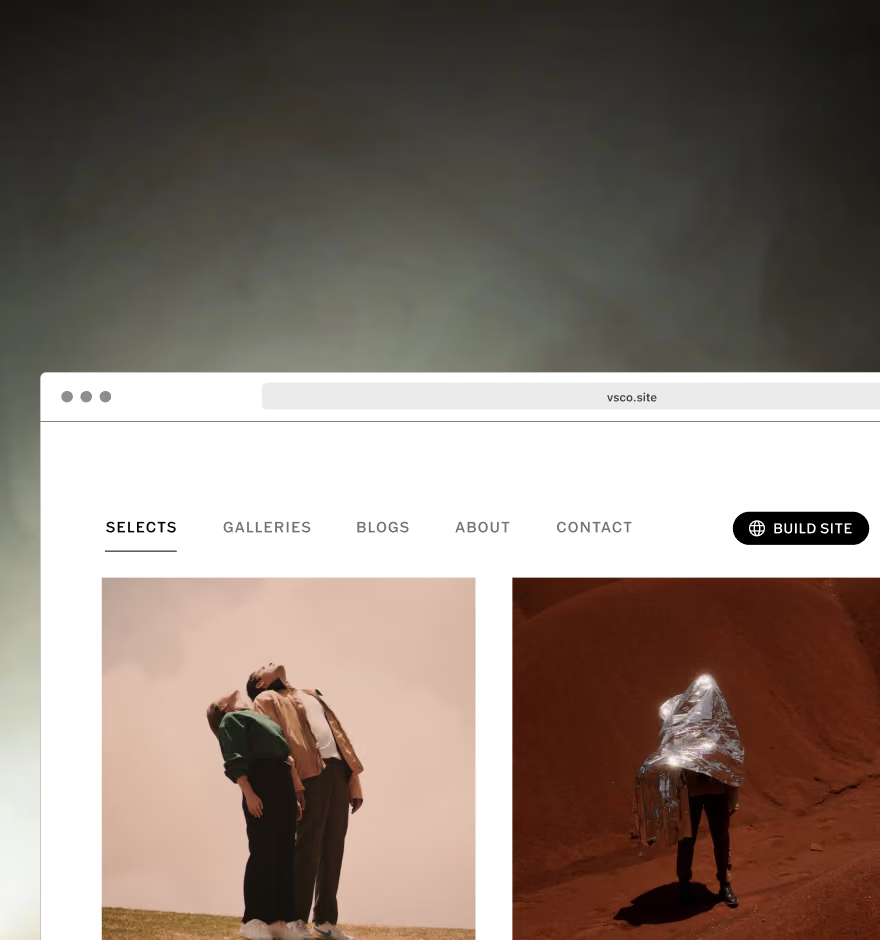
Before you reach out, prepare a mobile-friendly portfolio of around 20 of your strongest, most relevant images. A focused collection helps prospects judge whether your style fits their brand.
VSCO Sites builds a portfolio from your VSCO Profile, uploaded photos, Galleries, and Blogs with no code, so it's easy to keep current.
Clients rarely want a fixed number of photographs. They want to solve a recurring content problem without finding, briefing and coordinating a new photographer every time. Build your offer in three steps:
- Identify the recurring need: Does the business struggle to keep its social channels fresh, or spend too much time coordinating separate photographers for each launch?
- Translate it into a repeatable service: Turn that need into specific deliverables, such as a monthly image set or a quarterly website refresh.
- Define what's included and what costs extra: Spell out the boundaries so both sides know what the fee covers.
Here is an illustrative monthly product photography package:
- One half-day product session
- 25 edited, high-resolution images
- Two product or styling setups
- One round of revisions
- Delivery within five business days
- Website and organic social media usage
And what sits outside it:
- Additional sessions
- Rush editing
- Additional image selections
- Paid advertising or extended licensing
These numbers show the structure, not a recommended offer. If you add video, only package it with photography if you have the skills and capacity to deliver both consistently.
Clients value one creative partner who keeps a consistent look across formats, but only when the quality holds.
There's no universal photography retainer rate, so start from your costs. A monthly retainer price is the sum of six parts:
- Production: session time, assistants, equipment and location costs
- Post-production: culling, editing, retouching and exporting
- Pre-production: creative planning, client communication and coordination
- Licensing: intended usage, channels, duration and exclusivity
- Business costs: software, insurance, equipment maintenance and overhead
- Profit: what remains after the cost of doing the work
Then calculate your effective hourly rate.
A $1,500 monthly package can look attractive until you add up 12 hours of shooting, planning, editing, revisions and communication.
That works out to $125 an hour before business expenses and taxes.
The point isn't that you should charge a particular rate. It's that you should know the real time and cost behind every agreement.
The same discipline applies to the annual figure.
A $1,500 monthly retainer adds up to $18,000 over 12 months, but that is contracted gross revenue only if the client commits for the full year.
If the agreement can be cancelled monthly, it isn't guaranteed.
And it isn't profit, because equipment, insurance, software, taxes and overhead still come out of it.
Protect your margin with a few rules:
- Don't offer unlimited deliverables
- Set a clear revision limit, and define what counts as a revision versus a reshoot or a new request
- Specify whether unused sessions or deliverables roll over
- Charge separately for work outside the agreed scope
- Define licensing instead of assuming all usage is included
- Don't automatically discount your work in exchange for a longer commitment
If you want to reward a longer commitment, offer priority scheduling or an added deliverable instead of a lower rate. For more on structuring fees around usage and tiers, see this guide to increasing commercial photography project budgets.
Check Whether a Retainer Is Profitable
Before you agree to terms, ask:
- Does the monthly fee cover all production and administrative time?
- Is the licensing appropriate for the client's intended use?
- Is there a clear limit on deliverables and revisions?
- Does the commitment justify reserving this capacity?
- Is there enough profit after expenses?
- Can you deliver the work without compromising other bookings?
A clear photography retainer agreement prevents most of the friction that ongoing client relationships create. Group the terms into four categories:
- Scope: sessions, deliverables, revisions and additional work
- Money: monthly fee, payment dates, late payments and expenses
- Usage: licensing, channels, duration and exclusivity
- Commitment: contract length, cancellation, renewal and unused deliverables
Two points deserve extra attention.
First, availability isn't unlimited. If a client pays for reserved availability, define what that means, including response times, booking notice and how much time is reserved.
Second, unused work needs a policy. If a client skips their monthly session, decide before the agreement starts whether it expires, rolls over or converts into another deliverable.
Licensing matters as much as image counts. Specify where the images can appear, whether usage includes organic social, web, print or paid advertising, how long the license lasts, whether it's exclusive and whether expanded campaigns need additional licensing.
Plan to track completed work against the agreement each month, including sessions, deliverables, hours and what remains.
Regular balance updates help clients see what's included and avoid surprises when additional fees apply.
This is general guidance, not legal advice, so have a lawyer review your standard agreement.
You don't need an elaborate sales pitch. Show potential clients that you understand their visual needs and have ideas for meeting them. The approach differs for existing and new clients.
Existing Clients
- Look for recurring requests or projects you could consolidate
- Identify seasonal or monthly content needs
- Suggest a package that simplifies their future bookings
- Explain how a standing agreement helps their planning
New Clients
- Research the business and identify a specific opportunity
- Show relevant work from your portfolio
- Suggest a practical creative concept
- Propose a paid trial before a longer agreement
Before you reach out, look at the business's website and social channels.
Maybe a restaurant still features photos of an old menu, or a clothing brand's latest product images look inconsistent. A specific observation shows you've done your homework.
Choose a channel that fits: a quick Instagram DM might work for a small creative brand, while a polished email is usually better for an established company.
A short first message can sell an idea instead of asking for a monthly commitment:
“Hi [Name],
I saw your recent product launch and thought there could be an opportunity to build a more consistent library of product and lifestyle imagery for your website and social channels.
I work with brands on ongoing photography, creating fresh imagery around product launches and seasonal campaigns. I'd love to share a few ideas for how we could approach this for [Brand].
Would you be open to a quick conversation?”
Lower the Risk With a Trial Project
Some clients want to see your work before they commit to a monthly agreement. A paid trial project lets them experience your photography and workflow firsthand. Read more in our guide on How to Evaluate and Negotiate Photography Spec Work.
For example, offer a single session with enough edited images to cover two weeks of social media content. Show the client how you plan sessions, organize files and handle approvals.
After delivery, ask for feedback, then introduce a few retainer options that build on the trial.
Here's how it can play out:
- A skincare brand needs new product and lifestyle photography every month.
- You notice the recurring need, run a paid trial session and propose a monthly package with a defined image count.
- You agree on licensing, session dates and delivery.
- After three months, you review the arrangement together and adjust the scope.
Clients renew when four things hold:
- Consistency: deliver on the agreed schedule and maintain a recognizable visual standard
- Communication: keep clients informed about production, approvals and delivery
- Initiative: bring new creative ideas instead of waiting for requests
- Business awareness: understand how the client uses the photography and adapt future work
A retainer shouldn't become a recurring transaction where you deliver the same package every month. It should evolve with the client's business.
Set Expectations From Day One
Start each partnership with a discovery call or client questionnaire to establish project goals, deliverables and deadlines, who approves the work and handles revisions, and upcoming campaign dates. Reference images clarify creative direction.
VSCO Canvas lets you organize images, videos and other visual references into mood boards you can share before a session.
Boards can be view-only or editable, and clients can review and comment without a VSCO account, which makes approvals easier and cuts down on miscommunication.
This guide to getting started with VSCO Canvas walks through the setup.

Deliver Consistently
When the work is ready, VSCO Galleries lets you share photos and videos through one link, and clients don't need an account to view them.
A straightforward delivery process makes it easier for clients to review and access their content, which supports renewal.
Expand, Renew and Ask for Referrals
There are three ways to grow a retainer into long-term business. For more on building ongoing client relationships, see this guide to how to win repeat photography clients and build long-term relationships.
- Expand the scope: introduce seasonal campaigns, additional formats or new photography needs. A client who hired you for product photography might also need team portraits, behind-the-scenes content or launch-day coverage.
- Secure renewals: review the work and upcoming priorities well before the agreement expires.
- Generate referrals: ask satisfied clients for introductions and permission to feature the work in your portfolio.
Also review each retainer's profitability periodically. A long-standing client isn't necessarily a good one if the scope has grown while the fee has stayed the same.
Small touchpoints, such as a thank-you after delivery or a check-in ahead of a seasonal campaign, keep the relationship active between sessions.
Know When to Walk Away
A retainer should create stability, not lock you into an unprofitable relationship. Warning signs include:
- The client wants unlimited access or deliverables
- The scope changes every month without a fee adjustment
- The client expects extensive usage rights without appropriate compensation
- The agreed schedule regularly conflicts with other paid work
- The monthly fee no longer covers the actual workload
What is a photography retainer fee?
A photography retainer fee is the recurring amount a client pays for a defined set of ongoing services or reserved availability. The agreement spells out what the fee covers, such as sessions, deliverables and usage rights.
How do monthly photography retainers work?
The client pays a set fee each month, and you deliver the agreed scope, such as one session and a fixed number of edited images. The agreement defines revisions, licensing, unused work and how either side can cancel or renew.
How do you price monthly photography packages?
There's no universal rate. Add up production, pre-production, editing, revisions, licensing, business costs and your desired profit, then check the effective hourly rate. Define the sessions, images, revisions and usage included in the fee.
What should a photography retainer agreement include?
Cover scope, monthly fee and payment dates, licensing and usage, and the commitment terms. That means contract length, cancellation, renewal and what happens to unused sessions or deliverables.
How do you get recurring photography clients?
Start with existing clients who book you repeatedly, then research businesses that publish new visual content regularly. Pitch a specific idea, and offer a paid trial project before proposing a monthly agreement.
Should photographers offer discounts for retainers?
Not automatically. Offer a lower rate only if guaranteed work and more predictable scheduling justify it, and consider priority scheduling or an added deliverable instead.
Manage Your Photography Retainer Business
Managing several retainer clients means keeping track of agreements, production schedules, payments and follow-ups.
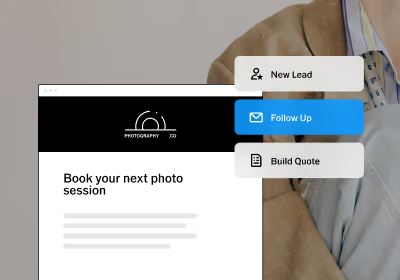
VSCO Workspace handles client management and business operations in one place. A quote can include your packages, a questionnaire and a contract, with an initial retainer payment, in one link, and clients need no account.
Payment schedules can split an order into monthly payments, and automatic reminders go out before and after due dates.
Reusable templates make repeat bookings easier to set up, and automations send follow-ups at the timing you choose, which helps you check in before a renewal.