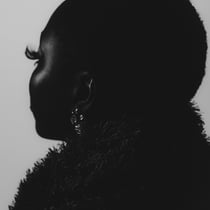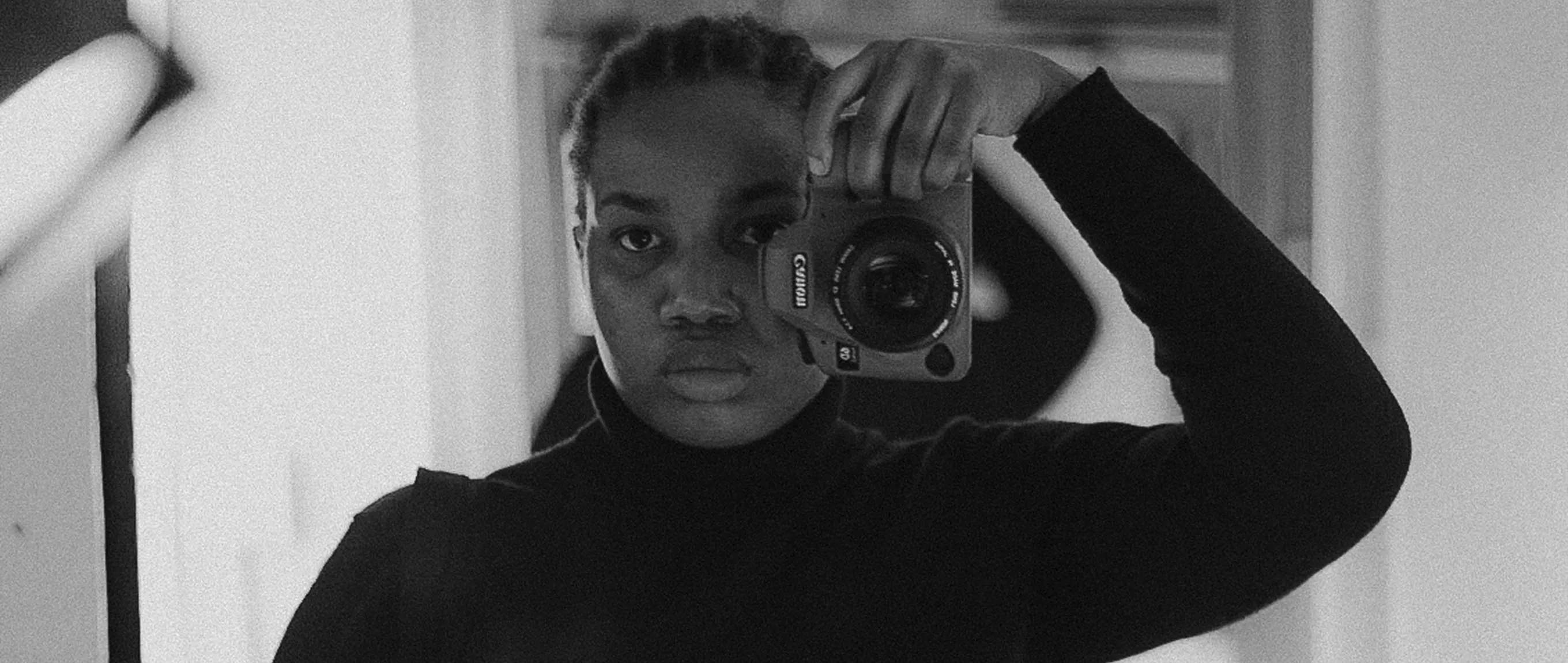
I use color, texture, and references from old films, vintage magazines, and family photo albums to build images that feel both intimate and distant at the same time.
Adaeze Okaro approaches editing the she photographs—with intention, curiosity, and a clear sense of feeling and emotion.
Her work draws on old films, vintage magazines, and family photo albums. It carries a sense of melancholy that also somehow feels warm, images that feel both familiar and new. Getting to that quality isn't about applying a filter. It's built layer by layer: from her approach with the camera in hand and into editing with multiple tools.
In this conversation, Adaeze walks through the tools that play a part in that process, and how developing a precise editing language has changed not just how she edits, but how she sees while she's shooting.
1. What VSCO editing tools do you use regularly?
I regularly use presets as a foundation, but I rarely leave them untouched.
I tend to build on them. I am especially drawn to tools like HSL for fine color control, Grain for texture, and Split Tone to subtly shape mood.
I also love Bloom and Halation for the softness they introduce into highlights, and occasionally lens flares or light leaks when I want to lean into something more atmospheric or dreamlike.
These tools together allow me to move beyond a clean image into something more emotive and layered.

2. Why do you use these tools? What excites you about them?
What excites me most is how these tools allow me to translate feeling into image.
I do not approach editing as correction. It is more of an extension of the moment, almost like completing a sentence that began when I pressed the shutter.
HSL, for example, lets me be very intentional with color relationships, especially since color is such a central language in my work. Grain and Bloom introduce a kind of imperfection that feels human to me, softening the image and allowing it to breathe a little more.
I think what motivated me initially was curiosity, wanting to see how far I could push an image emotionally without losing its honesty. Over time, certain tools have become essential, especially HSL and Grain. They have definitely helped define the visual tone of my work.
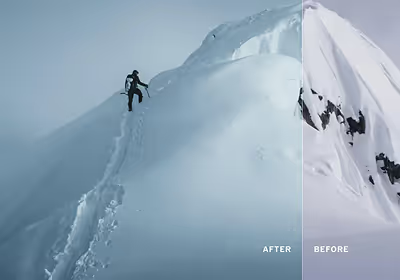
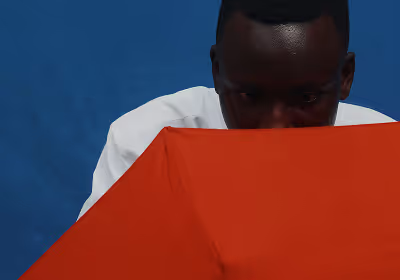
Editing tools allow me to move beyond a clean image into something more emotive and layered.
3. Have any of these tools changed how you photograph?
Yes, absolutely. Knowing how I tend to shape color and light in post has influenced how I see and capture things in the moment.
I am more attentive to subtle color contrasts, to how light falls on skin, fabric, or space, because I already have a sense of how I might later enhance or quiet those elements.
It has made my process more intentional, almost like I am photographing with both the present and the future image in mind.
4. Have any tools opened up directions in your work you weren't expecting?
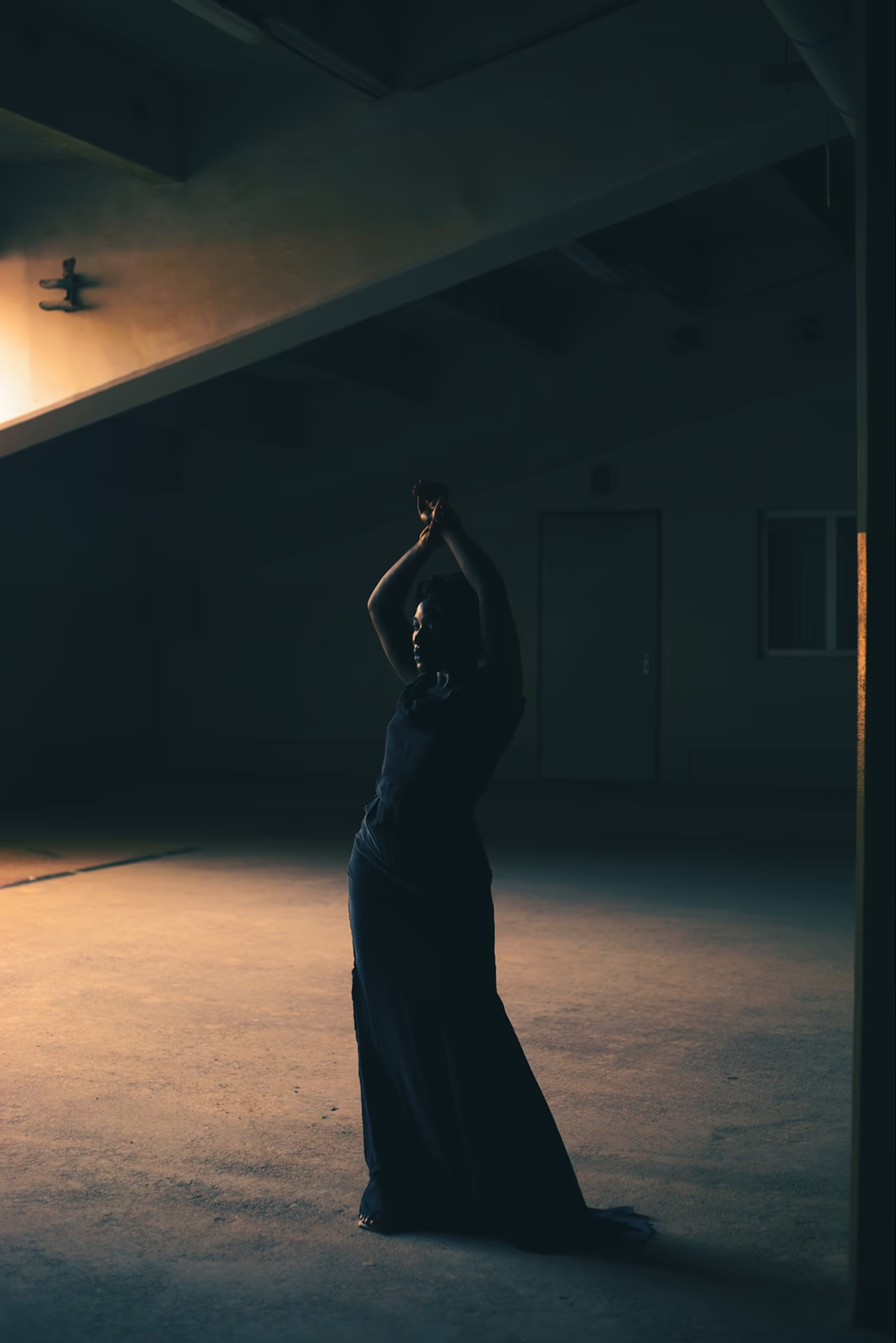
Definitely. Tools like Split Tone and Bloom have encouraged me to explore softness and emotional ambiguity in new ways.
There have been moments where a particular edit sparked the beginning of a visual idea, where the mood created in post became something I wanted to pursue more deeply in a series.
I would not say I build work around tools, but they often open doors, suggesting new directions or ways of seeing that I then carry back into my shooting process.
5. Can you describe your photography practice in a couple of sentences?
My work is rooted in what I think of as internal weather, the shifting states we carry within us that are not always visible but deeply felt.
I use color, texture, and references from old films, vintage magazines, and family photo albums to build images that feel both intimate and distant at the same time.
There is often a sense of melancholy running through the work, but also a softness that holds it, like something remembered rather than something simply seen.
Build a look people can feel and remember
Adaeze doesn't edit to fix images. She edits to finish them, to complete what began the moment she pressed the shutter.
That shift in approach is what makes her work recognizable across a body of work, not just striking in a single image. Each tool has a specific role, and together they create something consistent enough that clients know her work before they see her name.
That's the kind of editing practice worth building. Not faster, not flashier. Just more intentional, more repeatable, and more yours.
Tools often open doors, suggesting new directions or ways of seeing that I then carry back into my shooting process.